


Listen to the article
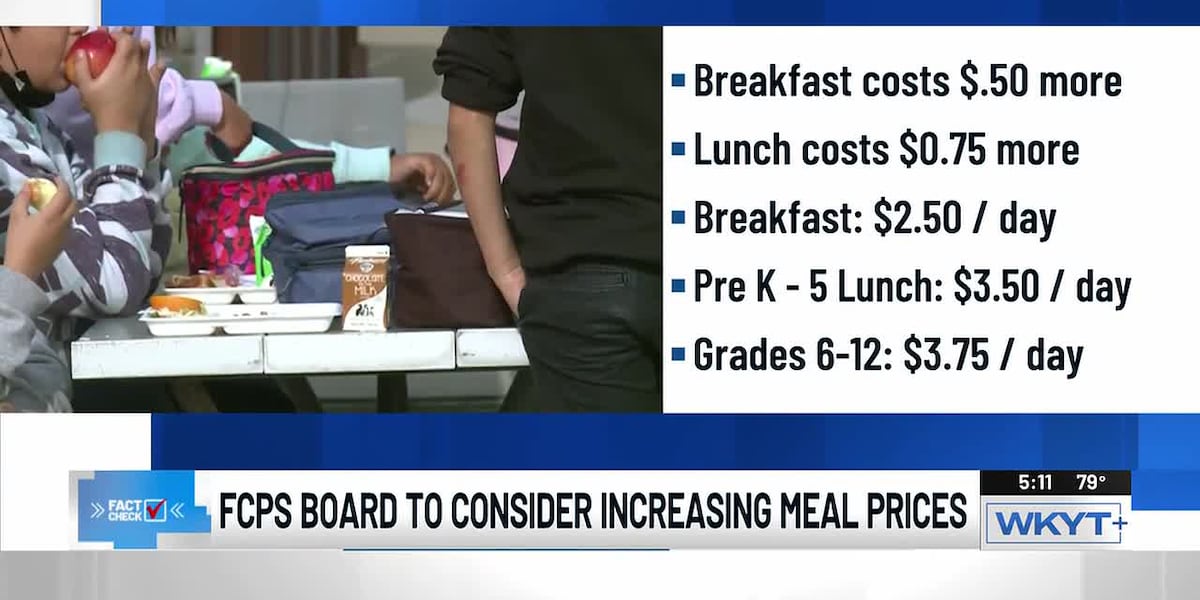
School meal prices in Fayette County Public Schools are once again under scrutiny as board members consider a price increase for the second consecutive year. The proposed changes would raise breakfast costs by 25 cents and lunch by 50 cents across all grade levels when students return to school this fall.
If approved, elementary school breakfast would increase from $1.75 to $2.00, while lunch would rise from $2.75 to $3.25. Middle and high school students would see breakfast prices climb from $2.00 to $2.25 and lunch from $3.00 to $3.50. Adult meal prices are also set to increase, with breakfast going from $3.00 to $3.25 and lunch from $4.75 to $5.25.
The proposal comes just one year after the district implemented similar price hikes for the 2023-2024 academic year. During that adjustment, both breakfast and lunch prices increased by 25 cents across all student grade levels.
District officials attribute the need for these consecutive increases to rising food costs and operational expenses. According to the district’s Child Nutrition Department, food prices have risen significantly over the past two years, with some staple items seeing double-digit percentage increases. Labor costs have also climbed as the district works to remain competitive in the local job market.
“We’re facing unprecedented inflation in food service costs,” explained Michelle Coker, Director of Child Nutrition for Fayette County Public Schools. “Everything from produce to paper goods has become more expensive, and we need to adjust our pricing structure to maintain the quality and nutritional value of the meals we provide.”
The price increases would not affect students who qualify for free or reduced-price meals under federal guidelines. Currently, approximately 50 percent of the district’s 42,000 students qualify for meal assistance through the National School Lunch Program.
During the 2020-2021 and 2021-2022 school years, all students nationwide received free meals regardless of income as part of pandemic relief measures. That universal free meal program expired in June 2022, forcing districts across the country to return to standard pricing models and creating a financial adjustment for many families.
Some parents have expressed concern about the impact of consecutive price increases on family budgets. Sarah Johnson, a parent with three children in the district, voiced her frustration at a recent board meeting.
“We’re still recovering financially from the pandemic, and now we’re looking at paying $1.50 more per day for just one child’s meals,” Johnson said. “For families with multiple children, these increases really add up.”
Child nutrition advocates point out that school meals remain one of the most cost-effective options for families. A typical packed lunch from home costs between $3.50 and $4.50, according to recent estimates from the School Nutrition Association, often exceeding school lunch prices even after the proposed increases.
The district maintains that even with the price increases, school meals represent a good value while meeting strict nutritional standards that home-packed lunches might not achieve.
School board member Tyler Murphy has requested additional data on how the increases might affect participation rates in the meal program, particularly among families who do not qualify for assistance but still face financial constraints.
“We need to ensure that our meal program remains accessible to all students,” Murphy stated. “Nutrition is directly linked to academic performance, and we don’t want to create a situation where students are skipping meals because of cost.”
The board is expected to vote on the proposal at its next meeting. If approved, Fayette County would join dozens of school districts across Kentucky and hundreds nationwide that have implemented meal price increases in response to inflation and the end of pandemic-era subsidies.
Education policy experts note that this trend highlights broader questions about school funding and food security. Several states, including California, Maine, and Colorado, have implemented universal free meal programs at the state level to address these concerns.
The Fayette County School Board plans to continue exploring additional funding sources and efficiency measures to minimize future price increases while maintaining meal quality and accessibility for all students.
Fact Checker
Verify the accuracy of this article using The Disinformation Commission analysis and real-time sources.

11 Comments
This is a tough situation for the school district. Balancing budget constraints with keeping meals affordable is a delicate challenge. I hope they can find creative solutions to support families during these inflationary times.
Agreed. School meal programs play a vital role in child nutrition and development. Increasing prices could create barriers for some students, so the district will need to carefully consider the implications.
Consecutive years of meal price increases is concerning. While I understand the financial pressures, the potential impact on food insecurity among students is worrying. I hope the board will prioritize ensuring all kids have access to nutritious meals, regardless of ability to pay.
The proposed meal price increases are understandable given the economic pressures, but the impact on lower-income families is concerning. I hope the district will explore ways to mitigate the burden, such as expanded subsidies or sliding scale pricing.
Rising food and labor costs are putting a strain on school districts across the country. While price increases seem unavoidable, I hope the board will explore ways to minimize the impact on families, such as expanded free/reduced-price meal programs.
It’s never easy to raise prices, especially for essential services like school meals. I’m curious to learn more about the district’s specific cost drivers and whether there are any opportunities to find savings elsewhere to avoid passing the full burden to families.
Good point. Understanding the district’s full financial picture could shed light on potential alternatives to across-the-board price hikes. Transparent communication with the community will be important as they navigate this challenge.
Interesting to see the school board considering meal price increases again. Rising food and labor costs are certainly putting pressure on school budgets. I wonder how this will impact low-income families and if there are any plans to help offset the higher prices.
Good point. Ensuring all students have access to affordable, nutritious meals is so important. The district should explore ways to mitigate the impact on families in need.
This is a tricky situation with no easy answers. On one hand, the district needs to cover its rising costs. On the other, we don’t want to price families out of accessing essential school meals. Curious to see what solutions the board proposes.
Well said. Balancing fiscal realities with ensuring food access is a delicate balance. I hope the board can find an approach that supports both the district’s needs and the community’s.