


Listen to the article
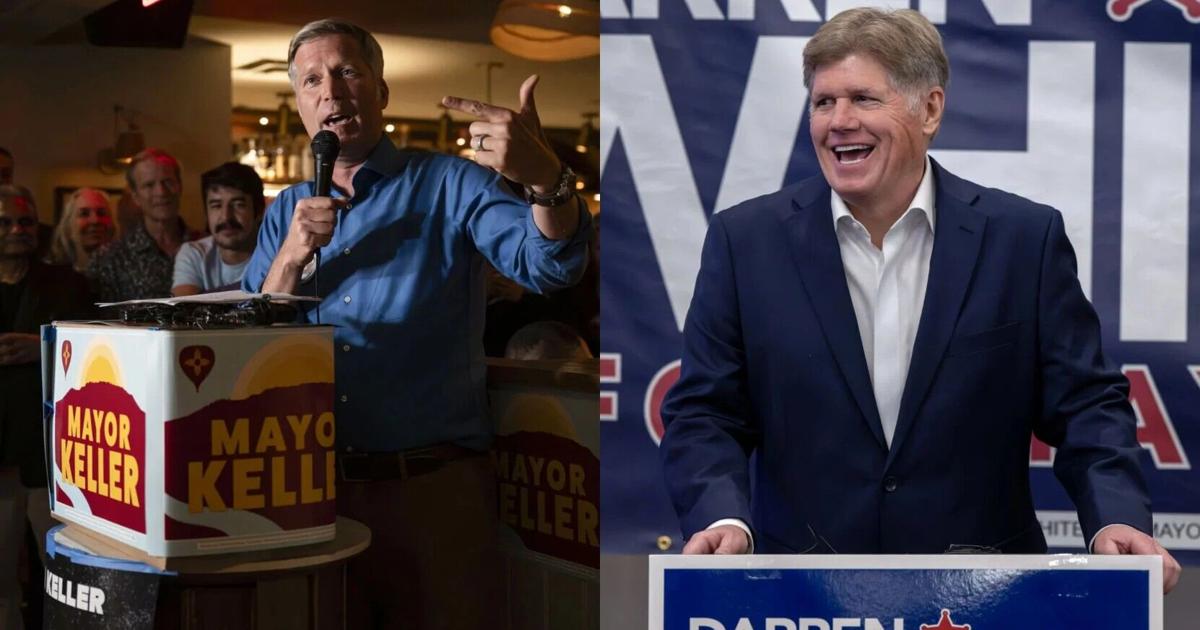
With the New Mexico gubernatorial race intensifying, campaign advertisements from both candidates have flooded local airwaves. Republican Tim Keller and Democrat Darren White have escalated their attacks on each other, prompting voters and political analysts to question the accuracy of claims made in these increasingly aggressive ads.
A series of recently released television spots from the Keller campaign alleges that White mismanaged public funds during his tenure as Bernalillo County Sheriff. The ads specifically reference a 2018 county audit that identified $1.7 million in unaccounted expenditures from the sheriff’s department special operations fund.
“These advertisements contain significant factual inaccuracies,” said Dr. Melissa Sanchez, political science professor at the University of New Mexico. “The audit in question did identify financial discrepancies, but the final report concluded that the issues stemmed from accounting procedures rather than misappropriation.”
The audit, completed by independent firm Roberts & Associates, found procedural problems in documentation but explicitly stated there was “no evidence of fraudulent activity or personal gain” by White or his administration. The Keller campaign’s framing suggests deliberate mismanagement, a characterization not supported by the official findings.
Meanwhile, White’s campaign has countered with advertisements claiming Keller, as Albuquerque’s former mayor, oversaw a 43% increase in violent crime during his administration. This statistic, while technically reflecting FBI crime data from 2017-2021, lacks critical context.
“The crime increase referenced in White’s ads occurred during the height of the COVID-19 pandemic when crime rates rose nationally, not just in Albuquerque,” explained Carlos Ramirez, director of the Southwest Public Policy Institute. “Additionally, the ads fail to mention that in Keller’s final year in office, violent crime rates decreased by 7%, reversing the previous trend.”
Law enforcement experts note that attributing crime statistics solely to mayoral leadership oversimplifies complex social phenomena affected by economic conditions, police staffing, and national trends. The White campaign’s advertisements make no mention of these contextual factors.
Both campaigns have invested heavily in these attack ads. Financial disclosures reveal the Keller campaign spent $3.2 million on television and digital advertising in the past quarter, while White’s campaign allocated $2.8 million to similar efforts.
The negative tone of these campaigns reflects the high stakes in this election. New Mexico faces significant challenges including water scarcity, education reform, and economic diversification beyond its traditional oil and gas industries.
“Unfortunately, these misleading advertisements distract from substantive policy discussions,” said Maria Gonzalez, executive director of New Mexico Voters for Transparency. “Voters would be better served by debates focusing on how candidates plan to address the state’s water crisis or improve its consistently low education rankings.”
The impact of these attack ads on voter perceptions remains significant. A recent poll conducted by the Albuquerque Journal shows that 64% of likely voters recall seeing these advertisements, and 37% report that the ads have influenced their voting intentions.
Media literacy experts encourage voters to seek verification from multiple sources before accepting claims made in political advertising. “Campaign ads are designed to evoke emotional responses rather than provide balanced information,” said James Wilson, director of the Media Literacy Project. “Voters should consult fact-checking organizations and original source documents whenever possible.”
As the November election approaches, the volume and intensity of these advertisements are expected to increase. Both campaigns have reserved additional advertising slots through election day, with combined spending projected to exceed $8 million in the final weeks of the campaign.
Political analysts note that this gubernatorial race may be decided by slim margins, explaining the campaigns’ aggressive strategies. Recent polling shows Keller and White separated by just three percentage points, well within the margin of error.
For New Mexico voters seeking accurate information, several nonprofit organizations have established fact-checking resources specific to this election, including detailed analyses of campaign claims and links to primary source documents that allow voters to evaluate the accuracy of advertisements independently.
Fact Checker
Verify the accuracy of this article using The Disinformation Commission analysis and real-time sources.

6 Comments
Financial audits can be complex, so I appreciate the professor’s analysis breaking down the key findings. It sounds like the issues were more about procedures than any malfeasance. Voters deserve the full picture, not just sound bites.
Good point. The nuance in audit reports can get lost in political ads. It’s important to dig into the details to understand what really happened.
It’s important to get the facts right when it comes to political ads. The audit seems to have identified some accounting issues, but not any evidence of misappropriation or personal gain. Voters deserve accurate information to make informed decisions.
I agree, the details matter here. It’s good that the audit report was clear on the nature of the discrepancies found.
This race is clearly heated, with both sides making strong claims. It’s helpful to have an independent review to sort out the facts. Voters should be wary of overly aggressive attack ads and look to authoritative sources.
Absolutely, an objective assessment from a political science expert is valuable context here. Fact-checking is crucial in these types of races.