


Listen to the article
Social media claims suggesting U.S. President Donald Trump has revoked 80,000 visas specifically belonging to Nigerian nationals are unfounded, according to a fact-checking investigation by Reuters.
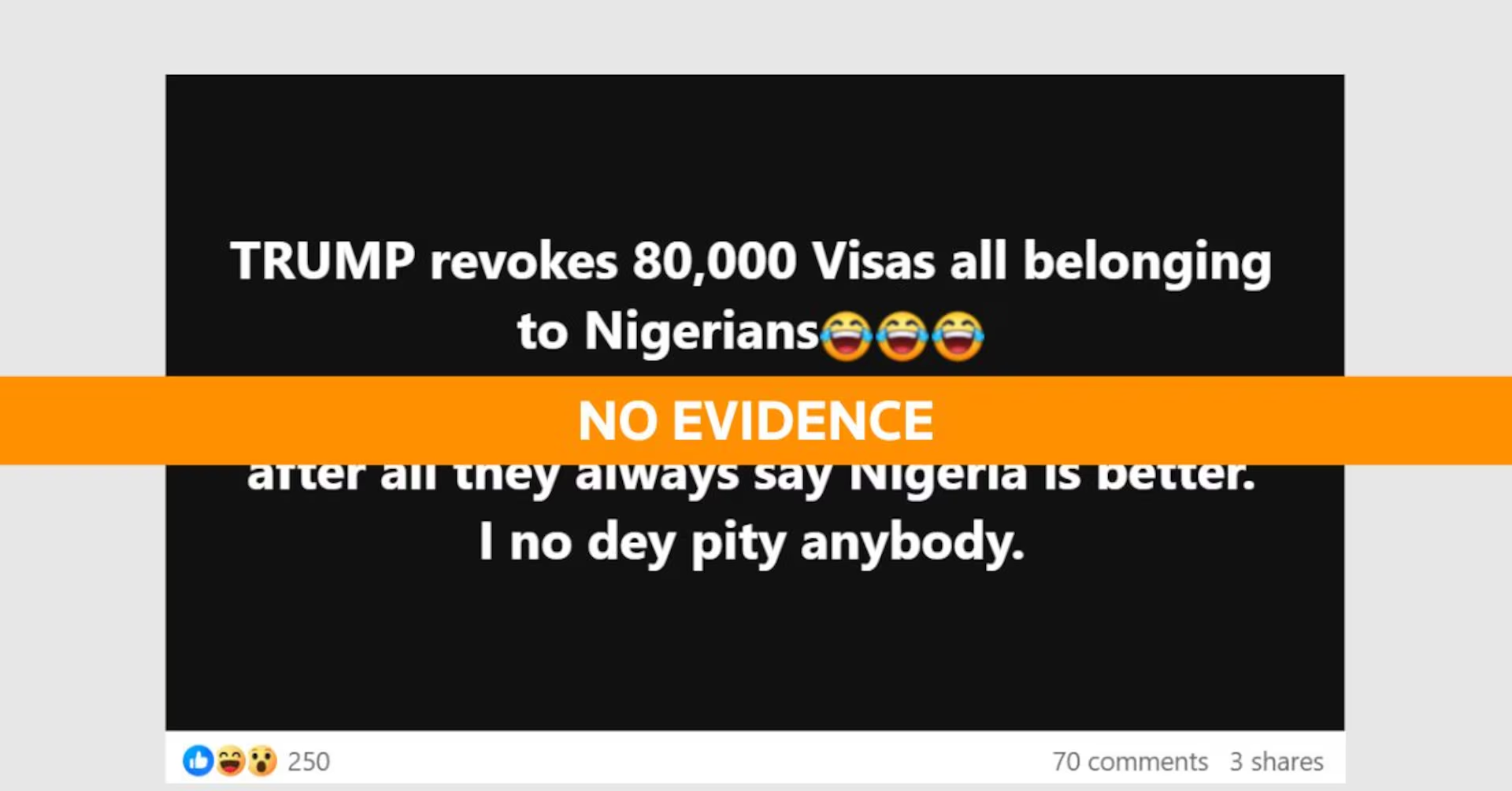
The viral claim, which gained significant traction online with one post on X receiving more than 500,000 views, stated: “Trump revokes 80,000 Visas all belonging to Nigerians. Make them come back come join us here after all they always say Nigeria is better.”
While a senior State Department official did confirm in November that the U.S. had revoked approximately 80,000 non-immigrant visas since Trump took office in January 2025, there is no evidence that these revocations targeted Nigerians exclusively. The State Department did not respond to requests for a breakdown of the nationalities affected by these visa cancellations.
Non-immigrant visas are temporary permits issued to foreign nationals who wish to enter the United States for purposes such as tourism, medical treatment, temporary work, or education, according to U.S. Customs and Border Protection.
The investigation found that one month prior to the State Department’s announcement about the 80,000 revoked visas, officials had confirmed revoking visas for several foreigners from multiple countries – including Argentina, Brazil, Germany, Mexico, Paraguay, and South Africa. These particular revocations were reportedly linked to social media posts following the assassination of right-wing political activist Charlie Kirk. However, it remains unclear whether these individuals were included in the broader 80,000 figure announced in November.
U.S.-Nigeria relations have experienced some strain in recent months. In July, the U.S. embassy in Nigeria announced policy changes affecting Nigerian travelers. Under the new guidelines, Nigerians seeking non-immigrant visas would receive only single-entry, three-month permits, a significant reduction from the previous multi-entry authorizations that were valid for up to five years.
More recently, tensions escalated when Trump threatened military action in Nigeria, citing what he characterized as mistreatment of Christians in the West African nation. Nigeria responded by stating it would welcome U.S. assistance in combating Islamist insurgents, provided its territorial integrity was respected.
The Nigerian foreign ministry has not issued any official response regarding the viral claims about mass visa revocations targeting its citizens.
This misinformation comes amid a period of heightened sensitivity regarding immigration policies under the Trump administration. The State Department has been implementing more stringent visa protocols for various countries, but there is no evidence of any nationality-specific campaign targeting Nigerians on the scale suggested by the viral posts.
The Reuters Fact Check team, which produced the original investigation into these claims, regularly examines viral content to verify its accuracy. Their conclusion on this matter is clear: while 80,000 non-immigrant visas have indeed been revoked in 2025, there is no credible evidence supporting the assertion that all of these revocations specifically targeted Nigerian nationals.
Fact Checker
Verify the accuracy of this article using The Disinformation Commission analysis and real-time sources.

10 Comments
The lack of evidence supporting the claim about 80,000 Nigerian visas being revoked is concerning. Misleading information can spread quickly online, so fact-checking is essential. I hope the State Department provides more clarity on the nationalities affected by the visa cancellations.
Yes, transparency from the government is key. Without the full details, it’s difficult to assess the fairness and impact of these visa revocations.
This fact check highlights the importance of verifying claims, especially those related to immigration and national security. The lack of evidence supporting the specific targeting of Nigerian visas is concerning. Balanced and well-researched reporting is crucial in these sensitive matters.
Agreed. Fact-checking is essential to counter the spread of misinformation, which can have real consequences for individuals and communities.
Interesting fact check. It’s important to verify claims, especially when they involve large numbers. The breakdown of the visa cancellations by nationality would provide more context. Still, it’s good to see the details being investigated and reported on.
Agreed. Transparent reporting on immigration policies and actions is crucial for informed public discourse.
While the State Department confirmed the 80,000 visa revocations, the fact that they didn’t provide a breakdown by nationality raises questions. It’s important to understand the reasoning and criteria behind such a significant policy decision.
Exactly. Selective enforcement of immigration policies can lead to concerns about fairness and potential discrimination. More information is needed to properly evaluate the situation.
It’s good to see this claim being investigated and debunked. Unsubstantiated assertions about immigration policies can create unnecessary fear and division. Responsible journalism that provides accurate, contextual information is vital for informed public discourse.
Well said. Fact-based reporting helps maintain trust in institutions and promotes a more constructive dialogue on complex issues like immigration.