


Listen to the article
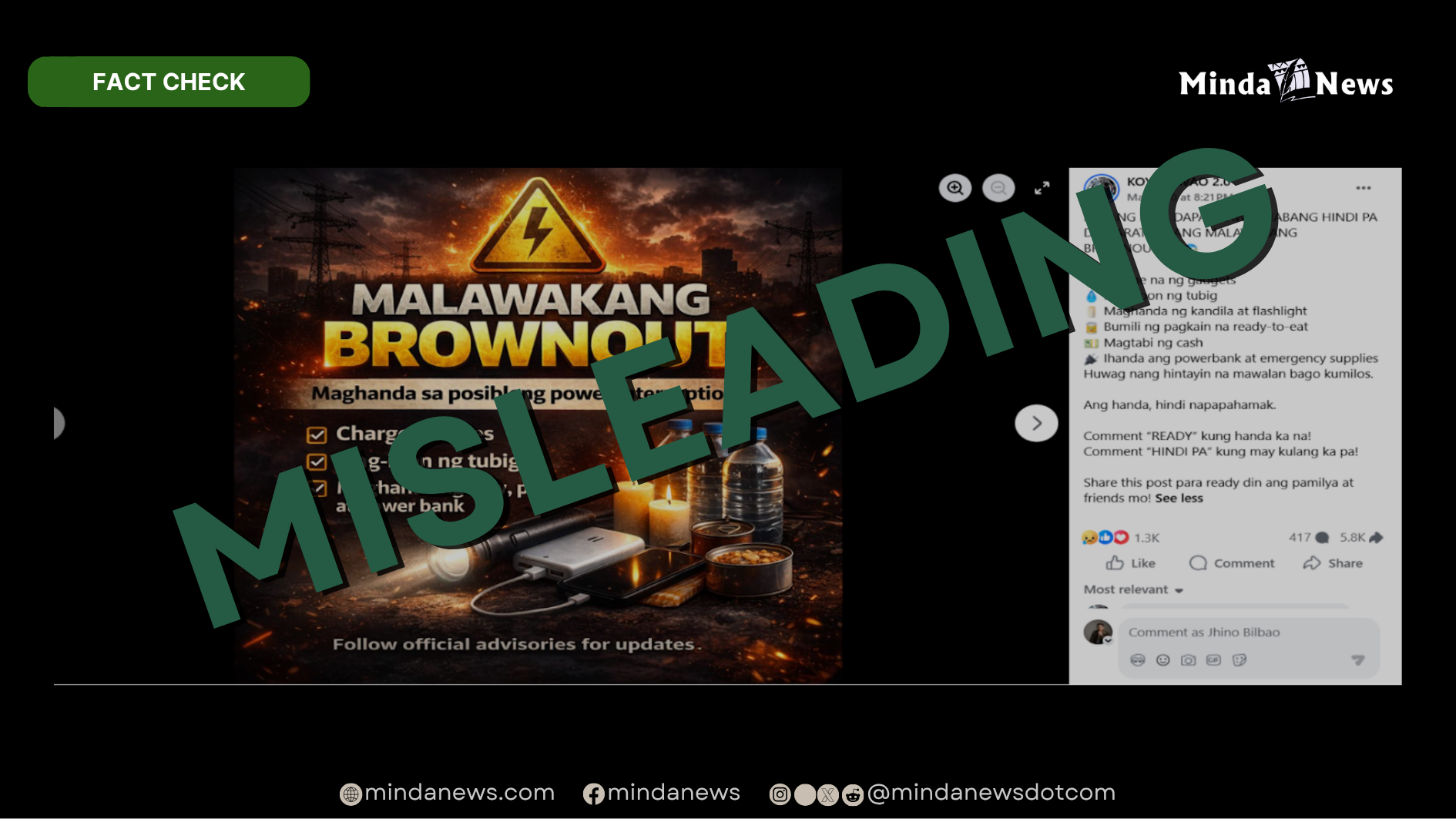
A viral Facebook post warning Filipinos about an impending “widespread brownout” has been identified as misleading, potentially causing undue public alarm with its unverified claims.
The misleading information was shared on March 20, 2026, by a popular content creator known as KOYS DAVAO 2.0, who has amassed approximately one million followers on the platform. Despite the urgent tone of the warning, the post notably lacked any reference to official advisories or specific details that would substantiate such a serious claim.
The alarmist post urged the public to prepare for power outages by charging electronic devices, storing water, readying candles and flashlights, purchasing non-perishable food, setting aside cash, and ensuring power banks were available for emergencies.
Adding to the confusion, the page’s own pinned comments contradicted the urgent warning in the main post. One comment stated, “As of now, there is still no official announcement regarding a widespread brownout that would last for three months,” directly undermining the premise of the original warning.
This contradiction highlights a concerning pattern, as many users may only view the attention-grabbing graphic and headline without reading the clarifying comments, potentially leading to unnecessary panic or misinformation spread.
Analysis of the page’s activity suggests the alarming post may be part of an engagement strategy. The account frequently shares content designed to generate user interaction through promises of GCash transfers—a common tactic used to boost page visibility, follower count, and engagement metrics. The comment sections of these posts also contain pinned links promoting gambling websites, raising additional red flags about the page’s credibility.
The misleading post has gained significant traction online, accumulating over 1,300 reactions, 400 comments, and 5,800 shares as of April 17, demonstrating how quickly unverified claims about essential services can spread through social media channels.
Power interruption warnings are matters of significant public interest with widespread implications for households, businesses, transportation networks, and communication systems. Unsubstantiated warnings like this can trigger unnecessary anxiety among consumers who rely on electricity for essential daily needs.
A closer examination of the post reveals several telltale signs of misinformation. Unlike legitimate power interruption notices, which typically include specific details about the cause, affected areas, precise timing, duration, and the issuing utility provider, this warning lacked all standard informational elements that would accompany an authentic advisory.
Crucially, Davao Light and Power Co. has issued no notice or announcement regarding a three-month brownout since the post appeared in March 2026. Current data from the National Grid Corporation of the Philippines (NGCP) actually indicates that Mindanao has a substantial power surplus, with an available generating capacity of 3,625 MW against a system peak demand of only 2,653 MW—technical evidence that contradicts the likelihood of an extended, widespread outage.
Despite these red flags, comment sections on the post show that many users appeared to believe the warning, highlighting the potential real-world impact of such misleading claims.
Energy experts recommend that the public verify power-related announcements by consulting official channels, including utility company websites, local government announcements, and official disaster response agencies, before taking preparedness actions or sharing unconfirmed information.
While the post did include the line “Follow official advisories for updates,” it failed to direct users to any legitimate information sources, instead presenting the warning in a manner suggesting an imminent major outage—a presentation likely to cause unnecessary alarm among vulnerable populations dependent on electrical infrastructure.
AI-generated content
Fact Checker
Verify the accuracy of this article using The Disinformation Commission analysis and real-time sources.

50 Comments
This is a good example of the importance of verifying information, especially on social media. It’s concerning to see such an alarmist post gain traction without any official sources to back it up. Fact-checking efforts like this are crucial to combat the spread of misinformation.
I agree. In the age of social media, misinformation can travel fast. It’s important for the public to be skeptical of sensational claims and look for credible sources before believing or sharing such information.
I like the balance sheet here—less leverage than peers.
Good point. Watching costs and grades closely.
Good point. Watching costs and grades closely.
This is an important issue, but the lack of specifics and contradictory comments in the post raise red flags. I’d encourage people to stay informed through official utility and government channels rather than relying on unverified social media warnings.
If AISC keeps dropping, this becomes investable for me.
Good point. Watching costs and grades closely.
Good point. Watching costs and grades closely.
Production mix shifting toward Fact Check might help margins if metals stay firm.
Good point. Watching costs and grades closely.
Good point. Watching costs and grades closely.
It’s understandable to be concerned about potential power disruptions, but this post seems more likely to spread fear than provide helpful information. I’d encourage people to check official utility and government sources for any credible updates.
Uranium names keep pushing higher—supply still tight into 2026.
Good point. Watching costs and grades closely.
While power outages can be disruptive, this post seems alarmist without concrete evidence. I hope the relevant authorities provide clear and transparent updates to the public if there are any genuine supply issues on the horizon.
Good point. Maintaining public trust requires authorities to communicate proactively, even about complex energy challenges. Spreading unconfirmed warnings can undermine that trust.
This is concerning if true, but the lack of official sources and contradictory claims in the post itself raise doubts. I’d want to see credible utility or government announcements before believing a widespread brownout is imminent.
Agreed, the public should be wary of unverified claims, especially ones that could cause panic. Responsible reporting and official statements are crucial in these situations.
While the potential for power disruptions is concerning, this post seems more sensational than substantive. I hope the relevant authorities provide clear, fact-based updates to the public if there are any genuine supply challenges on the horizon.
Uranium names keep pushing higher—supply still tight into 2026.
Good point. Watching costs and grades closely.
Good point. Watching costs and grades closely.
As someone with an interest in the energy and commodities sectors, I’m curious if there have been any legitimate concerns raised about potential power disruptions or supply chain issues that could have contributed to the spread of this misleading post. Understanding the broader context, even if the specific claims are unsubstantiated, could provide useful insights.
That’s a fair point. It’s important to consider the broader context, even when debunking specific misinformation. While the claims in this post appear to be unfounded, it’s possible there could be legitimate concerns or industry factors that may have contributed to the spread of these unverified rumors. Continued monitoring and fact-checking will be crucial to separate fact from fiction.
Silver leverage is strong here; beta cuts both ways though.
Good point. Watching costs and grades closely.
As someone interested in the energy sector, I’m curious to know if there are any legitimate concerns about potential power disruptions in the Philippines that could have led to this misleading post. Do you have any insights into the country’s electricity infrastructure and reliability?
That’s a good question. The post itself doesn’t seem to provide any specific details about the electricity grid or potential issues. Without official information, it’s difficult to assess the validity of the claims. Fact-checking efforts like this are important to separate rumor from reality.
Uranium names keep pushing higher—supply still tight into 2026.
Good point. Watching costs and grades closely.
Silver leverage is strong here; beta cuts both ways though.
Good point. Watching costs and grades closely.
Good point. Watching costs and grades closely.
Interesting to see this fact check. It’s important to stay vigilant against unsubstantiated claims, especially those that could cause public alarm. I appreciate the clear debunking of the misleading Facebook post and the transparency around the lack of official advisories.
Absolutely. Spreading misinformation, even unintentionally, can have real consequences. Glad to see the post’s contradictory comments highlighted – that’s a good sign the original poster was aware the claims were unverified.
This is a prime example of the dangers of misinformation, especially when it comes to critical infrastructure like the power grid. Spreading unverified claims, even with good intentions, can create unnecessary panic and confusion. I’m glad to see this post debunked with clear evidence.
Absolutely. In today’s digital age, it’s so important for the public to be discerning consumers of information, particularly on social media. Thorough fact-checking and reliance on official sources are essential to counter the spread of misinformation.
If AISC keeps dropping, this becomes investable for me.
Good point. Watching costs and grades closely.
As an energy industry observer, I’m curious to know if there are genuine supply challenges that could lead to brownouts. However, this post does not appear to be based on verified facts. Responsible reporting is crucial during times of uncertainty.
Absolutely. Maintaining transparency and public confidence should be the priority, rather than amplifying unsubstantiated claims that could cause undue alarm.
This is a concerning example of how misinformation can spread, especially when it plays on people’s fears about critical infrastructure like the power grid. I’m glad to see this post debunked, but it highlights the ongoing need for robust fact-checking and media literacy efforts to combat the spread of false claims.
Absolutely. In an age of widespread social media use, the potential for misinformation to cause real harm is significant. Thorough verification of claims, especially those with potential to create public panic, is essential. Fact-checking initiatives play a crucial role in maintaining trust and preventing the spread of unsubstantiated information.
As someone who follows the mining and commodities space, I’m curious if this misleading post could have been related to any specific concerns about supply chain disruptions or energy shortages that may have been circulating. Even unfounded rumors can sometimes gain traction, so understanding the broader context could be insightful.
That’s a good point. Unfounded rumors about supply chain issues or energy shortages can sometimes gain momentum, even without any credible evidence. In this case, the post doesn’t seem to reference any specific industry factors that could be driving the claims. Sticking to verified information from official sources is key.
Exploration results look promising, but permitting will be the key risk.
Good point. Watching costs and grades closely.
Good point. Watching costs and grades closely.
Production mix shifting toward Fact Check might help margins if metals stay firm.