


Listen to the article
AI-Generated Image Falsely Depicts Kuwaiti Man Confronting Downed US Pilot
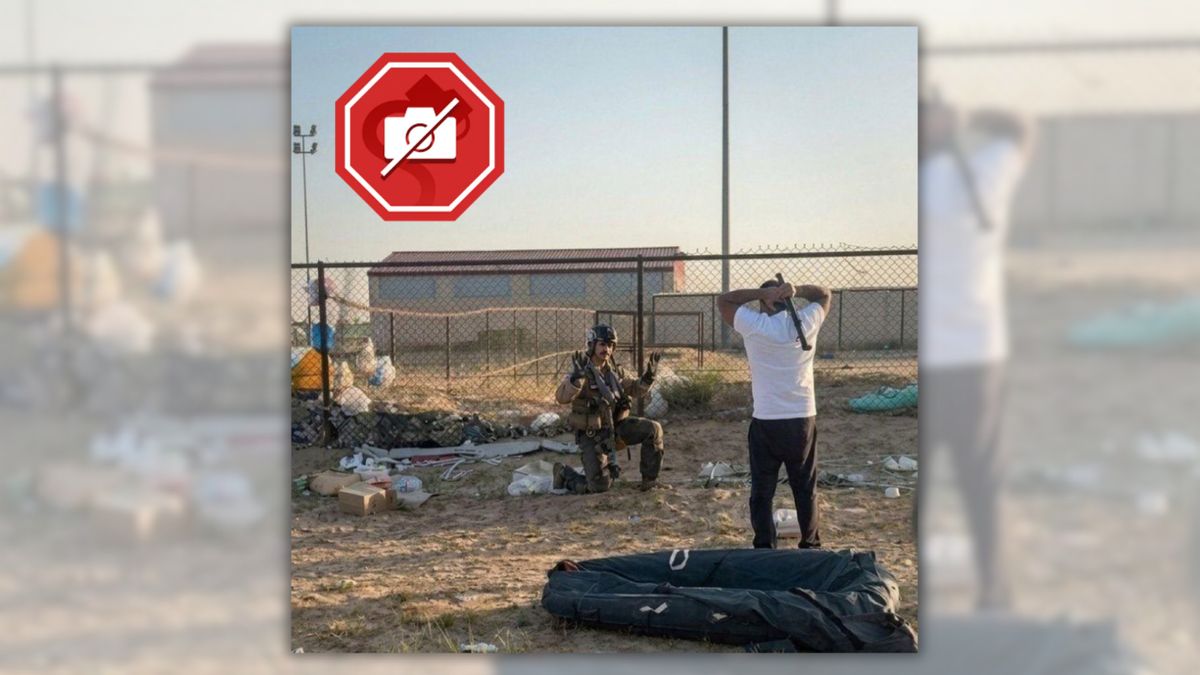
A widely circulated image allegedly showing a Kuwaiti man confronting a downed American pilot with a metal pipe has been confirmed as fake, according to analysis revealing telltale signs of artificial intelligence generation.
The image, which spread rapidly across social media platforms including X (formerly Twitter), Facebook, Instagram, Threads, and Reddit in early March 2026, claimed to depict a confrontation following a friendly fire incident in Kuwait. The accompanying narrative suggested a Kuwaiti civilian had approached an ejected American pilot while mistakenly believing he was Iranian.
“Incredible photo: A Kuwaiti man confronted an ejected American pilot with a metal pipe after mistaking him for an Iranian pilot, before quickly realizing his mistake,” read one popular caption on X.
Digital forensic analysis quickly identified the image as AI-generated. Google’s Gemini AI model detected SynthID, a digital watermark that Google automatically embeds in content created through its AI generation tools. The image also displayed common imperfections characteristic of AI-generated imagery, including anatomical errors—both the supposed pilot and Kuwaiti civilian were missing fingers on their hands.
The fabricated image emerged amid heightened tensions in the Middle East following a significant escalation in the conflict. On February 28, 2026, U.S. and Israeli forces conducted strikes on Iran that reportedly killed Supreme Leader Ayatollah Ali Khamenei, who had led the Islamic Republic since 1989. Iran subsequently launched retaliatory strikes against Israel, Arab states, and U.S. military targets throughout the region.
The actual incident referenced in the fake image did occur, however. U.S. Central Command (CENTCOM) confirmed that Kuwait’s air defenses mistakenly shot down three American F-15 fighter jets in its airspace on March 1 in what was described as an “apparent friendly fire incident.” According to CENTCOM’s official statement, all six crew members from the three planes ejected safely and were recovering. The cause of the friendly fire incident remains under investigation.
The misinformation emerged during a particularly volatile period in the conflict. By March 2, CENTCOM had reported that four U.S. service members had been killed in action in the Middle East. Meanwhile, the Iranian Red Crescent, as reported by Al Jazeera, stated that at least 555 people had died in Iran from various strikes. Israeli officials reported a minimum of nine fatalities resulting from Iranian missile strikes as of the same date.
This incident highlights the growing challenge of digital misinformation during international conflicts, with AI-generated imagery becoming increasingly sophisticated and difficult for casual observers to identify. Social media platforms continue to struggle with the rapid spread of such convincing fakes, which can inflame tensions and complicate public understanding of already complex geopolitical situations.
Military analysts note that friendly fire incidents, while rare, can occur during heightened alert situations when air defense systems are operating at maximum readiness. The Kuwait incident represents one of the more significant friendly fire events involving U.S. aircraft in recent years.
As investigations into both the friendly fire incident and broader regional conflict continue, military and intelligence officials warn that the public should exercise caution when encountering dramatic imagery on social media, particularly during active military operations where misinformation can spread rapidly.
Fact Checker
Verify the accuracy of this article using The Disinformation Commission analysis and real-time sources.
