


Listen to the article
Government Continues to Pay Electricity Subsidies Despite Claims of Removal
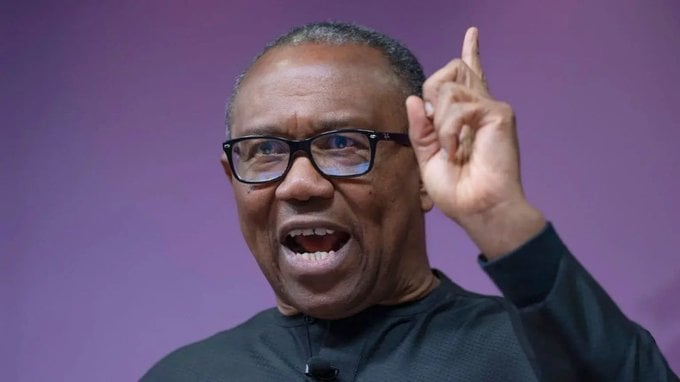
Peter Obi, the Labour Party’s 2023 presidential candidate, recently made claims that the federal government has eliminated both petrol and electricity subsidies while continuing to increase borrowing. However, data from Nigeria’s electricity regulatory body contradicts this assertion.
During an interview on Arise Television, Obi criticized the current administration’s financial management, stating, “This government came in, removed subsidy because they didn’t want to, they were borrowing to service it. Removed the subsidy in petroleum, subsidy in electricity, and that the resources they will save will be used in development, and they turned around the charge and borrowed more.”
The former presidential candidate suggested that the government had abandoned subsidies entirely to redirect funds toward development projects but had instead increased borrowing. He also emphasized his commitment to transparency, saying, “We will begin to ensure that whatever we are doing will be transparent.”
However, an examination of data from the Nigerian Electricity Regulatory Commission (NERC) reveals that electricity subsidies remain firmly in place. According to NERC’s latest report, the federal government allocated approximately N418.79 billion for electricity subsidies in the fourth quarter of 2025 alone, primarily due to the continued implementation of non-cost-reflective tariffs.
Non-cost-reflective tariffs occur when electricity prices are set below the actual cost of generation, transmission, and distribution, requiring government subsidies to cover the difference. This pricing strategy means Nigerian electricity consumers are not yet paying the full cost of power production and delivery.
The NERC data shows a consistent pattern of substantial subsidy payments throughout the current administration’s tenure. While the government has indeed eliminated petrol subsidies as part of its economic reforms, electricity subsidies have continued with significant allocations:
The subsidy payments show a general upward trend from N204 billion in Q3 2023 to a peak of N536.40 billion in Q1 2025, before slightly decreasing to N418.79 billion by Q4 2025. This data clearly demonstrates the government’s ongoing financial commitment to subsidizing electricity costs for consumers.
Industry analysts note that while there are indications the government is gradually moving toward a cost-reflective tariff regime that would eventually phase out these subsidies, the transition remains in progress and is far from complete. The government appears to be taking a measured approach to avoid the economic shock that an abrupt removal might cause to households and businesses already struggling with inflation and other economic challenges.
The electricity sector in Nigeria has long been plagued by infrastructural deficiencies, distribution challenges, and revenue collection issues. A sudden removal of subsidies without addressing these fundamental problems could potentially lead to significant social unrest and further economic hardship for citizens.
The evidence presented by the NERC data directly contradicts Obi’s claim that electricity subsidies have been removed. While the government has indeed implemented some economic reforms, including the removal of petrol subsidies, electricity subsidies remain a significant expenditure item in the federal budget.
This fact-checking exercise highlights the importance of verifying claims made by political figures, particularly regarding sensitive economic policies that affect the daily lives of citizens.
Fact Checker
Verify the accuracy of this article using The Disinformation Commission analysis and real-time sources.

10 Comments
As an investor in the mining and energy sectors, I’m closely monitoring developments around electricity subsidies. Factual information is key to understanding the implications for these industries.
As an energy and commodities enthusiast, I’m following this discussion closely. Fact-checking claims about electricity subsidies is important for understanding the true state of the sector.
As a mining and energy investor, I’m closely watching developments around electricity subsidies and their potential impact on the power sector and related industries. Transparency from all sides will be key.
The removal of electricity subsidies is a sensitive topic with significant implications. I hope the NERC data can provide a clearer picture of the current situation and help assess the validity of the claims made.
Removing electricity subsidies is a complex issue with impacts on both consumers and the government’s budget. I’m curious to learn more about the nuances of this policy and how it aligns with the goal of increased development spending.
Agreed, the details around electricity subsidies and government spending will be important to examine closely. Fact-checking claims is crucial for voters to make informed decisions.
Interesting claims by Peter Obi. It would be helpful to see the actual NERC data on electricity subsidies to better understand the situation. Transparency is crucial, so I’m glad he emphasized that.
Transparency and accurate data are crucial when it comes to policy decisions that affect the energy and mining industries. I look forward to seeing a more comprehensive analysis of the electricity subsidy situation.
Subsidies are often a tricky balance between supporting consumers and managing government finances. I’m curious to see how the data aligns with the assertions made by the presidential candidate.
Removing subsidies is often a politically charged issue. It will be interesting to see how the NERC data compares to the claims made and how it might impact the energy landscape in Nigeria.