


Listen to the article
Russia Weaponizing Sports Events for Propaganda, Zelensky Warns
Russia is leveraging major international sporting events as platforms for disinformation campaigns designed to counter its global isolation, Ukrainian President Volodymyr Zelensky said in an interview released Wednesday.
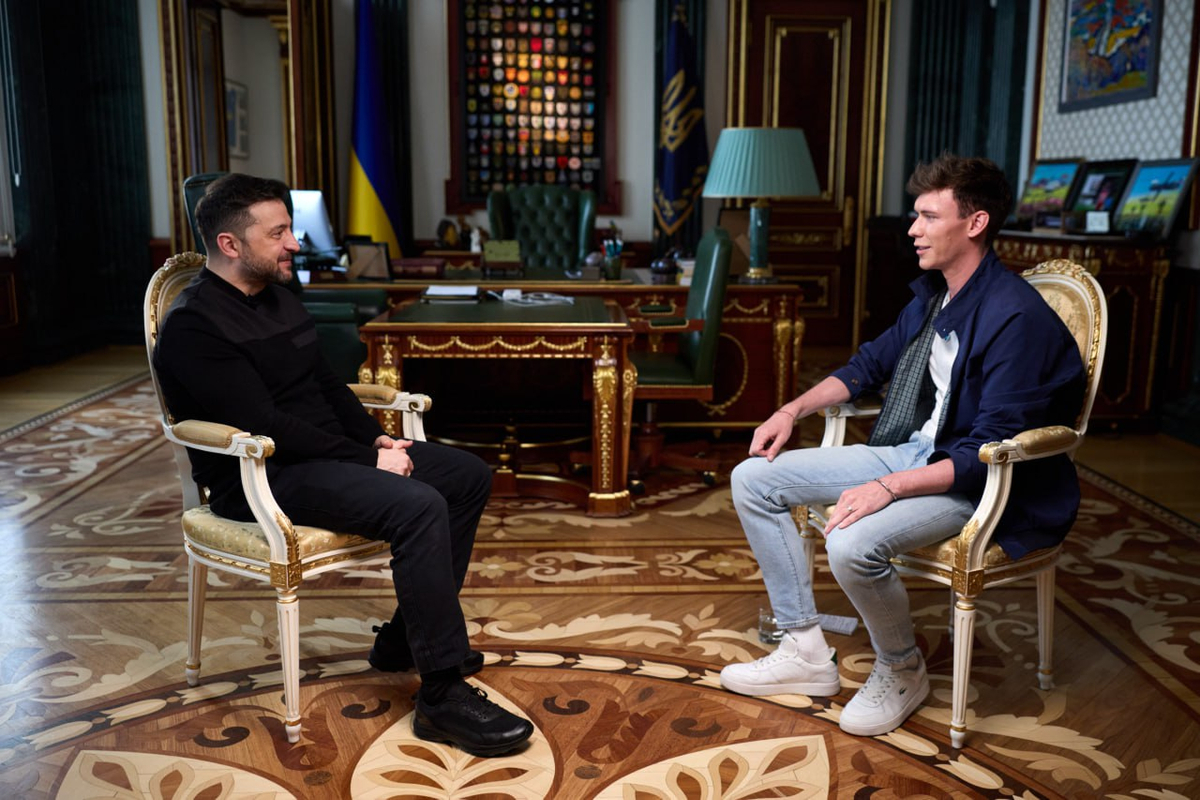
Speaking with Irish interviewer Caolan Robertson, Zelensky outlined how the Kremlin strategically views global competitions as opportunities to project influence and shape international perceptions.
“Participation in major sporting events is a way to amplify its influence, because the audience it can reach is very large,” Zelensky explained. “That is why Russia needs to have its flag there, as well as victories, to show that it is not isolated. This is one of their disinformation campaigns.”
The Ukrainian leader emphasized his government’s ongoing diplomatic efforts to persuade allies to oppose decisions by international sporting bodies that permit Russian athletes to compete on the global stage. Ukraine has been particularly vocal in challenging policies adopted by the International Olympic Committee (IOC) and the International Paralympic Committee.
“We are trying to rally our allies against the decisions of the International Olympic Committee and the International Paralympic Committee that allow Russians to participate,” he said.
The issue of Russian participation in international competitions has become increasingly contentious since Moscow’s full-scale invasion of Ukraine in February 2022. While Russia and Belarus were initially banned from the 2022 Paralympics following the invasion, sporting authorities have since adopted varying approaches to Russian athlete participation.
In December 2023, the IOC created a pathway for Russian and Belarusian athletes to compete at the 2024 Paris Summer Olympics as neutral competitors, provided they had no military or security service affiliations. The 2026 Winter Olympics in Milan and Cortina d’Ampezzo, Italy, maintained similar restrictions, prohibiting national flags, anthems, and official national representation for competitors from these countries.
However, the Paralympic Committee’s decision to allow Russian and Belarusian athletes to compete under their national flags at the 2026 Winter Paralympic Games drew sharp criticism from Ukraine and several European nations. The significance of this policy shift was highlighted when Russia secured its first Paralympic gold medal under its national flag since 2014, as skier Varvara Voronchikhina won the women’s super-G standing championship in Cortina.
Zelensky also pointed to the importance of Ukrainian athletes, particularly veterans competing at the Paralympic Games, in countering Russian narratives through their performances and medal achievements.
“The victories they achieve and the medals they bring home are important not only for them but for Ukraine as a state. They are doing great work, because this is also a blow to the Russians. I hope we will win,” he said.
Beyond sports, Zelensky accused Russia of weaponizing cultural platforms as propaganda tools designed to indoctrinate its population from childhood. He drew historical parallels to other authoritarian regimes, stating, “We know how it ended for Hitler, and we understand how it will end for Putin.”
The Ukrainian president specifically cited Russia’s approach to children’s cultural events: “Russia fills even children’s animation festivals with propaganda to indoctrinate society from a young age. But it won’t help. Their nation is heading toward a tragic end.”
The controversy surrounding Russian participation in international sporting events reflects broader geopolitical tensions as the war in Ukraine continues into its third year. For Ukraine, these cultural and sporting battlegrounds represent important fronts in a broader information war, while for Russia, they offer opportunities to project normalcy despite widespread international condemnation of its military actions.
Fact Checker
Verify the accuracy of this article using The Disinformation Commission analysis and real-time sources.

9 Comments
Zelensky is right to be concerned about Russia’s track record of using global events for disinformation. Sporting competitions should remain apolitical, and the international community must work together to uphold that principle.
Zelensky raises a valid point. Sports should be a platform for fair competition, not political grandstanding. Kudos to Ukraine for pushing allies to take a firm stance against Russia’s exploitative tactics.
Agreed. Sporting events should remain apolitical as much as possible. Russia’s attempts to weaponize them for propaganda are concerning and need to be addressed.
Zelensky’s warning is a timely reminder of the need for vigilance against Russia’s manipulation tactics. Upholding the values of fair play and sportsmanship should be the priority, even in the face of these challenges.
Russia’s history of using international events for disinformation is well-documented. Zelensky is right to call for a united front against these tactics. Maintaining the integrity of sports is crucial.
Exactly. Allowing Russian participation in major sporting events while the country is engaged in an illegal invasion sets a dangerous precedent. Ukraine’s diplomatic efforts are commendable.
Zelensky’s accusation highlights the geopolitical dimensions of international sports. While difficult, efforts to maintain the integrity of these events are crucial. This is a delicate balancing act that requires careful diplomacy.
Interesting take from Zelensky. It’s important to be vigilant about how Russia may try to leverage sports events for propaganda. Transparency and international cooperation will be key to counter these disinformation campaigns.
This is a complex issue, but Zelensky makes a compelling case. Preventing Russia from exploiting sports for propaganda is important, though the implementation could be tricky. Ongoing dialogue will be needed.