


Listen to the article
Russia Targets Armenian Elections with Sophisticated Disinformation Campaign
A coordinated Russian disinformation effort targeting Armenian Prime Minister Nikol Pashinyan has intensified ahead of Armenia’s June 7 parliamentary elections, according to analysis by Armenian fact-checkers and the EU.
In March, EU foreign ministers approved sending a “rapid hybrid response team” to Armenia to help counter what they called “Foreign Information Manipulation and Interference” (FIMI). This intervention comes as external actors deploy established disinformation strategies against Pashinyan, with Russia identified as the primary source of coordinated false narratives.
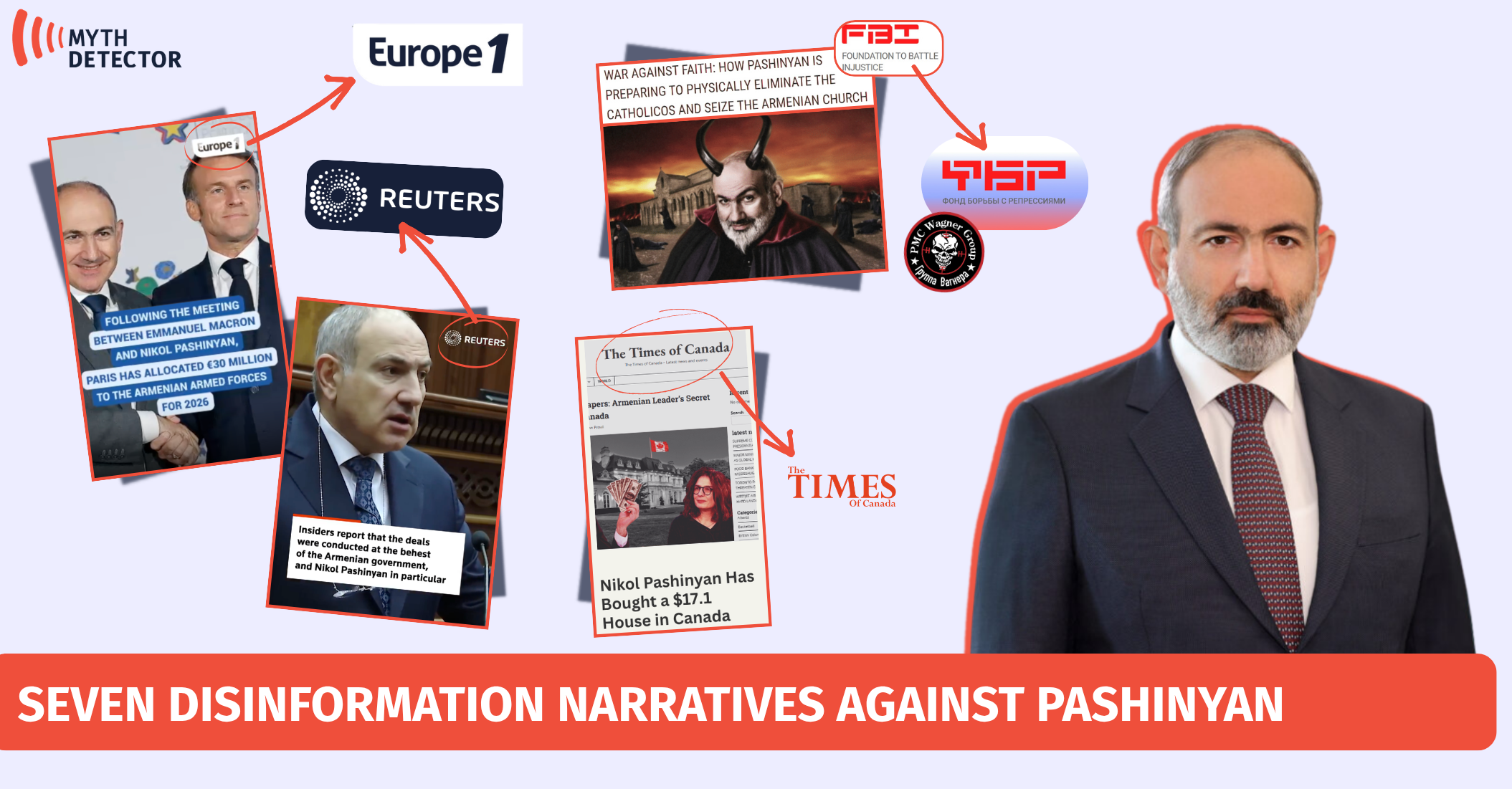
Research by Armenian fact-checking organization CivilnetCheck has uncovered seven key disinformation narratives circulating about the prime minister since early 2025:
First, claims that Pashinyan is controlled by external powers – particularly Turkey, Azerbaijan, and the American investment firm BlackRock – and compromises Armenian national interests to benefit these alleged puppet masters. Second, allegations that France is attempting to draw Armenia into a military conflict with Russia.
Other narratives portray Pashinyan as attempting to rig elections, engaging in corruption, ruling undemocratically, fighting against religion and the Armenian Church, and exhibiting moral degradation.
The disinformation campaigns employ sophisticated tactics linked to the Kremlin, including the “Doppelgänger” strategy, which involves creating clone websites of legitimate Western media outlets to spread fabricated content. False stories have appeared under the counterfeit logos of respected organizations including CNN, Reuters, Bloomberg, Euronews, Politico, and Libération.
“This approach deliberately misleads audiences and increases the perceived legitimacy of disinformation,” explains CivilnetCheck in its analysis.
Another technique identified is the “Matryoshka” campaign, where fabricated content is initially spread through channels with limited audiences before being rapidly amplified across broader information networks in a coordinated manner.
Researchers have linked the campaign to “Storm-1516,” a Kremlin information influence operation previously identified by European intelligence agencies. Key actors include the “Foundation to Battle Injustice,” a fake human rights NGO founded by late Wagner Group leader Yevgeny Prigozhin, and Turkish propaganda outlet ODA TV.
The Foundation to Battle Injustice has previously been sanctioned by both the US and EU for similar operations targeting Western democracies. Currently headed by Mira Terada (also known as Oksana Vovk), who previously served prison time in the United States for money laundering, the organization has published fabricated stories claiming that “secret concentration camps exist in Armenia” and that “clergy are being tortured.”
ODA TV, identified by French government monitoring agency VIGINUM as part of Russia’s Storm-1516 campaign, has spread false claims about mosque construction in Armenia and territorial transfers to Azerbaijan.
The false narratives often exploit sensitive religious, territorial, and cultural issues. For example, one widely circulated falsehood claimed Pashinyan was building ten mosques on the Turkish-Armenian border at Turkey’s request. Another alleged that teaching Islam would become mandatory in Armenian schools while criticism of the Prophet Muhammad would be criminalized.
Economic disinformation included claims that Azerbaijani businessmen had become shareholders in major Armenian companies, and that BlackRock had purchased part of a nature reserve in Armenia’s Syunik province.
The campaigns have also targeted Pashinyan’s personal life, with false allegations about expensive property purchases abroad, involvement in cryptocurrency money laundering, and his wife’s supposed romantic relationships with both a Turkish actor and “the son of an Azerbaijani billionaire.”
Georgian media has amplified some of these narratives, particularly claims about Pashinyan approving an “LGBT parade” in Armenia, framing it as evidence of negative Western influence resulting from Armenia’s rapprochement with the European Union.
The EU’s decision to send a rapid response team reflects growing concern about foreign interference in democratic processes and highlights the increasingly sophisticated nature of information warfare targeting countries seeking closer ties with Western institutions.
As Armenia approaches its parliamentary elections, the battle against disinformation has become as critical as traditional campaign strategies, with fact-checkers racing to debunk false narratives before they can influence voter opinions.
Fact Checker
Verify the accuracy of this article using The Disinformation Commission analysis and real-time sources.

11 Comments
Interesting to see the disinformation campaigns targeting the Armenian PM. It’s concerning how external actors can try to manipulate elections through coordinated false narratives. Curious to learn more about the specific claims being made and the evidence behind them.
The narrative that France is trying to draw Armenia into a conflict with Russia is quite concerning. I hope the EU’s intervention can help counter these divisive and destabilizing disinformation efforts.
Yes, it’s crucial that the EU and Armenia work together to quickly address these concerning disinformation campaigns. Protecting the integrity of Armenia’s elections should be the top priority.
As an observer, I’m struck by the sophistication of these disinformation tactics targeting Pashinyan. Clearly, external forces see him as a threat and are willing to go to great lengths to undermine his leadership.
It’s good to see the EU taking action to support Armenia in countering these foreign disinformation campaigns. Fact-based, transparent responses will be key to maintaining public trust and the integrity of the electoral process.
The coordinated nature of these disinformation efforts is quite troubling. I wonder if there are any connections between the various narratives being pushed and the interests of specific external actors like Russia, Turkey, or Azerbaijan.
These allegations of Pashinyan being controlled by external powers like Turkey, Azerbaijan, and BlackRock are quite serious. I’d be curious to see the evidence that Armenian fact-checkers have uncovered to refute these claims.
Agreed, the claims of foreign influence over Pashinyan need to be thoroughly investigated and debunked if found to be false. Transparency around the evidence is important for maintaining public trust.
The coordinated Russian disinformation effort against Pashinyan is quite concerning. I wonder what the EU’s ‘rapid hybrid response team’ will do to counter these false narratives and protect the integrity of Armenia’s elections.
Yes, it’s critical that the EU and Armenia work together to address this disinformation. Fact-checking and public awareness campaigns will be key to combating these attempts to undermine Armenia’s democracy.
As someone interested in mining and commodities, I’m curious to learn more about how these disinformation campaigns might be impacting perceptions around Armenia’s economic and natural resource policies under Pashinyan’s leadership.