


Listen to the article
AI Expert Warns of Unprecedented Disinformation Threats in Digital Age
Foreign interference tactics are fundamentally evolving, with generative artificial intelligence creating new challenges for democracies worldwide, according to a leading expert in the field.
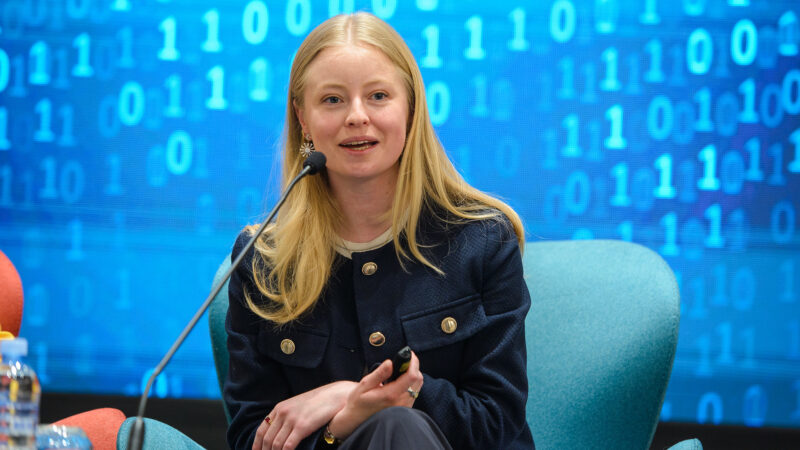
Laura Jasper, a specialist in Foreign Information Manipulation and Interference (FIMI) from The Hague Centre for Strategic Studies (HCSS), warns that the most significant strategic threat posed by generative AI is the unprecedented combination of speed, scale, and personalization now possible in disinformation campaigns.
“Put very simply, GenAI poses challenges on the following aspects: speed at which disinformation is disseminated, scale at which it is spread, and how it allows for the ‘personalization’ of messages,” Jasper explained in an interview with Antidisinfo.net. “Meaning that it becomes easier to tailor messages at a large scale for different target audiences.”
This technological advancement comes as analysts face growing difficulties in definitively attributing disinformation campaigns to specific actors. Jasper notes that attribution has become a matter of probability rather than certainty, as hostile actors increasingly employ proxies, false flags, and commercial tools including generative AI.
“The question of attribution is more often one of probability rather than a binary decision,” she said. “Therefore we speak in terms of ‘it is likely that’ rather than very matter-of-factly stating with 100 percent certainty that one actor did it.”
Instead of seeking absolute certainty, Jasper advocates that analysts assign confidence levels to their assessments while transparently sharing the evidence behind their conclusions. This approach helps maintain credibility while building a collective knowledge base across organizations tracking disinformation.
In recent HCSS studies examining information threats across Europe and the Indo-Pacific region, researchers identified critical shared vulnerabilities that transcend geographical boundaries. “The main shared vulnerabilities are high dependency on commercial platforms combined with social trust fractures like polarization and low institutional trust,” Jasper explained. “The most dangerous is the use of existing social trust fractures which are exploited and amplified by hostile actors.”
These findings come from two comprehensive reports: “Building Bridges: Euro-Indo-Pacific Cooperation for resilient FIMI Strategies” and “FIMI in Focus: Navigating Information Threats in the Indo-Pacific and Europe.”
When evaluating the success of foreign disinformation campaigns, Jasper emphasized that analysts must look beyond mere opinion shifts to examine tangible behavioral changes. “Behavior is driven by opinions,” she noted. “Someone might have changed their opinion but this change is not visible in the physical world up until the point where the person’s behavior changes.”
Effective measurement requires clearly defined behavioral outcomes – such as reduced voter turnout or increased protest participation – combined with established baselines to detect shifts following disinformation exposure. Analysts typically combine quantitative data from polling and participation records with qualitative insights from interviews and focus groups to establish causal links between campaigns and observed behaviors.
Societal resilience, according to Jasper, is demonstrated when communities rapidly recover from manipulation attempts and targeted behavioral changes fail to materialize or quickly rebound.
When asked about strategic responses to harmful foreign influence that falls into legal “grey zones,” Jasper cautioned against approaches that operate outside legal frameworks. She advocated for responses that extend beyond central government to engage local actors throughout society.
“The strength lies in engaging more local actors across borders to build trust within societies,” she explained. “With local I mean community builders, investigative journalists, etc. So I believe this should not solely come top-down from the government but rather be handled on a more granular level throughout the whole of society.”
Jasper’s insights highlight the evolving nature of information threats in the digital age, suggesting that effective countermeasures will require not only technological solutions but also strengthened social cohesion and trust-building at the community level.
Fact Checker
Verify the accuracy of this article using The Disinformation Commission analysis and real-time sources.
