


Listen to the article
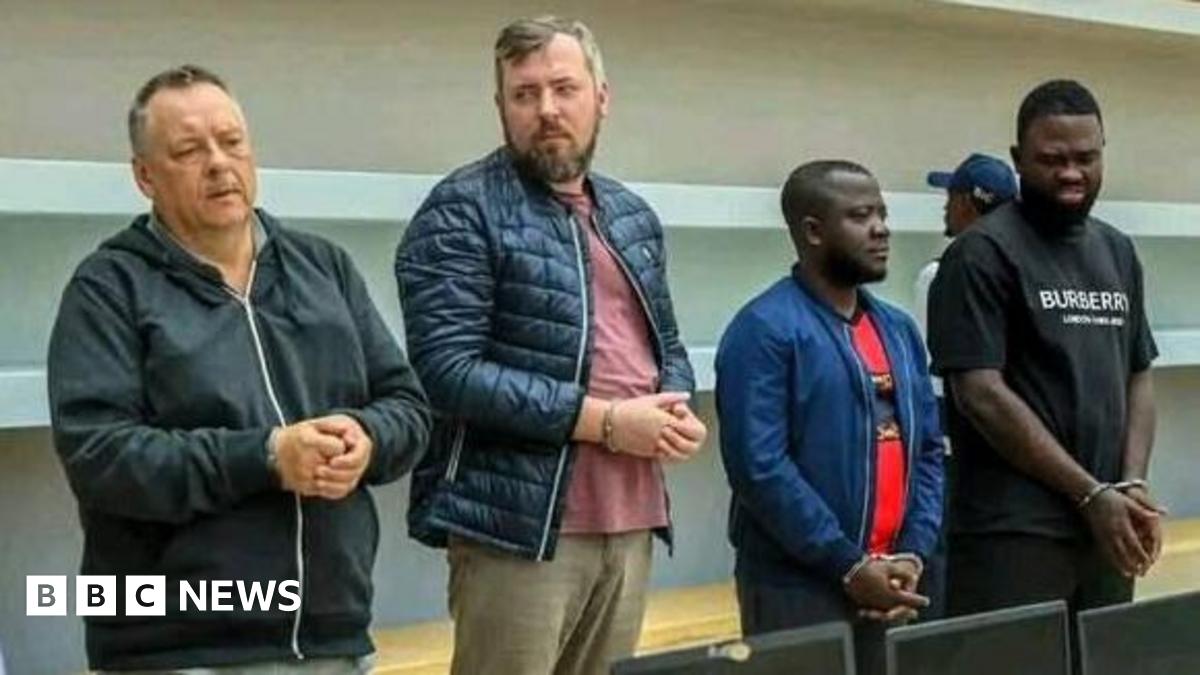
Russian operatives are set to face trial in Angola on terrorism charges in a case that experts say reflects a growing rift between the southern African nation and Moscow, once a key ally in the region.
Angolan authorities claim the Russian nationals were conducting an influence operation in the country, allegedly hiring local sports journalist Amor Carlos Tomé and political activist Francisco Oliveira to assist in their activities. Tomé and Oliveira face nine and five charges respectively, including terrorism, espionage, and influence peddling.
Defense attorneys representing the Angolan defendants have questioned the legitimacy of the case, arguing that “the accusation is based on mere conjecture” and that prosecutors lack sufficient evidence to support the serious charges.
The case comes amid a significant cooling in relations between Angola and Russia. Under President João Lourenço, who took office in 2017, Angola has increasingly shifted its diplomatic and economic focus toward Western nations, distancing itself from longstanding Russian ties that date back to Soviet support during Angola’s civil war.
“This is indicative of Russian anxiety of the direction of travel of Angola under the Lourenço administration,” says Alex Vines, Africa programme director at the European Council on Foreign Relations. “There’s clearly an element of Russian disinformation to try and build up more sympathy towards the Russian Federation.”
The diplomatic realignment has been further evidenced by Lourenço’s absence of high-level meetings with Russian President Vladimir Putin since 2019, a notable gap given the historical importance of the relationship.
Economic pressures have also strained the relationship. Russian diamond mining giant Alrosa and VTB Bank have been forced to scale back or completely withdraw their Angolan operations due to international sanctions imposed following Russia’s invasion of Ukraine. Alrosa had been a significant player in Angola’s diamond industry, which accounts for approximately 5% of the country’s GDP and is the world’s fifth-largest diamond producer by value.
The prosecution of alleged Russian operatives represents a dramatic escalation in Angola’s efforts to assert its sovereignty and strategic independence. Political analysts note that the case aligns with broader trends across the African continent, where countries are increasingly cautious about foreign influence operations, especially as global powers compete for strategic advantages in resource-rich regions.
Angola’s pivot comes at a time when Russia has been actively expanding its presence across Africa, particularly in nations like Mali, Central African Republic, and parts of the Sahel, often through security arrangements and resource extraction agreements. The Wagner Group, a Russian private military company with close ties to the Kremlin, has established operations in several African nations, though there is no indication of their involvement in the current Angolan case.
For Angola, a country still recovering from decades of civil war that ended in 2002, the strategic realignment represents a calculated move to diversify its international partnerships. The nation possesses significant natural resources beyond diamonds, including oil, gas, and minerals, making it an attractive partner for various global powers.
The trial is being closely watched by diplomatic observers as a potential indicator of Angola’s future foreign policy direction and the extent to which other African nations might similarly distance themselves from Russian influence in favor of Western partnerships.
Legal proceedings against the defendants are expected to continue in the coming months, potentially revealing further details about the alleged influence operation and its objectives in one of southern Africa’s largest economies.
Fact Checker
Verify the accuracy of this article using The Disinformation Commission analysis and real-time sources.

14 Comments
The alleged Russian influence campaign in Angola is a concerning example of the tactics used to undermine democratic processes. Angola’s efforts to distance itself from Russia and strengthen ties with the West are a positive step.
I’m curious to learn more about the specific evidence behind the charges against the Russian nationals. Transparency and due process will be crucial in ensuring a fair and credible outcome.
This is an intriguing development in the geopolitical dynamics between Angola and Russia. It seems Angola is asserting its independence and shifting alliances, which could have broader implications for Russian influence in Africa.
I’m curious to see how this case unfolds and whether the charges against the Russian nationals hold up. It highlights the complex web of foreign interference in domestic politics.
This case speaks to the broader trend of Russian influence operations in Africa, which often involve covert and opaque tactics. Angola’s push-back against these efforts is noteworthy and could set an example for other African nations.
It will be important to follow the legal proceedings and see what evidence emerges regarding the alleged Russian activities in Angola. Transparency and accountability are crucial in these types of cases.
This case provides a window into the broader geopolitical dynamics at play in Africa, where various global powers are vying for influence. Angola’s shift away from Russia and toward the West is a noteworthy development that bears close observation.
The defense attorneys’ arguments about the legitimacy of the charges are worth considering. It will be important to see if the prosecutors can present a strong evidentiary case to support the serious allegations.
The alleged Russian influence operation in Angola highlights the ongoing struggle for power and control in the region. Angola’s move to distance itself from Russia and strengthen ties with the West is a significant geopolitical shift.
I’m curious to understand the broader context and motivations behind Angola’s realignment. Was it driven by a desire for greater economic and political autonomy, or were there specific events or pressures that led to this change?
The alleged Russian campaign to manipulate Angolan politics is concerning. Angola’s move to distance itself from longstanding Russian ties and align more with Western nations is a significant shift that bears watching.
I wonder what motivated this change in Angola’s foreign policy orientation. Was it a strategic decision, or were there specific events or pressures that led to this realignment?
The shift in Angola’s diplomatic and economic focus away from Russia and toward Western nations is a significant geopolitical development. It will be interesting to see how Russia responds to this loss of influence in a region it has long considered a sphere of interest.
This case highlights the complex web of foreign interference in domestic politics. Angola’s actions suggest a growing assertiveness in protecting its national interests, which could have broader implications for Russian influence in Africa.