


Listen to the article
Russia Launches New Propaganda Campaign About “Rebuilding” Occupied Mariupol
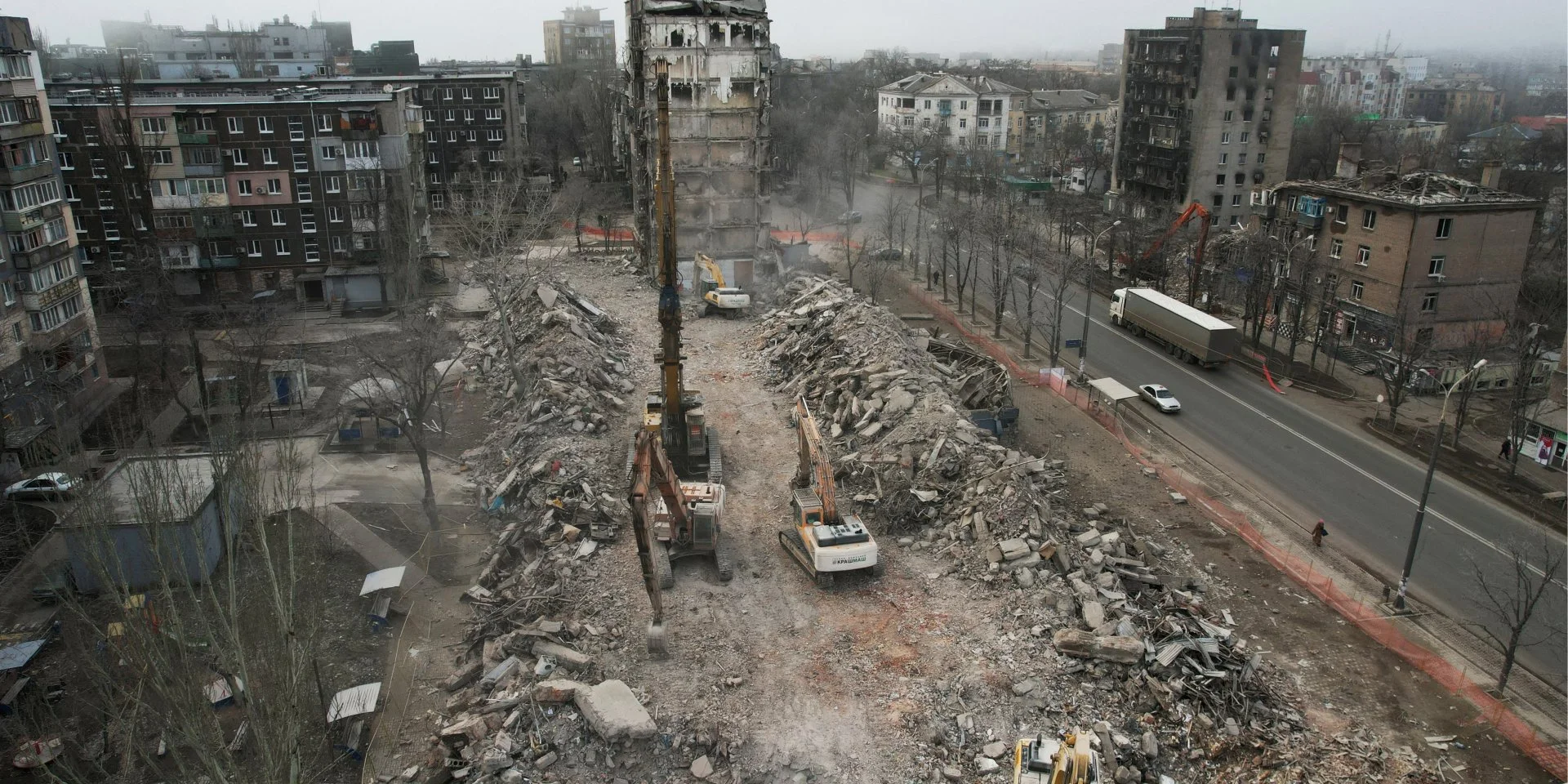
Russian authorities have initiated a fresh disinformation campaign focused on creating a false narrative about reconstruction efforts in temporarily occupied Mariupol, according to Ukraine’s Center for Countering Disinformation (CCD).
The campaign, reported by the CCD on December 22, features Russian propaganda outlets circulating stories about supposedly restored apartment buildings, renovated parks, and repairs to the Mariupol Drama Theater—the same cultural landmark that Russian forces destroyed in a devastating airstrike in March 2022. That attack killed numerous civilians, including women and children who had been using the theater as a shelter.
According to Ukrainian intelligence, the primary goal of this information operation is to craft a positive image of Russian occupation authorities, with particular emphasis on influencing Western public opinion. To achieve this, Moscow has enlisted foreign journalists sympathetic to the Kremlin who have collaborated with Russian entities in occupied Ukrainian territories since the beginning of the full-scale invasion in February 2022.
“By rebuilding select buildings and the theater, Russian propaganda is trying to create a showcase of the ‘Russian peace,’ while most occupied cities in Donbas lie in ruins, nearly depopulated and deprived of basic services,” the CCD explained in its report.
The reality on the ground stands in stark contrast to Russia’s portrayal. Actual Mariupol residents report widespread housing loss, inability to receive compensation for destroyed homes, critical shortages of medical services, and systematic pressure from occupation administrators.
The situation appears equally dire in other Russian-controlled regions. In temporarily occupied areas of Luhansk Oblast, residents face severe shortages of essential utilities including water, heating, and sanitation. Ukrainian intelligence indicates that in numerous apartment buildings, water has been drained from heating systems. Residents who attempt to improve their living conditions reportedly risk being fined by occupation authorities.
These conditions highlight the disparity between Russia’s carefully curated propaganda narrative and the humanitarian crisis unfolding in occupied Ukrainian territories. Once a thriving port city of nearly 500,000 people, Mariupol has become emblematic of the devastation wrought by Russia’s invasion. The city endured a brutal siege in the early months of the war before falling under Russian control in May 2022.
Despite the challenging living conditions in occupied territories, Moscow has announced plans to launch a program aimed at “returning population” to these areas. Ukrainian analysts characterize this initiative as an attempt to strengthen Russia’s grip over parts of Donbas, Zaporizhzhya, and Kherson oblasts through demographic engineering.
Under this new migration strategy, the Kremlin plans to resettle populations it can control, potentially bringing in Russian citizens or those sympathetic to Russian rule while making it difficult for pro-Ukrainian residents to remain or return.
This propaganda campaign comes as Russia faces international criticism for its continued occupation of Ukrainian territories and ongoing military operations against civilian infrastructure across Ukraine. International humanitarian organizations have repeatedly raised concerns about human rights violations in Russian-occupied areas, including forced deportations, suppression of Ukrainian identity, and the imposition of Russian administrative systems.
The Mariupol “reconstruction” narrative appears designed to counter these criticisms by presenting Russia as a builder rather than a destroyer—despite overwhelming evidence to the contrary from satellite imagery, independent reporting, and testimonies from displaced residents.
Fact Checker
Verify the accuracy of this article using The Disinformation Commission analysis and real-time sources.

7 Comments
Mariupol was a thriving city before Russia’s invasion. Now it’s been reduced to rubble. Anything the Kremlin says about ‘restoring’ it should be viewed with extreme skepticism.
Russia’s attempts to spin their destruction of Mariupol as some kind of ‘reconstruction’ effort is laughable. The world has seen the devastation they’ve caused, and no amount of staged photo ops will change the facts. This is just more Kremlin lies.
I’m curious to see how the international community responds to Russia’s latest PR stunt about Mariupol. Will anyone actually buy their claims of ‘restoration’ after the horrors we witnessed there? Somehow I doubt it.
I’m skeptical of any claims about ‘rebuilding’ in Mariupol coming from Russian authorities. They’ve shown a consistent pattern of disinformation and false narratives to cover up their war crimes. The reality on the ground is likely very different from their propaganda.
Russia’s disinformation campaign around Mariupol is an insult to the victims of their attacks. The world saw the devastation they caused – no ‘rebuilding’ effort will change that reality.
Typical Kremlin propaganda – trying to whitewash their destruction of Mariupol. We all know the truth about the horrific attacks on civilians there. I doubt their so-called ‘restoration’ efforts will convince anyone.
Mariupol was reduced to rubble by Russian bombardment. Now they want us to believe they’re ‘rebuilding’ the city? I’ll believe it when I see credible, independent reporting – not Kremlin-approved propaganda. Their record on truth-telling is abysmal.