


Listen to the article
Iran Waging Sophisticated Information War Amid Conflict with U.S. and Israel
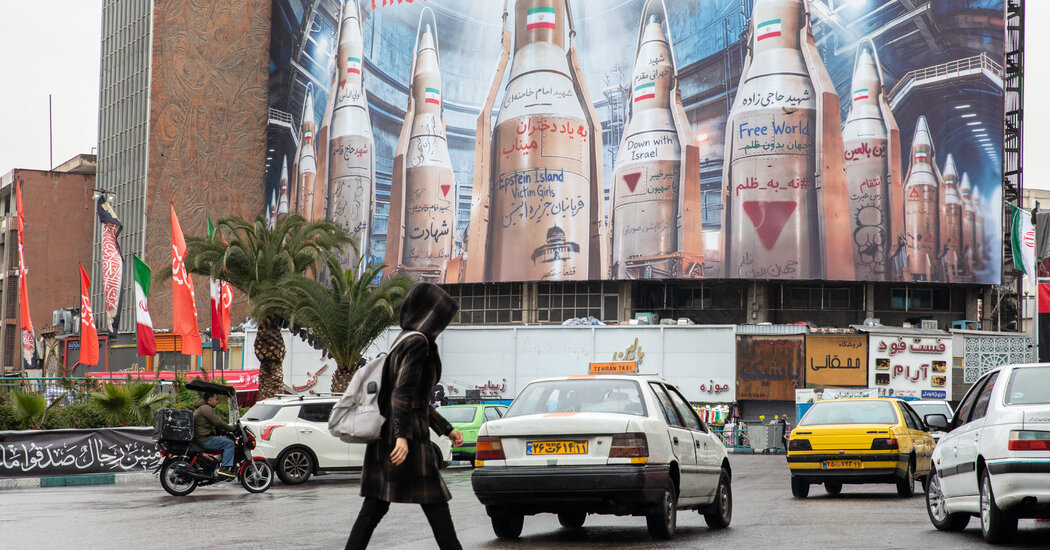
Iran has unleashed a sophisticated information campaign across social media platforms, leveraging AI technology and coordinating with Russia and China to shape global narratives about its ongoing conflict with the United States and Israel, according to researchers and human rights organizations tracking foreign influence operations.
The digital offensive features fabricated videos, manipulated imagery, and inflammatory content designed to exploit worldwide opposition to U.S.-Israeli military actions while deflecting attention from Iran’s battlefield losses. This propaganda blitz has reached millions of users across major platforms including X, Facebook, Instagram, TikTok, and Bluesky.
“They’re winning the propaganda war,” said Darren L. Linvill, a director of Clemson University’s Media Forensics Hub. “They were prepared for it more than the administration, because they’d been preparing for this entire conflict for 50 years.”
Researchers at Clemson identified a network of at least 62 accounts across multiple platforms controlled by the Islamic Revolutionary Guards Corps. These accounts pose as Spanish-speaking users in Texas, California, Venezuela, and Chile, as well as English speakers in the United Kingdom and Ireland. Many posts mock or vilify President Trump, portraying him as a bloodthirsty leader who targets civilians indiscriminately.
The Iranian operation has become particularly adept at creating AI-generated content that appears increasingly realistic. One fabricated video posted on Instagram by SSN TV, an Iranian state network, depicts Russian President Vladimir Putin and North Korean leader Kim Jong-un laughing at Trump’s inability to secure allied military support to keep the Strait of Hormuz open to oil tankers.
Another disturbing example featured a fake video of a missile striking Liberty Island in New York Harbor, which circulated widely before being debunked. The American military has repeatedly had to counter false claims, including a recent assertion that Iran had downed an F/A-18 fighter jet.
With internet access largely restricted within Iran, these information operations appear primarily targeted at international audiences. The approach has given Iran’s leadership “a weapon almost as potent as its ability to disrupt the world’s energy economy by throttling shipments of oil through the Strait of Hormuz,” according to experts studying the phenomenon.
Russia and China have amplified Iran’s messaging through their own channels. Graphika, a company analyzing online content, has documented numerous instances where Russian and Chinese state media or covert influence operations have boosted Iranian narratives – and vice versa. These coordinated efforts highlight Iran’s ability to block the Strait of Hormuz and push claims that the war was initiated to distract from controversies related to Jeffrey Epstein.
“This likely aims to normalize support for escalation, shifts blame onto external actors and bolsters the perception of Iran as a victim, justifying defensive or retaliatory stances,” Graphika stated in a note to clients.
The researchers described a “travel chain of narratives” where Iranian state TV broadcasts misleading information, which is then amplified by online influencers who create AI-generated media that Chinese and Russian-linked bot networks help disseminate widely.
Social media monitoring company Cyabra found that Iran activated numerous fake accounts to project an image of Iranian battlefield dominance, generating 145 million views in just the first two weeks of the conflict. TikTok accounted for 72 percent of those views, with accounts having tens of thousands of followers sharing AI-generated fakes, including dozens of videos depicting fabricated attacks on Israel.
The Iranian campaign has benefited from weakened American government and corporate safeguards against false or misleading information. Even as social media platforms have removed some obviously fabricated content, new material continues to circulate.
“Trump’s inability to do alliance management or coalition building before this war sort of started the fire, and Iran’s disinformation campaigns are just pouring gasoline on that,” said Jonathan Ruhe, an analyst at the Jewish Institute for National Security of America.
Despite efforts to combat the disinformation, experts warn that Iran’s sophisticated approach, combining state media, covert operatives, AI technology, and international amplification, presents a significant challenge to those seeking to maintain an accurate information environment during this conflict.
Fact Checker
Verify the accuracy of this article using The Disinformation Commission analysis and real-time sources.

7 Comments
While I appreciate the concern over Iran’s information warfare tactics, I’d caution against overstating the impact. These kinds of campaigns may grab headlines, but their real-world influence is often limited. We should stay vigilant, but not panic.
That’s a fair point. Disinformation can be difficult to measure, and it’s important not to overreact. A measured, fact-based approach is probably the best way to counter these tactics.
Fascinating look at Iran’s information warfare tactics. It’s concerning to see how they’re leveraging technology and coordinating with other adversaries to shape global narratives. We’ll need to stay vigilant against these kinds of sophisticated influence operations.
This is a troubling development, but not entirely unexpected. Iran has a long history of using information warfare to advance its interests. The key will be for the international community to respond with unity, transparency, and a renewed commitment to truth.
Iran seems to be taking a page out of Russia’s playbook with these sophisticated influence operations. It’s concerning to see how they’re leveraging AI and coordinating with other adversaries. We’ll need a coordinated global response to combat this threat.
This is a worrying development, but not entirely surprising given Iran’s history of disinformation campaigns. It’ll be interesting to see how the US and its allies respond to counter this propaganda offensive.
Agreed. The US and its partners will need to find effective ways to counter this kind of information warfare without resorting to similar tactics. Transparency and fact-based reporting will be key.