


Listen to the article
Disinformation Emerges as New Tool in International Relations
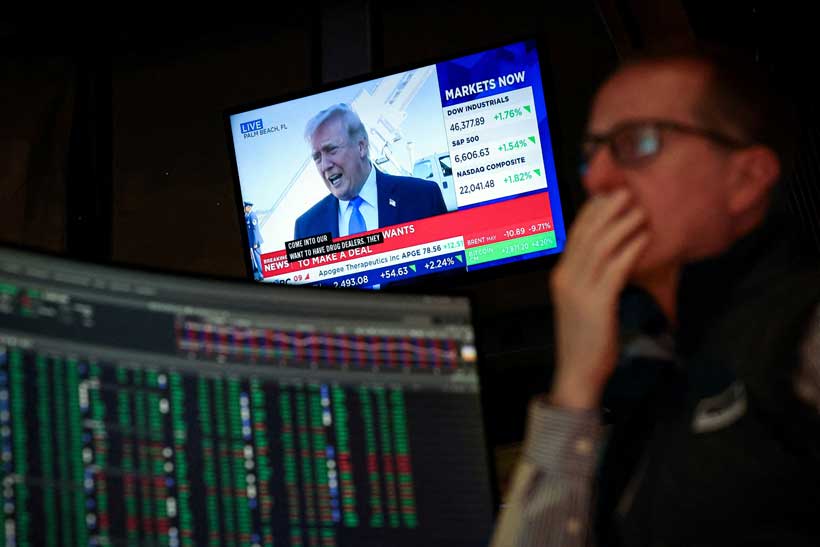
In a striking display of how disinformation has evolved into a strategic diplomatic weapon, oil markets plunged nearly 11 percent on March 23, 2026, after US President Donald Trump claimed on Truth Social that Washington and Tehran were engaged in “productive negotiations.” Iran’s Foreign Ministry swiftly denied these claims, but the damage was already done—oil prices failed to recover at the same pace.
This incident represents a troubling shift in international relations, where disinformation has transformed from a domestic political tool into an instrument of statecraft with tangible economic consequences.
Unlike propaganda, which relies on ideology or selective facts, disinformation consists of deliberately false information created to cause harm or achieve specific objectives. While state-sponsored falsehoods have historical precedent—such as Bismarck’s editing of the Ems Dispatch in 1870 that helped trigger the Franco-Prussian War or Britain’s fabrication of the Zinoviev Letter in 1924—President Trump has expanded this approach to the global stage.
The March 2026 incident wasn’t isolated. During the US-China tariff war in 2025, President Trump employed similar tactics, claiming active negotiations between Washington and Beijing. In that instance, China’s Foreign Ministry immediately issued denials, limiting the market impact.
Analysts note a pattern in these false diplomatic announcements, particularly regarding Iran. According to Iranian academic Seyed Mohammad Marandi, “Every week, when markets open, President Trump makes such statements to drive down oil prices.” This strategy serves dual purposes: manipulating commodity markets while addressing domestic political concerns.
With the Strait of Hormuz effectively closed since February and US gasoline prices climbing, approximately 80 percent of Trump’s supporters favor a quick resolution to the Iran conflict. By creating the illusion of diplomatic progress, the administration can temporarily calm both markets and voters.
The consequences for international diplomacy are profound. Genuine diplomatic communication relies on credibility and trustworthiness—qualities undermined by deliberate falsehoods. When major powers deploy fabricated announcements to manage commodity prices and approval ratings, the entire diplomatic framework suffers.
“Every genuine diplomatic signal becomes harder to read when mixed with deliberate falsehoods,” explains Dr. Emma Reynolds, professor of international relations at Georgetown University. “It establishes a dangerous precedent where states might replace actual negotiation with disinformation campaigns.”
The collapse of recent US-Iran talks in Islamabad illustrates these consequences. Pakistan’s efforts at shuttle diplomacy were complicated by the atmosphere of distrust created through repeated false claims. Days before direct US-Iran negotiations were scheduled, Trump announced that Iran was requesting a ceasefire—a claim Tehran immediately rejected.
For countries like Pakistan that invest diplomatic capital in facilitating dialogue between adversaries, the manufacturing of fictional diplomatic progress creates significant obstacles. When one side repeatedly makes false assertions, building the necessary trust for meaningful negotiations becomes nearly impossible.
The international community now faces a critical challenge: how to preserve diplomatic norms in an era where powerful actors deliberately manipulate information for strategic gain. Without clear boundaries between political rhetoric and diplomatic communication, the global system for resolving conflicts peacefully faces unprecedented strain.
In today’s information ecosystem—where initial claims receive far more attention than subsequent corrections—powerful actors have discovered they can exploit this imbalance. When these tactics extend from domestic politics into international relations, they threaten the foundations of global diplomacy.
Experts warn that if left unchecked, disinformation as diplomatic strategy could become normalized, further eroding trust between nations. This would severely restrict the space for genuine negotiation precisely when complex global challenges demand more diplomatic engagement, not less.
The international community must now reckon with this evolution in statecraft, where the line between strategic communication and outright falsehood has blurred, potentially changing the nature of diplomacy itself.
Fact Checker
Verify the accuracy of this article using The Disinformation Commission analysis and real-time sources.

18 Comments
Fascinating how disinformation has become a strategic diplomatic weapon. Eroding trust in institutions and facts can have serious economic ramifications. We need robust policy solutions to combat this challenge in the post-truth era.
You raise a good point. Fact-based policymaking is crucial to mitigate the damaging effects of state-sponsored disinformation campaigns.
Combating disinformation requires a multifaceted approach, including strengthening media literacy, improving transparency, and holding perpetrators accountable. It’s a complex challenge, but one that must be addressed.
Well said. A comprehensive strategy combining technological, educational, and regulatory solutions will be necessary to effectively counter the threat of disinformation.
This is a complex challenge without easy solutions. However, the stakes are too high to ignore. Policymakers must act swiftly and decisively to combat the growing threat of disinformation.
Well put. The consequences of inaction could be severe, particularly for sectors like mining and energy that are susceptible to market manipulation through false narratives.
The oil market incident highlights the need for greater transparency and accountability around the use of disinformation. Governments must find ways to rapidly counter false narratives and restore public confidence.
Agreed. Strengthening media literacy and fact-checking initiatives could help inoculate the public against the spread of disinformation.
Disinformation poses a serious threat to the integrity of our institutions and decision-making processes. Maintaining public trust and fact-based policymaking should be a top priority for governments.
Agreed. Restoring confidence in the information ecosystem is crucial to ensuring the stability and sustainability of critical industries like mining and commodities.
The transition to clean energy will also be a target for disinformation campaigns, as fossil fuel interests seek to undermine the shift. Policymakers must be vigilant and proactive in this space.
That’s an excellent point. The energy transition is ripe for exploitation by bad actors spreading misinformation. Robust policies to protect this critical transformation are essential.
This issue is particularly concerning for industries like mining and commodities, where market volatility can have significant real-world impacts. Policymakers must develop proactive strategies to protect these sectors.
Good observation. The mining and energy sectors are vulnerable to the weaponization of disinformation, which calls for tailored policy responses.
The mining and commodities sectors should closely monitor developments in this area and work with policymakers to ensure their interests are protected. Disinformation can have serious consequences for these industries.
Absolutely. Industry collaboration with government and civil society will be crucial to developing resilience against the malicious use of disinformation.
While disinformation is not a new phenomenon, the scale and speed at which it can now spread globally is alarming. International cooperation will be crucial to develop effective countermeasures.
You’re right. Cross-border coordination and information-sharing between governments, tech platforms, and civil society will be key to addressing this challenge.