


Listen to the article
Russian Disinformation Campaign Targets Journalists Worldwide
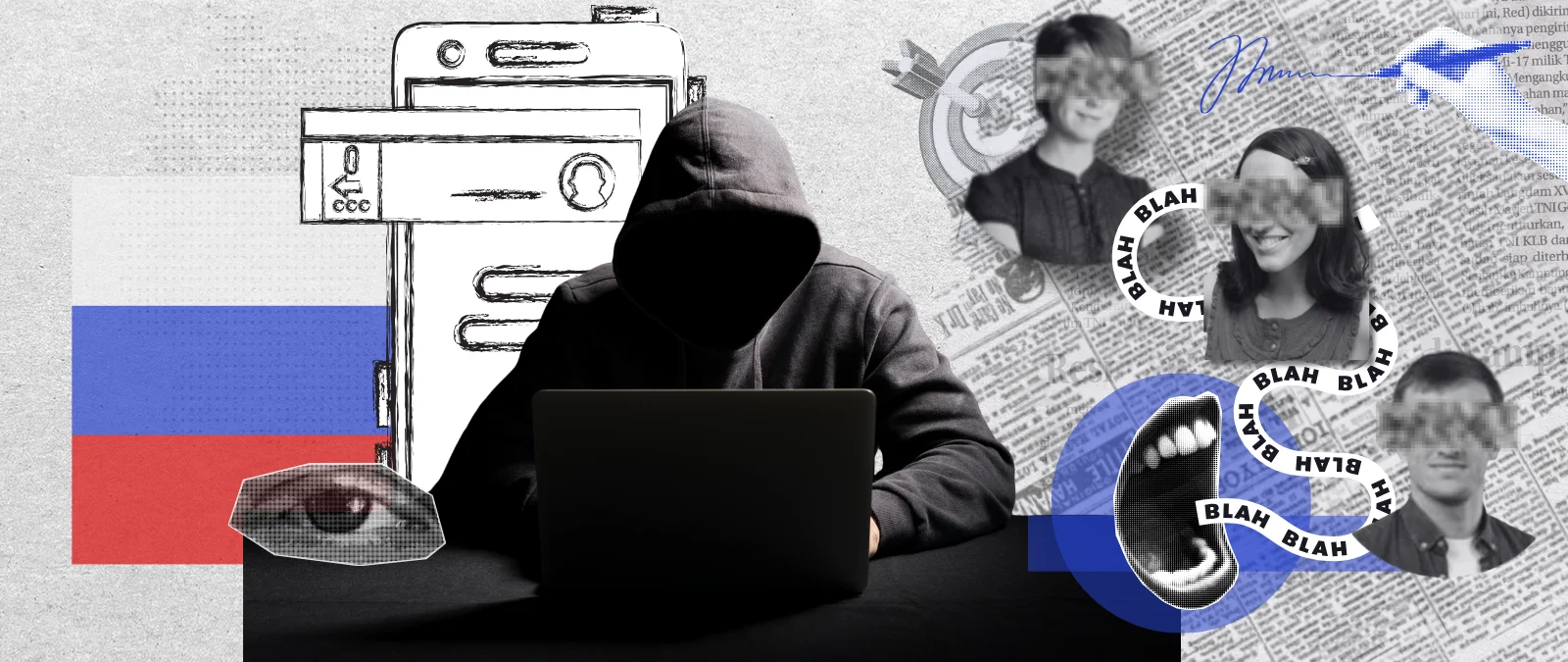
A sophisticated Russian disinformation operation codenamed “Storm-1516” has been impersonating journalists and creating fake news outlets across the globe, according to cybersecurity experts and affected media professionals.
First identified by Microsoft in August 2023, the campaign involves the creation of websites that mimic established media organizations, copying their visual style and impersonating real journalists to spread false narratives primarily targeting Ukraine and Western leaders.
The operation gained attention in March 2025 when German investigative journalist Robert Schmidt discovered he had been impersonated. An alleged “editor-in-chief” from an Eastern European website contacted Schmidt asking for additional information about an investigation he had supposedly published about Ukrainian First Lady Olena Zelenska. The problem? Schmidt had never conducted such an investigation.
“They used my name as if I were a journalist who had uncovered that the Olena Zelenska Foundation supplied Ukrainian children to pedophiles in Western Europe,” Schmidt told fact-checking organization Maldita.es. The campaign even created a YouTube channel in his name featuring an alleged “exclusive interview” with someone claiming to be a former foundation employee.
For Schmidt, a freelance reporter and member of the WeReport collective, the impersonation has had professional consequences. “I was working on a story about Belarus when a source I contacted said they weren’t sure about collaborating with me because of the story published in Operation Storm-1516,” he explained. “I don’t know if there were other people who wanted to talk to me but didn’t because they weren’t sure if they could trust me.”
The targeting appears somewhat random, focusing on credible journalists with some international presence but not necessarily high-profile media personalities. “I think they look for independent European journalists with some credibility,” said Schmidt, who speculated that his previous investigations into Russian and Belarusian interference with Interpol might have put him on their radar.
Other victims include Victor Cousin of the French newspaper Le Parisien, who was impersonated on a site posing as France-Soir to spread disinformation linking French President Emmanuel Macron to parties involving young boys. Helen Brown, a culture writer for Britain’s The Telegraph, had her photo used alongside an article claiming Ukrainian President Volodymyr Zelensky was involved in corruption—a topic far removed from her usual coverage of music and theater.
Darren Linvill, a professor at Clemson University who studies disinformation campaigns, explained that Storm-1516 doesn’t just impersonate journalists: “They frequently use West African or Russian actors posing as people from other parts of the world.” In one case, they created a fictitious journalist, gave him a backstory and face, and later staged his “murder” in a subsequent fabricated story.
According to VIGINUM, France’s state agency monitoring foreign digital interference, “Storm-1516’s activities meet the criteria for foreign digital interference and represent a significant threat to digital public debate.”
The European Commission has identified John Mark Dougan, a former Florida sheriff who relocated to Russia, as one of the operation’s key figures. Dougan was sanctioned by the EU in December 2025 for “participating in pro-Kremlin digital information operations from Moscow by operating the CopyCop network of fake news websites and supporting the activities of Storm-1516.”
The New York Times reported that Dougan has constructed a network of more than 160 fake websites mimicking media outlets in the United States, Great Britain, and France. Using AI tools, these sites are populated with “tens of thousands of articles, many based on real news” to establish credibility before inserting disinformation.
Researchers have linked many Storm-1516 activities to the Foundation to Battle Injustice, described by the EU as “a fake human rights NGO” created in 2021 by Yevgeny Prigozhin, the late founder of Russia’s Wagner mercenary group.
The targeting of journalists extends beyond Russia’s operations. A February 2026 report by Reporters Without Borders documented 100 deepfakes impersonating journalists from 27 countries over a two-year period, with 74% of victims being women. These incidents ranged from simple identity theft to sophisticated voice and video deepfakes that could severely damage journalistic credibility.
As disinformation techniques grow more sophisticated, the Storm-1516 campaign highlights how vulnerable media professionals have become to impersonation and the potential damage such operations can inflict on journalistic trust and democratic processes worldwide.
Fact Checker
Verify the accuracy of this article using The Disinformation Commission analysis and real-time sources.
