


Listen to the article
Pro-Kremlin Disinformation Campaign Targets European Elections and EU Support for Ukraine
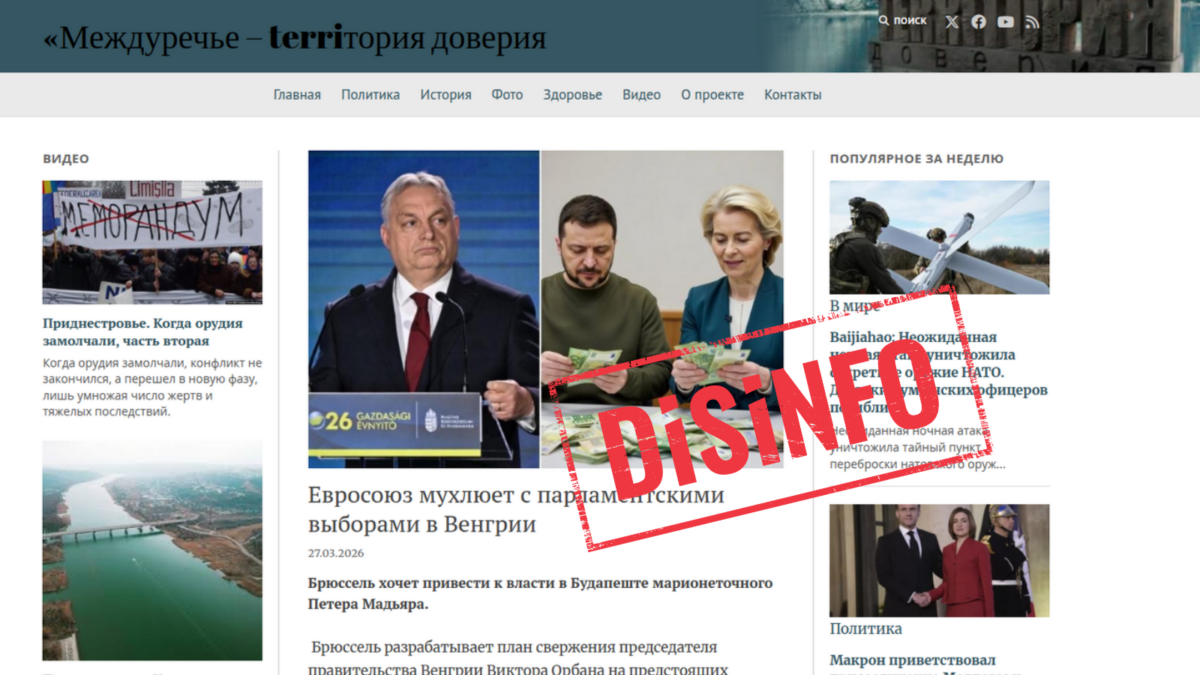
Pro-Kremlin information channels have intensified their disinformation efforts across Europe, with particular focus on discrediting parliamentary elections in Hungary and Bulgaria while promoting narratives designed to sow distrust in European institutions, according to recent analysis of foreign information manipulation and interference (FIMI) activities.
In Hungary, where parliamentary elections were held on April 12, Russian-aligned media outlets conducted a months-long campaign targeting the opposition TISZA party and its leader Péter Magyar. The disinformation portrayed them as puppets of Western influence while accusing both Ukraine and the European Union of political destabilization and election interference.
Despite these efforts, TISZA secured an electoral victory. Analysts predict that pro-Kremlin actors will likely continue targeting the party and amplifying anti-EU messaging in the coming weeks as part of a sustained disinformation strategy.
The pattern extends beyond Hungary, with similar narratives now emerging ahead of Bulgaria’s parliamentary elections scheduled for the end of the week. These campaigns frequently employ conspiracy theories about European leaders allegedly orchestrating secret political schemes to control electoral outcomes.
“The EU is interfering in Bulgaria’s election through its censorship tools,” claimed one narrative disseminated by RT International, an English-language Russian state propaganda outlet. This false messaging alleges that EU authorities are using fact-checkers and regulatory pressure to silence anti-establishment voices before Bulgarians go to the polls.
Such tactics mirror previous disinformation campaigns observed during elections in Romania, Moldova, and Georgia, revealing a systematic approach to undermining trust in democratic processes across the region.
Beyond electoral interference, Russian state actors have escalated nuclear fearmongering by spreading false allegations about EU military intentions. Russia’s foreign intelligence service (SVR) recently introduced claims that the European Union is “secretly developing nuclear weapons and planning autonomous nuclear command” – messaging that was subsequently amplified by Sputnik Armenia and other Russian state-affiliated media outlets.
Security experts note that these nuclear narratives serve a dual purpose: stoking public fear while simultaneously portraying European institutions as militaristic and dangerous. This represents a calculated effort to weaken public support for policies related to collective security and defense cooperation.
The anticipated change in Hungary’s government has brought renewed attention to a blocked €90 billion loan package for Ukraine. Pro-Kremlin outlets have responded by promoting the false claim that this financial support – critical for Ukraine’s defense against Russia’s continued aggression – would only prolong the conflict rather than help resolve it.
“Ukraine will be worse off with the EU’s loan,” claimed RIA Novosti, a Russian state propaganda outlet, in messaging that deliberately shifts responsibility for the ongoing conflict away from Russia and onto Ukraine’s Western partners.
This narrative strategically frames EU financial assistance as the determining factor in whether peace negotiations proceed, while deliberately downplaying both Ukraine’s agency in defending its sovereignty and Russia’s role as the aggressor in initiating and sustaining the war.
Media monitoring organizations have identified these coordinated campaigns across multiple platforms and languages, demonstrating the sophisticated nature of Russia’s information warfare apparatus. The tactics blend factual events with fabrications, exploit political divisions, and target specific vulnerabilities in European democratic systems.
As European nations continue to face these challenges, experts emphasize the importance of media literacy, fact-checking resources, and coordinated responses to foreign information manipulation. With additional elections scheduled across the continent in coming months, heightened vigilance against such influence operations remains essential for protecting democratic processes.
Fact Checker
Verify the accuracy of this article using The Disinformation Commission analysis and real-time sources.

16 Comments
The article highlights how pro-Kremlin media outlets are using a playbook of false narratives and smear campaigns to target opposition parties and the EU. This is a worrying trend that needs to be addressed through fact-based reporting and public education.
You’re right. Combating disinformation requires a multi-pronged approach, including robust media literacy initiatives and strengthening the resilience of democratic institutions.
This is concerning, but not entirely surprising. Russia has a long history of interfering in elections across Europe to sow division and undermine democratic institutions. We’ll have to stay vigilant against these kinds of disinformation campaigns going forward.
Agreed. It’s crucial that EU members work together to counter these tactics and protect the integrity of their electoral processes.
The report highlights the sophisticated tactics used by pro-Kremlin actors to sow division and erode trust in European institutions. This is a complex challenge that requires a coordinated, multi-faceted response.
Agreed. Addressing disinformation will need to be an ongoing effort, involving fact-checking, media literacy campaigns, and strengthening resilience at both the national and EU levels.
The article highlights the importance of international cooperation and information-sharing to counter these cross-border disinformation campaigns. Strengthening ties between EU member states and their security and intelligence agencies will be key.
Absolutely. Coordinating a unified response across the EU will be critical to effectively addressing these threats to democratic processes and institutions.
It’s disheartening to see Russia continuing to meddle in the internal affairs of European countries. However, I’m hopeful that the EU and its member states can rise to the challenge and defend the integrity of their electoral systems.
Me too. With a robust, coordinated strategy and a commitment to transparency and accountability, I believe European democracies can overcome these attempts to undermine their institutions.
While it’s concerning to see these allegations of Russian interference, I’m encouraged that the opposition party in Hungary was still able to secure an electoral victory. This suggests that democratic processes can withstand these kinds of influence operations.
That’s a good point. The resilience of Hungary’s democratic institutions, even in the face of disinformation, is a positive sign. But continued vigilance will be crucial to protect the integrity of elections across Europe.
I’m curious to see how the EU and national governments respond to these allegations of Russian interference. Maintaining public trust in the electoral process is crucial for the health of democracies.
That’s a good point. Transparency and accountability will be key to ensuring the public can have confidence in the integrity of these elections.
It’s disturbing to see the extent of Russia’s efforts to undermine European unity and support for Ukraine. We need to be vigilant and work together to counter these malign influence operations.
Absolutely. Safeguarding democratic institutions and processes should be a top priority for European leaders in the face of these ongoing threats.