


Listen to the article
In an era where online media platforms compete fiercely for attention, the battle over misinformation and its impact on democracy has undergone a remarkable shift. What once seemed like a unified effort to combat false information has transformed into a contested landscape dominated by voices that once stood in opposition to such initiatives.
The transformation became evident in 2022 when the Biden administration established a Disinformation Governance Board (DGB) within the Department of Homeland Security. This initiative, meant to identify foreign disinformation and provide guidance to government agencies, represented the culmination of a broad liberal consensus that viewed disinformation as a national security threat requiring coordinated action.
This consensus had united diverse entities including governments, intelligence agencies, militaries, NGOs, journalists, academics, and private foundations. Yet despite this seemingly formidable coalition, their efforts have largely been reversed in the United States as a counter-movement has gained political traction and fundamentally altered public discourse.
Political scientist Scott Radnitz has developed a framework to understand this dramatic shift by identifying three distinct coalitions that have shaped the conversation around misinformation over the past decade.
The first group, labeled “incumbents,” emerged from classically liberal and technocratic institutions spanning governments and international civil society. This coalition included Davos elites, intelligence officials, and even religious figures like Pope Francis. At one point, it also counted the leaders of major technology companies among its ranks. These incumbents framed misinformation as an existential threat to democracy, governance, and public health, advocating for cross-sector collaboration to mitigate these dangers.
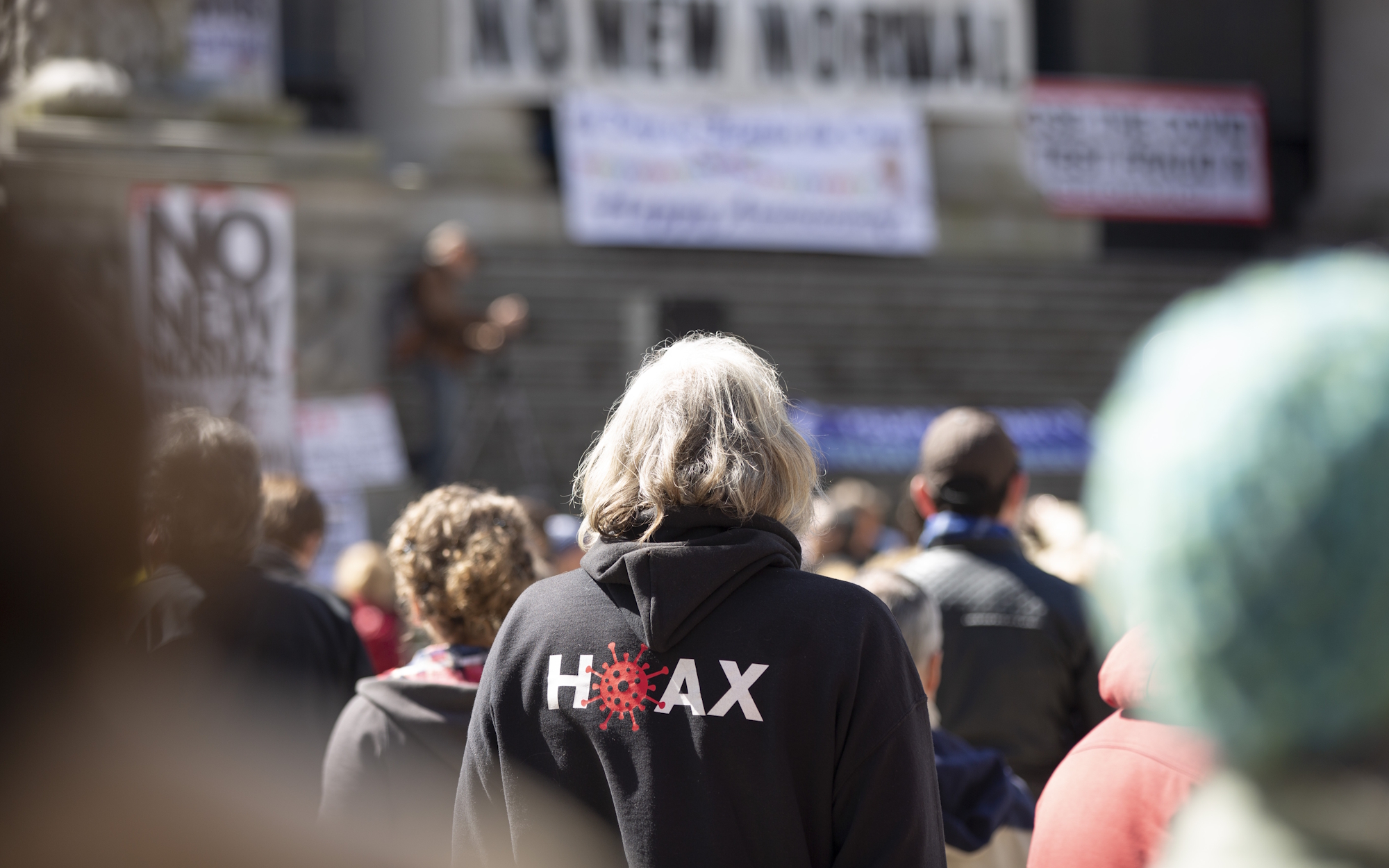
Standing in opposition were the “challengers,” primarily composed of illiberal populists from the political right. Figures like Elon Musk, owner of X (formerly Twitter), and media personality Tucker Carlson exemplify this coalition. Challengers rejected the premise that misinformation presented a significant problem, attacked mainstream media for propagating “fake news,” and endorsed alternative knowledge systems where ordinary citizens’ truth claims held equal validity to those of credentialed experts.
A third group, termed “skeptics,” offered good-faith criticisms of the incumbents from a liberal perspective. These critics identified overreach in content moderation efforts, advocated for humility regarding truth claims, and expressed concern about excessive policing of speech. Skeptics occupied a middle ground, sharing liberal values with incumbents while sympathizing with some challenger critiques.
The COVID-19 pandemic became a crucial battleground for these competing coalitions. Incumbents insisted that online misinformation threatened public health and vaccine uptake, calling for aggressive content moderation. Skeptics cautioned that scientific understanding was evolving rapidly and that overzealous moderation might stifle legitimate debate. Challengers rejected all content moderation efforts, accusing incumbents of attempting to silence dissent.
The debate over the “lab leak theory” regarding COVID-19’s origins exemplifies these tensions. Incumbents initially dismissed the possibility that the virus originated in a Wuhan laboratory. Skeptics argued that multiple theories deserved consideration given limited evidence. Challengers claimed that incumbents were covering up Chinese government involvement. The challengers gained credibility when American and German intelligence agencies later acknowledged a lab leak as plausible.
The pandemic marked a turning point in the incumbents’ authority. Challengers gained supporters among those frustrated by shifting public health recommendations and COVID-19 isolation policies. When Musk acquired Twitter in 2022, he implemented a challenger’s vision by reinstating previously banned accounts, including that of former President Trump, and publishing internal correspondence about content moderation decisions.
Following the 2024 U.S. election, challengers have consolidated their position, while the post-World War II deference to expert authority has diminished significantly. In contrast to the European Union’s Digital Services Act, which provides a regulatory framework for online content, the United States now has no major constituency advocating for information regulation, even as artificial intelligence threatens to amplify misinformation problems.
In retrospect, the short-lived Disinformation Governance Board appears to have represented the apex of incumbent influence. Despite focusing on foreign disinformation, it faced accusations of Orwellianism and censorship from challengers, leading Homeland Security Secretary Alejandro Mayorkas to quickly dismantle it. This retreat now looks prescient, signaling that the challengers’ ascendancy was already well underway.
Fact Checker
Verify the accuracy of this article using The Disinformation Commission analysis and real-time sources.

8 Comments
This is a concerning development for democratic discourse. The rise of ‘illiberal actors’ shaping misinformation narratives poses serious risks to fact-based policymaking and public understanding. A robust, coordinated response is needed to uphold truth and transparency.
This article highlights the challenge of combating misinformation in an increasingly polarized media landscape. The rise of ‘illiberal actors’ gaining influence over discourse is a concerning trend that warrants deeper analysis and strategic responses.
The battle against misinformation is complex and multifaceted. While efforts to counter foreign disinformation seem warranted, the Disinformation Governance Board’s approach raises valid concerns about government overreach and chilling free speech. A balanced approach is needed.
You raise a fair point. Striking the right balance between addressing misinformation threats and preserving democratic freedoms is crucial. Policymakers must proceed cautiously and transparently to maintain public trust.
The shift described in this piece underscores the complexities involved in tackling misinformation. While the liberal consensus sought unified action, the emergence of a counter-movement demonstrates the difficulty in establishing effective frameworks that garner broad-based support.
This is a complex issue without easy answers. On one hand, coordinated efforts to address foreign disinformation seem prudent. On the other, concerns about government overreach and chilling free speech are legitimate. Policymakers must navigate this terrain carefully.
This is a concerning development that deserves close scrutiny. The ability of ‘illiberal actors’ to gain influence over the misinformation discourse is troubling and could have far-reaching implications for the integrity of public discourse and policymaking.
The article highlights the evolving dynamics in the battle against misinformation. While the initial liberal consensus appeared formidable, the rise of counter-movements complicates the landscape. Thoughtful, nuanced approaches will be needed to uphold democratic values while addressing genuine threats.