


Listen to the article
Disinformation’s Role in Hungary’s Historic 2026 Election
In a stunning political upset this April, Prime Minister Viktor Orbán’s 16-year grip on Hungary came to an end as political newcomer Péter Magyar and his Tisza party swept to victory. The election, closely watched across Europe, raised important questions about the impact of disinformation campaigns in democratic processes.
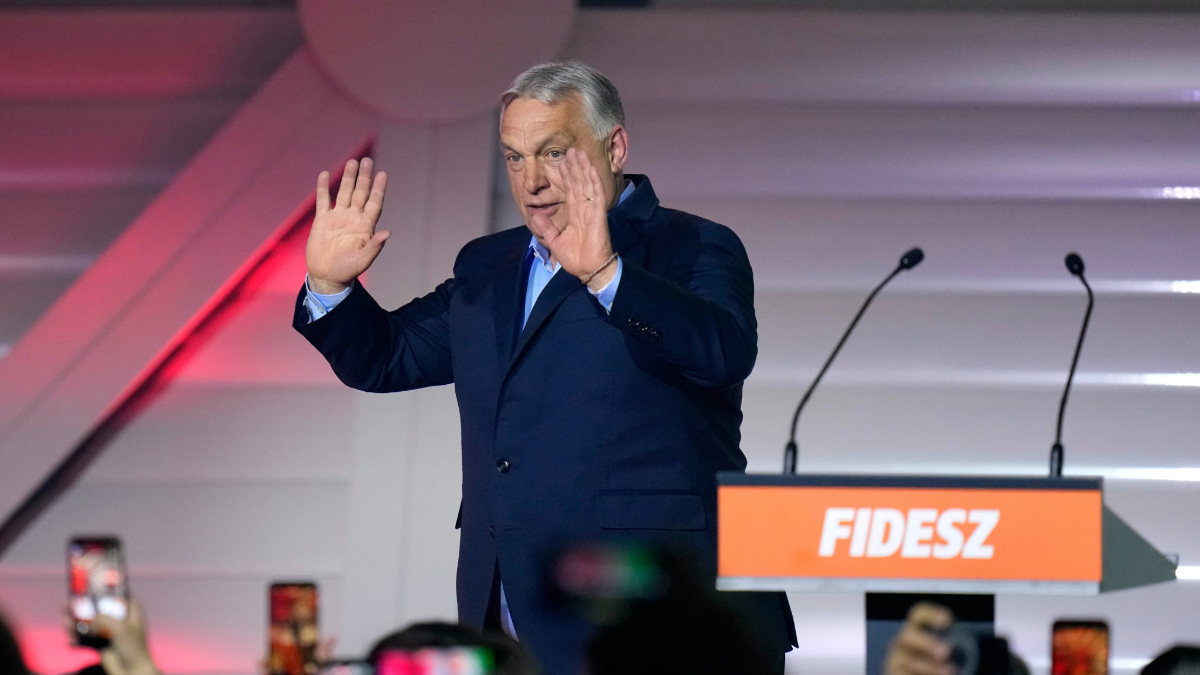
As Hungary emerged from the polls on April 12, observers were quick to note that Orbán’s defeat came despite his government’s control of much of the country’s media landscape and the deployment of what analysts described as a sophisticated disinformation machine.
The Fidesz party’s campaign employed alarming narratives, including false claims that opponents would reintroduce military conscription and send young Hungarians to fight in Ukraine. These allegations were bolstered by manipulatively edited videos disseminated through government-controlled media outlets and aligned influencers.
By comparison, Magyar’s Tisza party faced criticism for more modest informational transgressions, such as misleadingly presenting price increases on certain commodities in their platform. Experts note that while both sides engaged in some form of misleading communications, the scale and systematic nature of these efforts were notably different.
The election outcome challenges a common assumption that overwhelming disinformation inevitably determines electoral results. “People form their voting intentions in much more complex ways than by hearing and believing false claims,” explained one political analyst. “Economic conditions, candidate personalities, and shifting issue priorities all play crucial roles.”
After four years of war in Ukraine, Hungarian voters may have found domestic concerns like healthcare more pressing than the foreign policy narratives that dominated Fidesz messaging. This suggests a more nuanced understanding of how disinformation operates in political contexts.
For policymakers, Hungary’s election offers important lessons about disinformation countermeasures. Rather than viewing disinformation as an unstoppable political weapon requiring extraordinary security responses, the results suggest a need for steady, consistent support of fact-checking initiatives that empower voters regardless of electoral timing.
Three notable phenomena characterized the Hungarian election landscape: Russian interference attempts, generative AI deployment, and the impact of new political advertising restrictions.
Contrary to fears of powerful Russian meddling, the observable foreign interference proved surprisingly ineffective. Researchers from Gnida Project identified several disinformation campaigns linked to the Russian Storm-1516 group, which followed a predictable pattern: creating fake news sites publishing implausible stories about Tisza Party figures. One such effort falsely connected Tisza vice-president Ágnes Forsthoffer to Jeffrey Epstein through clumsily forged emails.
These campaigns gained minimal traction, with even pro-government media hesitant to amplify them. Facebook ads promoting these stories reached at most 100,000 users. This relatively weak showing from Russia in support of its closest EU ally raises questions about whether Russian disinformation capabilities have been overestimated in other contexts.
The 2026 campaign also marked the first major Hungarian election where AI-generated content featured prominently. Both sides deployed artificial intelligence to create emotional visual narratives. Fidesz produced a widely-circulated video depicting a Hungarian soldier dying in Ukraine while his daughter waited at home. Though recognizably artificial, the emotional impact lingered with viewers.
Opposition-aligned media countered with AI-generated interviews purportedly showing postal voters supporting Fidesz, apparently designed to stir resentment toward Hungarian dual citizens living abroad. These examples demonstrate that AI content and disinformation, while related, serve distinct functions in political communication.
Perhaps most significant was the impact of new EU transparency rules that prompted Meta and Google to ban political ads on their platforms in Europe starting in October 2025. Despite concerns that this would favor extremist content and disadvantage smaller parties, the opposite occurred in Hungary.
Prior elections saw Fidesz dominate online advertising with overwhelming spending that made their messaging unavoidable across platforms. Without this advantage, the playing field leveled significantly. While some Fidesz allies found ways to circumvent the ban, overall ad volume decreased substantially, and analysis showed Tisza generating stronger organic engagement online than the ruling party.
As Hungary prepares for a new political chapter, disinformation remains a challenge to democratic discourse. However, the 2026 election suggests that with proper context and critical thinking tools, voters can make informed choices despite sophisticated attempts to manipulate the information environment.
Fact Checker
Verify the accuracy of this article using The Disinformation Commission analysis and real-time sources.

11 Comments
This election outcome provides an encouraging reminder that even in the face of significant challenges, democratic values and honest governance can prevail. The defeat of the Fidesz party’s disinformation-heavy campaign offers hope for the resilience of free and fair elections.
This seems like a significant victory for democracy, even if the margin of victory was narrow. The ability of voters to see through disinformation and elect a more principled challenger is heartening. Hopefully this serves as a wake-up call for other governments relying too heavily on manipulative tactics.
This is an interesting case study on the limits of disinformation as a political strategy. Even with control of the media landscape, it seems the Fidesz party’s aggressive disinformation tactics ultimately backfired. Voters seemed to value more honest, substantive platforms.
This election outcome raises important questions about the sustainability of disinformation-based political strategies. While they may yield short-term gains, it seems voters are increasingly rejecting such tactics in favor of more transparent, accountable leadership. A hopeful sign for democratic resilience.
It’s encouraging to see disinformation tactics failing, even in a country where the government has significant control over media. Voters appear to be growing savvier about spotting and rejecting manipulative narratives. Hopefully this sets a positive precedent for democratic processes elsewhere.
The article highlights the potential for voters to see through even sophisticated disinformation campaigns when presented with a clear alternative. It will be interesting to see if this Hungarian election result inspires similar challenges to authoritarian-leaning leaders in other parts of Europe and beyond.
While the details of this election are specific to Hungary, the broader lesson about the limits of disinformation as a political strategy seems widely applicable. Voters appear to be growing more discerning and less tolerant of manipulative narratives, even when propagated by those in power.
I wonder if this election result will have ripple effects across Europe and embolden other pro-democracy movements to push back against authoritarian-leaning leaders. The Fidesz party’s defeat could mark a broader shift away from disinformation as an effective political strategy.
It’s encouraging to see that even in the face of a well-resourced disinformation campaign, voters were able to discern the truth and support a more honest, principled candidate. This could be an important lesson for other countries grappling with the corrosive effects of political misinformation.
The article highlights an important lesson – disinformation can only take you so far. Voters ultimately want candidates who offer genuine, fact-based platforms, not just empty rhetoric and conspiracy theories. This Hungarian election result could mark a turning point in the fight against political misinformation.
I’m curious to learn more about the specific disinformation tactics employed by the Fidesz party and how the Tisza party managed to overcome them. Were there any unique strategies or grassroots efforts that helped counter the government’s propaganda machine?