


Listen to the article
Vermont’s Champlain Valley Poised to Become Official Wine Region
Move over, craft beer — Vermont wine is making a name for itself as the Champlain Valley approaches federal recognition as an American viticultural area, marking a milestone for local vineyard owners.
A proposed federal rule by the U.S. Alcohol and Tobacco Tax and Trade Bureau would officially designate the “Champlain Valley of Vermont” as a recognized wine region. This designation would allow producers to highlight their grapes’ geographic origins on wine labels and would require that almost all grapes used in wines carrying the regional name be grown within specific boundaries. The proposed area encompasses land between Lake Champlain and the Green Mountains, extending from Rutland County to the Canadian border.
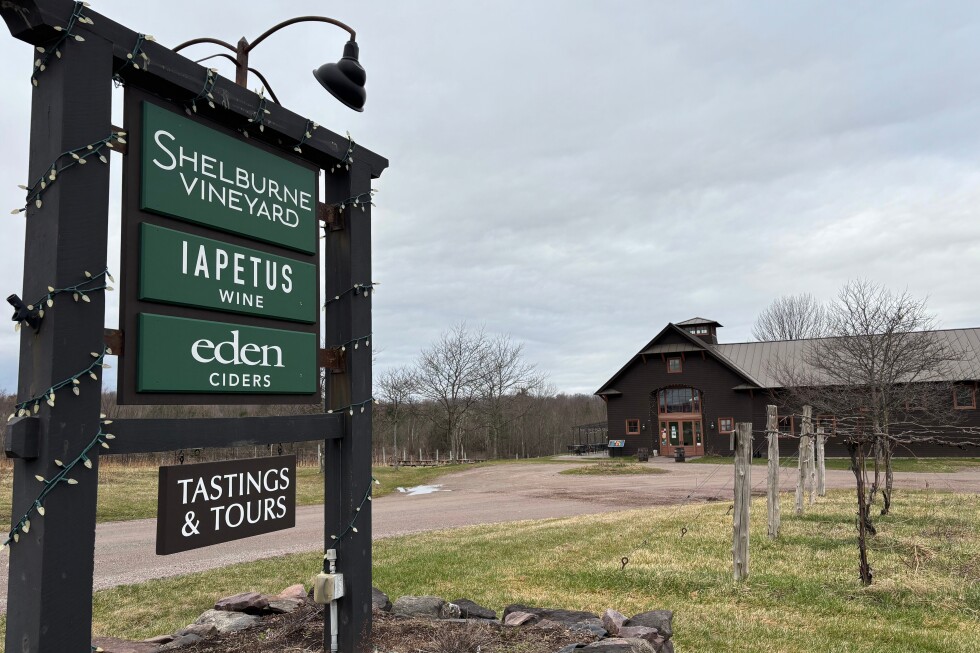
“It gives us validity,” said Kenneth Albert, founder of Shelburne Vineyard and former president of the Vermont Grape and Wine Council, who submitted the original petition for recognition in 2022. “We’ll finally get some respect,” he added with a laugh. Albert’s vineyard, established in 1998, was among Vermont’s pioneering commercial grape-growing operations.
Vermont’s wine industry represents a small but growing sector of the state’s agricultural economy. A 2018 University of Vermont study characterized winemaking as a “unique growth sector” with significant potential. This federal recognition could substantially elevate Vermont’s standing among wine-producing regions nationally.
Kristen Carrese, who oversees marketing and exports at the Vermont Agency of Agriculture, Food and Markets, emphasized the tourism potential: “An American viticultural area designation is an exciting opportunity to define the Champlain Valley as a distinct wine growing region that’s shaped by our specific climate, soils and geography.”
The Champlain Valley offers a distinctive environment for viticulture. As detailed in Albert’s proposal, the region benefits from an unusual combination of factors. Vermont’s generally cooler climate is naturally moderated by Lake Champlain, creating slightly warmer conditions and extending the growing season compared to other parts of the state.
Climate change has expanded the variety of grapes that can be cultivated in Vermont vineyards, according to Kendra Knapik, another recent Grape and Wine Council president who co-founded Ellison Estate Vineyard in Grand Isle. However, she noted that this trend comes with tradeoffs, as extreme weather events become more frequent.
“There’s this concept in wine called ‘terroir,'” Knapik explained, referencing a wine industry term for the environmental factors—including temperature, soil composition, and elevation—that influence grape character. “You’re tasting a place.”
The federal recognition essentially validates that the valley’s unique environmental characteristics are significant enough to warrant special designation in the wine world. It would also permit local producers to include more detailed origin information on their labels, a practice that Knapik described as otherwise heavily regulated.
For Albert, this ability to highlight the geographic source of his grapes represents a significant advantage. It not only generates greater customer interest in the product but also draws attention to the region itself. Albert expressed hope that additional Vermont regions might secure similar recognized status following his proposal.
David Keck, a sommelier and owner of Stella14 Wines in Jeffersonville, expressed measured optimism about the effort to increase awareness of Vermont wine. “I think it’s good recognition for the area,” he said, noting that the state’s wine industry is “positioned well right now to grow rapidly.”
According to Keck, what the sector primarily lacks is substantial investment. While federal recognition represents just one element in elevating Vermont’s winemaking profile, he considers it a positive development.
The proposed federal rule will remain open for public comments until May 26, after which officials will make their final determination.
This potential recognition comes at a time when regional wine production is gaining increased attention nationwide, with consumers showing greater interest in locally produced wines and unique terroirs outside traditional wine regions. If approved, the Champlain Valley would join approximately 260 other American viticultural areas across the United States, potentially putting Vermont more prominently on the map for wine enthusiasts.
Fact Checker
Verify the accuracy of this article using The Disinformation Commission analysis and real-time sources.

8 Comments
Interesting to see Vermont’s wine region gaining federal recognition. I’m curious how the unique climate and terroir of the Champlain Valley will shape the local vintages. This could open up new opportunities for Vermont wineries to showcase their products.
This is great news for Vermont’s wine scene. The Champlain Valley AVA recognition could be a major boost, helping local producers gain more visibility and tap into growing consumer interest in regional, terroir-driven wines.
The Champlain Valley’s designation as an official AVA is an exciting milestone for Vermont’s burgeoning wine industry. I wonder how this will impact grape growing and winemaking practices in the region as producers work to highlight the local character of their wines.
Becoming a federally recognized wine region is an exciting milestone for Vermont. I wonder how this will impact grape growing and winemaking techniques in the Champlain Valley as producers work to establish a distinct regional identity.
The Champlain Valley’s potential as a premier wine region is intriguing. I’m curious to learn more about the specific microclimates and grape varietals that will define the local terroir. This federal recognition could be a big boost for Vermont’s winemaking ambitions.
Vermont may not be the first place that comes to mind for quality wine, but the Champlain Valley seems poised to change that. This AVA designation could be a game-changer, allowing local producers to establish a unique regional identity and build consumer awareness.
Vermont may be better known for craft beer, but this Champlain Valley AVA designation shows the state’s potential as a wine producer as well. It will be interesting to see how this affects the dynamics of the local beverage industry.
Federal recognition as a wine region is a big deal for Vermont. It will be interesting to see how this impacts the marketing and branding of local wines. I hope it helps raise the profile of Vermont’s viticulture and encourages more investment in the industry.