


Listen to the article
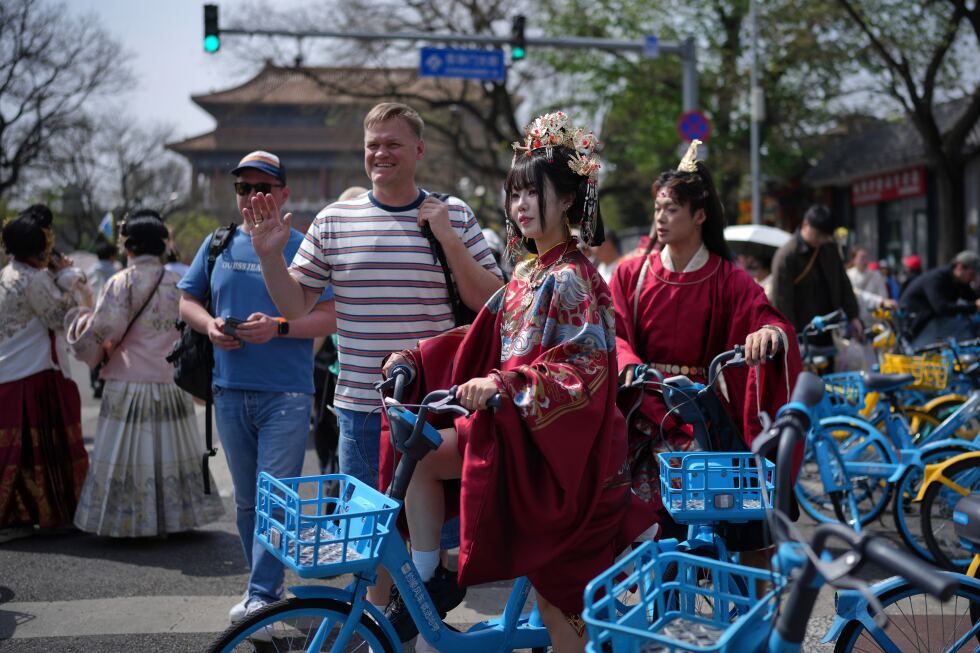
The social media phenomenon of “becoming Chinese” has swept through TikTok and other platforms in recent months, with young adults worldwide embracing elements of Chinese culture in a trend that has gained unprecedented traction globally. Videos featuring users drinking hot water with goji berries, eating dumplings, or wearing house slippers—all claiming to be “Chinamaxxing” or in a “very Chinese time of their life”—have garnered millions of views.
This cultural wave represents an organic form of soft power that China’s government has sought for years through official channels but never achieved with such authenticity. The phenomenon has even caught the attention of high-ranking Chinese officials, including U.S. Ambassador Xie Feng, who recently referenced the trend while promoting China’s new visa-free transit policy and encouraging Americans to experience China firsthand.
The viral sensation marks a significant shift in how Chinese cultural elements are perceived globally. From everyday habits to consumer products, “Chineseness” has acquired a cultural cachet previously unseen on the world stage.
“China is gaining real soft power, and you can see it most clearly in how Chinese culture and ‘Chineseness’ are becoming familiar, repeatable, and globally consumable in everyday life,” explains Shaoyu Yuan, a professor at New York University’s Center for Global Affairs. “That legitimacy is earned through taste, utility, and entertainment.”
This cultural ascendancy builds upon China’s economic foundation—a record $1.2 trillion trade surplus with the rest of the world—and its technological innovations, particularly in social media algorithms that power platforms like TikTok.
The trend appears to have originated with Sherry Zhu, a 23-year-old from New Jersey, whose videos joking about Chinese cultural markers went viral in December, inspiring countless similar posts. However, the widespread adoption of Chinese cultural elements has generated mixed feelings, particularly among Chinese Americans.
For many who have faced discrimination in Western countries, the sudden popularity of Chinese culture feels complicated. Elise Zeng, a 28-year-old from Brooklyn whose critique of the phenomenon garnered over 36,000 likes, expressed this sentiment: “Appreciation does not erase the racism that many Chinese people grew up with.”
Zeng recalled fears during the COVID-19 pandemic when many Asian Americans faced verbal abuse and physical attacks. “Those experiences don’t just disappear because Chinese culture is suddenly cool and trendy,” she noted.
The “becoming Chinese” trend rides a broader wave of Chinese cultural exports finding global success. Labubu dolls—fuzzy, ugly-cute collectibles carried by celebrities including Rihanna—brought a 300% profit increase to Chinese parent company PopMart last year.
In music, Cantonese rapper Skaii isyourgod (known as “Lanlao”) gained international fame despite language barriers, with his single “Blueprint Supreme” amassing billions of TikTok views globally. Meanwhile, the animated film “Ne Zha 2,” based on Chinese mythology, became the highest-grossing animated film ever before even reaching North American theaters.
Chinese gaming has also broken records, with “Black Myth: Wukong”—based on the classic Monkey King tale—setting the all-time record for simultaneous players in a single-player game on Steam with 2.4 million concurrent users at launch.
Even practical technologies like China’s Amap have gone viral internationally for features that outshine Western alternatives like Google Maps, including the ability to show whether a walking route will be in sunshine or shade.
While Chinese President Xi Jinping has pushed officials to “tell China’s story well” since 2013, launching initiatives like the multibillion-dollar Belt and Road infrastructure program and establishing Confucius Institutes worldwide, these official efforts have often met skepticism. Many Confucius Institutes in Western countries have closed amid concerns about propaganda and espionage, while Belt and Road has faced criticism as a potential debt trap.
China’s state media has been quick to claim the “becoming Chinese” trend as evidence of “China’s social development.” However, Professor Yuan suggests that such official endorsements may undermine the organic cultural appeal. “Cultural influence travels farther when it is chosen rather than announced,” he observed.
As China’s hard power in manufacturing, renewable energy, and military might continues to grow, this unexpected surge in cultural appeal represents a different kind of influence—one that resonates with young people worldwide through everyday experiences rather than official narratives.
Fact Checker
Verify the accuracy of this article using The Disinformation Commission analysis and real-time sources.

9 Comments
The ‘becoming Chinese’ meme is a fascinating window into China’s rising global influence. While the trend seems spontaneous, China may try to harness this cultural momentum for strategic advantage. It will be interesting to see how this plays out on the world stage.
The ‘becoming Chinese’ meme speaks to the rising global status and aspirational nature of Chinese culture. However, I hope this trend doesn’t oversimplify or appropriate Chinese identity. Authentic cultural exchange is positive, but it needs to be done respectfully.
Well said. There’s a fine line between cultural appreciation and appropriation. China will need to encourage genuine engagement while guiding this movement in a meaningful direction.
This trend highlights the growing appeal and desirability of Chinese culture worldwide. It will be interesting to see how China leverages this organic soft power to further its global influence, economically and geopolitically.
Good point. China may seek to capitalize on this cultural momentum, though the government will have to tread carefully to maintain authenticity and avoid perceptions of propaganda.
This trend is a double-edged sword for China. On one hand, it reflects growing global interest in Chinese culture. But on the other, there’s a risk of superficial or inaccurate depictions. China will have to navigate this carefully to leverage the soft power benefits.
Absolutely. China will need to strike a balance between allowing organic cultural exchange and providing educational context to avoid misunderstandings or stereotypes.
Interesting how this ‘becoming Chinese’ trend is gaining such traction globally. Speaks to China’s growing soft power and cultural influence, even as a grassroots phenomenon. I wonder what’s driving this organic embrace of Chinese elements by young people worldwide.
Agreed, it’s a fascinating cultural shift. China seems to be exerting its influence in more subtle, consumer-driven ways beyond just government initiatives.