


Listen to the article
Sudan’s Farmers Face Double Crisis as Middle East Conflict Compounds Local War
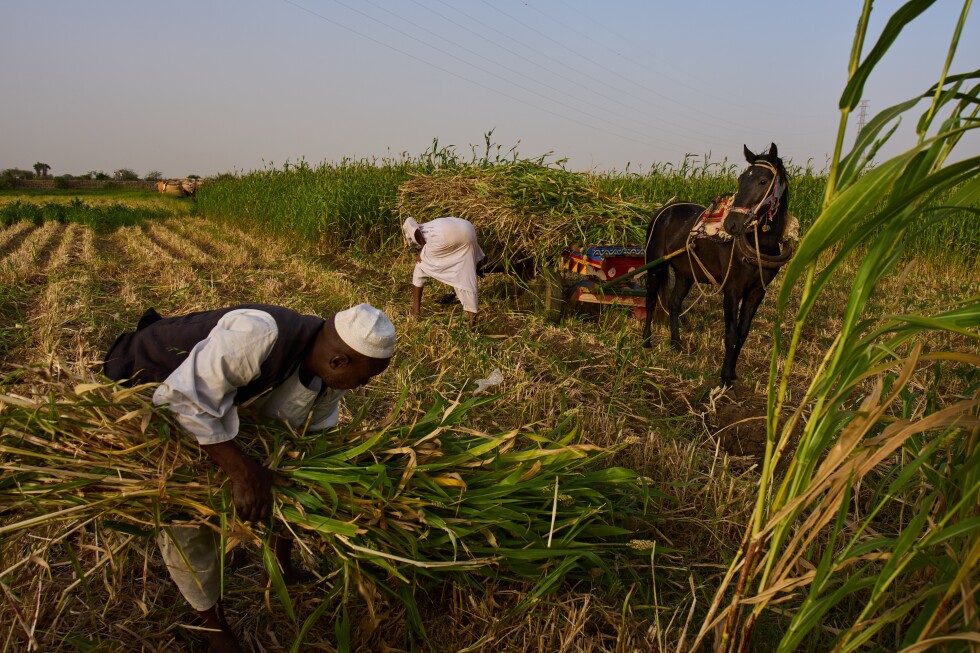
Two years after being displaced by Sudan’s civil war, farmer Omer al-Hassan returned to his land only to face a new threat: rising costs triggered by the conflict in the Middle East that are pushing him deeper into financial hardship and food insecurity.
“The Iran war has affected everything related to agriculture,” al-Hassan explained while harvesting onions with his workers. After spending two months clearing his weed-choked farm, he now struggles to afford fertilizer for his potato and tomato crops. Without government support, he and ten other farmers working his land have been forced to reduce production.
Mohammed al-Badri, another local farmer, faces similar challenges. “I could afford to plant only half my farm because of the rising costs,” he said. “The rest of it is nothing.”
The crisis stems from severe disruptions in the Gulf region, where Iranian actions in the Strait of Hormuz have stranded hundreds of commercial vessels for weeks. This bottleneck has critically affected Sudan, which receives more than half its fertilizer imports by sea from Gulf countries. Meanwhile, fuel prices have surged approximately 30%, triggering a corresponding rise in food prices.
Farmers across Sudan’s agricultural regions are watching costs skyrocket at the worst possible time – just as planting season approaches. In Gezira, one of Sudan’s main food-producing areas, farmer Abdoun Berqawi describes a “dangerous reality” emerging without government intervention. A 50-kilogram bag of urea fertilizer now costs around $50, compared to just $11 during the same period last year. Fuel for tractors has more than tripled from $2.50 to $8 per gallon.
“People are buying less food, cutting or skipping meals, selling assets and taking greater risks just to survive,” explained Melaku Yirga, Mercy Corps vice president for the Africa region, who recently visited Sudan’s agricultural provinces of Kassala and Gedaref. “Mothers are being forced to make painful choices about who gets to eat the little food that is available, while some families are resorting to leaves or animal feed just to get by.”
The situation is particularly dire for farmers who took bank loans and now risk imprisonment if poor yields prevent repayment. Merghany Omar, a farmer in al-Matammah in River Nile province, notes that even growing onions, a local staple, no longer covers basic production costs.
Sudan was already experiencing severe food insecurity due to its internal conflict between the military and the paramilitary Rapid Support Forces. The UN World Food Program estimates that 19 million people across Sudan face acute hunger, with many families approaching famine conditions. Last year, famine was officially declared in the Darfur and Kordofan regions.
The humanitarian response to this crisis has been significantly hampered by the Middle East conflict. WFP reports that food shipments bound for Sudan must now travel 9,000 kilometers (5,500 miles) farther to reach their destination, adding costs and delays. Many vessels avoid the Bab el-Mandeb Strait at the southern end of the Red Sea, where Iranian-backed Houthi rebels in Yemen have threatened shipping.
In urban areas, vegetable and dairy prices have increased by approximately 40% due to fuel price spikes. Samy Guessabi, country director for Action Against Hunger in Sudan, notes that these pressures come atop existing vulnerabilities, including currency depreciation. Remote agricultural regions like Kordofan, White Nile, Darfur, and Blue Nile are suffering the most, with limited access to markets and supplies.
The timing of these supply chain disruptions is particularly devastating as farmers prepare for Sudan’s planting season, which runs from June to November. Mubarak al-Nour, a farmer and former parliamentarian in Gedaref, warns that even if farmers secure fertilizer, delays mean they could miss critical planting windows. Many are switching to crops that require less or no fertilizer and scaling back production of corn, sesame, and other rain-fed crops.
Compounding these challenges, Mathilde Vu of the Norwegian Refugee Council points out that warring parties within Sudan are deliberately blocking essential supplies, with local fuel markets heavily bombed in recent months amid a “senseless escalation” of drone attacks nationwide.
As planting season approaches, Sudan’s farmers find themselves caught between the immediate violence of civil war and the economic aftershocks of a distant conflict, threatening to push millions deeper into hunger.
Fact Checker
Verify the accuracy of this article using The Disinformation Commission analysis and real-time sources.

14 Comments
This is a stark example of how global events can create ripple effects that harm vulnerable populations. Sudan’s farmers were already dealing with the fallout of civil war, and now they’re being squeezed by rising costs stemming from the conflict in the Middle East. It’s a complex, multifaceted challenge that will require a comprehensive response to support local food production.
Absolutely, a holistic, multi-pronged approach will be needed to help these farmers weather this crisis. Identifying ways to strengthen domestic supply chains, provide targeted subsidies, and build resilience in the agricultural sector should all be on the table.
It’s disheartening to see how the fallout from conflicts in the Middle East is cascading down to impact vulnerable farmers in Sudan. These producers were already grappling with the aftermath of civil war, and now they’re facing financial ruin due to soaring costs for essential inputs. Developing more robust, localized agricultural systems could be one way to insulate them from such global shocks in the future.
Absolutely, building resilience and self-sufficiency in Sudan’s agricultural sector should be a top priority. Providing support to help these farmers access affordable inputs and diversify their supply chains could go a long way in protecting their livelihoods and the country’s food security.
This is a complex, multifaceted crisis that underscores the fragility of global supply chains. Sudan’s farmers are caught in the middle, bearing the brunt of rising costs stemming from conflicts in the Middle East. Their plight highlights the need for more robust, localized agricultural systems that can withstand shocks. I hope they receive the support and resources they need to keep their farms viable.
This is a heartbreaking situation for Sudan’s farmers. They’re caught in the crosshairs of forces completely beyond their control – civil war and geopolitical conflicts thousands of miles away. Rising input costs are crippling their ability to grow food, which could have devastating consequences for food security. I hope they receive the support and resources they need to keep their farms viable.
It’s concerning to see how the fallout from conflicts halfway around the world can have such a devastating impact on local communities. Sudan’s farmers are already struggling, and these new economic pressures may push many of them over the edge. Bolstering domestic agriculture should be a priority to improve their resilience.
Absolutely, strengthening local food systems is crucial. Helping these farmers access the resources they need to maintain operations could pay dividends in terms of food security and economic stability for the country.
This is a troubling situation for Sudan’s farmers, caught between the twin crises of civil war and disruption in the Middle East. Rising costs for critical inputs like fertilizer are squeezing their already slim margins. Diversifying supply chains and securing stable local production could help insulate them from these global shocks.
Agreed, the farmers need support to weather this perfect storm. Government assistance and access to alternative suppliers could make all the difference in their ability to sustain food production.
It’s troubling to see how the conflict in the Middle East is impacting Sudanese farmers in such a profound way. Rising costs for inputs like fertilizer are undermining their ability to grow food, which has huge implications for food security in the region. Developing more resilient, localized supply chains could be one way to shield these producers from global shocks.
The knock-on effects of geopolitical conflicts can be devastating for vulnerable communities. These Sudanese farmers were already dealing with the fallout of civil war, and now they’re confronting soaring costs for essential inputs. It’s a tough spot, and they’ll need significant assistance to keep their farms viable.
You’re right, this is a dire situation compounded by forces completely outside the farmers’ control. Government intervention and international aid may be necessary to help stabilize the local agricultural sector and ensure continued food production.
This is a complex issue with ripple effects that extend far beyond the Middle East. Sudan’s farmers are facing a daunting situation, and their plight highlights the fragility of global supply chains. I wonder what policy solutions could be explored to provide more support and insulation for local agricultural producers in times of crisis.