


Listen to the article
South Korean farmers have launched an unprecedented legal battle against the nation’s largest power utility, claiming that its reliance on fossil fuels has accelerated climate change and damaged their livelihoods.
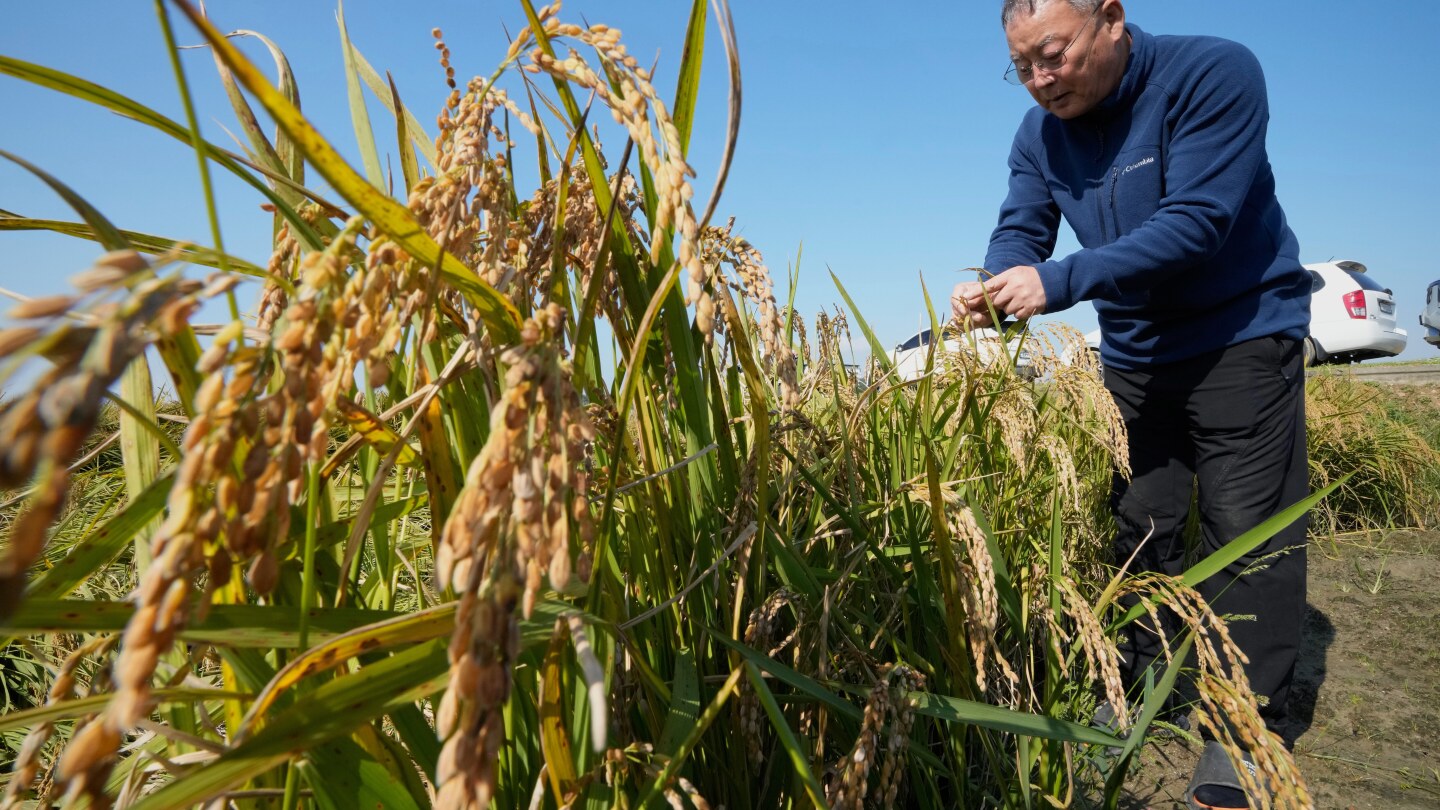
Hwang Seong-yeol, a rice farmer with three decades of experience, watched with concern as his combine harvester worked through one of his most difficult harvests in memory. Standing at the edge of his golden field in Seosan, South Korea, he described how erratic weather patterns had devastated his crop yield.
“It’s really unsettling – we know how much rice we should normally get from 25 acres of land, but the yield has been steadily declining every year,” said Hwang, who expects this year’s harvest to be 20-25% below normal.
Hwang is one of five farmers who recently filed a lawsuit against Korea Electric Power Corporation (KEPCO) and its subsidiaries, arguing that their heavy dependence on coal and other fossil fuels has directly contributed to the climate-related agricultural damages they’re experiencing.
The lawsuit, the first of its kind in South Korea, raises profound questions about whether power companies’ contributions to climate change can be quantified and linked to specific agricultural losses. Yeny Kim, a lawyer with the Seoul-based nonprofit Solutions for Our Climate who is handling the case, argues that KEPCO’s operations represent approximately 0.4% of global greenhouse gas emissions, based on her analysis of public data.
“Therefore, they should also bear 0.4% of the responsibility for the farmers’ losses,” Kim said.
The legal action comes after South Korea experienced its hottest year on record in 2023, triggering what government reports described as a series of “agricultural disasters.” These included devastating summer rains that destroyed thousands of hectares of cropland, followed by intense heat waves that further damaged crops, particularly rice – a staple of the Korean diet and a culturally significant crop.
For Hwang, the changing climate has manifested in a particularly challenging growing season. An unusually cold spring stunted plant growth, followed by summer floods and a remarkably wet autumn that fostered fungal diseases. When he finally harvested in late October, it was only the second dry day after 18 consecutive days of rain.
“We began to question why it’s always the farmers – who haven’t done anything wrong – that end up suffering the consequences of the climate crisis,” Hwang said. “Shouldn’t we be demanding something from those who are actually causing it?”
The lawsuit seeks initial damage claims of 5 million won ($3,400) per plaintiff, though this amount may be adjusted as the case proceeds. In a symbolic gesture, the farmers are also seeking 2,035 won ($1.4) each to urge the government to phase out coal power plants by 2035, five years ahead of its current 2040 target.
KEPCO, which holds a monopoly on electricity transmission in South Korea, declined to comment specifically on the lawsuit, stating it “cannot share information that could influence the verdict.” However, the utility told The Associated Press that it considers carbon reduction a key responsibility and cited its goal of cutting emissions 40% by 2030 from 2018 levels.
Energy experts note that KEPCO faces significant financial constraints that limit its ability to rapidly transition to cleaner energy sources. The utility carries a debt burden exceeding 200 trillion won ($137 billion), accumulated over decades of government policies that maintained artificially low electricity rates for households and industries.
This debt has restricted KEPCO’s capacity to expand and modernize the power grid or make substantial investments in renewable energy infrastructure. Consequently, renewables accounted for only 10.5% of South Korea’s energy mix in 2023, while the five KEPCO subsidiaries relied on coal for more than 71% of their electricity production.
The impact of climate change extends beyond rice farming. Ma Yong-un, an apple farmer in southeastern Hamyang, described using more pesticides as pests and diseases become harder to control due to prolonged heat and humidity.
“I think about that every day,” Ma said, expressing concerns about his family’s future. “The biggest concern is my children.”
While some experts question whether blame can fall solely on KEPCO for agricultural losses from a global phenomenon like climate change, the lawsuit highlights South Korea’s need for a more effective approach to renewable energy. The country is expected to reach its target of 32.95% renewable energy by around 2038 – significantly slower than the 33.49% average already achieved in 2023 among developed economies in the Organization for Economic Cooperation and Development.
This slow transition to clean energy could potentially hinder South Korea’s economic ambitions in advanced industries like semiconductors and artificial intelligence, as global tech companies face increasing pressure to power operations with renewable energy.
“Climate change and carbon neutrality are not just environmental concerns — they are economic issues, ultimately about jobs and our survival,” said Yun Sun-Jin, a professor at Seoul National University.
Fact Checker
Verify the accuracy of this article using The Disinformation Commission analysis and real-time sources.

11 Comments
The South Korean farmers are taking on a formidable opponent in KEPCO, but I admire their determination to seek accountability for the climate-related damages they’re experiencing. Even if the legal hurdles are high, this case could set a valuable precedent for other communities facing similar challenges.
I’m glad to see these farmers taking on the power utility over its role in climate change. While proving causation will be a challenge, it’s critical that major emitters are held responsible for the damages their actions have caused. This case could have far-reaching implications for climate litigation worldwide.
The link between fossil fuel emissions and crop damage is well-established, but proving causation in court will be a major challenge for these farmers. Still, I admire their tenacity in taking on a powerful utility. This case could have far-reaching implications for climate liability litigation.
This is a fascinating case that highlights the complex intersection of climate change, energy policy, and agricultural livelihoods. I’m curious to see how the courts navigate the challenge of quantifying the utility’s specific contribution to the farmers’ crop losses. It’s an important step in the fight for climate justice.
It’s encouraging to see farmers taking direct legal action against a major polluter like KEPCO. Climate change is already wreaking havoc on agricultural communities, and they deserve compensation for the losses they’re suffering. I’ll be following this case closely to see how the courts rule.
Interesting case – farmers directly suing a power utility over climate change impacts. It will be challenging to quantify and link the utility’s emissions to specific crop damages, but it’s an important step in holding major polluters accountable. I wonder how the courts will rule on this novel legal argument.
This lawsuit raises some profound questions about corporate responsibility for climate change. While proving causation will be difficult, I believe the farmers are right to demand compensation from the power utility whose fossil fuel emissions have contributed to the disruption of their livelihoods. I’ll be following this case closely.
Climate change is a global problem, but its impacts are often felt most acutely at the local level. These farmers are facing real economic hardship due to erratic weather patterns, and they’re right to seek compensation from the major emitters responsible. I’m curious to see how the case unfolds.
This is a bold and important lawsuit, even if it faces an uphill legal battle. The farmers are right to demand accountability from the fossil fuel industry for the very real climate impacts they’re experiencing. I hope this case sets a precedent for other communities seeking redress for climate-related harms.
This is a novel legal strategy, and it will be interesting to see if the courts find in favor of the farmers. Power utilities have long been major contributors to climate change, and I believe they should be held accountable for the damages their emissions have caused. I hope this case sparks similar actions around the world.
This is a bold move by the South Korean farmers. Climate change is already disrupting agricultural production worldwide, and they’re right to demand accountability from the fossil fuel industry. I hope this lawsuit sets a precedent for other communities seeking redress for climate-related harms.