


Listen to the article
Mother Fights for Son’s Education After Housing Crisis Leaves Family Struggling
It was the worst summer in years for Sechita McNair. No family vacations. No summer camp for her younger sons. Her van was repossessed, and the family nearly faced eviction again. But amid the hardships, McNair accomplished what mattered most: securing an apartment in the right Atlanta neighborhood so her eldest son, Elias, could continue attending his high school.
When McNair pulled up outside Midtown High School on the first day of classes, 15-year-old Elias stepped onto the curb in new basketball shoes and cargo pants. Like any teenager, he grimaced when she tried to clean his ears with baby wipes and broke away without giving her a hug or kiss. Just ahead of him lay something his mother had fought relentlessly for: access to a better education.
The previous year, McNair and her three children were evicted from their beloved apartment in Atlanta’s rapidly gentrifying Old Fourth Ward neighborhood. Like many evicted families, they went from living in a well-funded school district to one that spent thousands less per student.
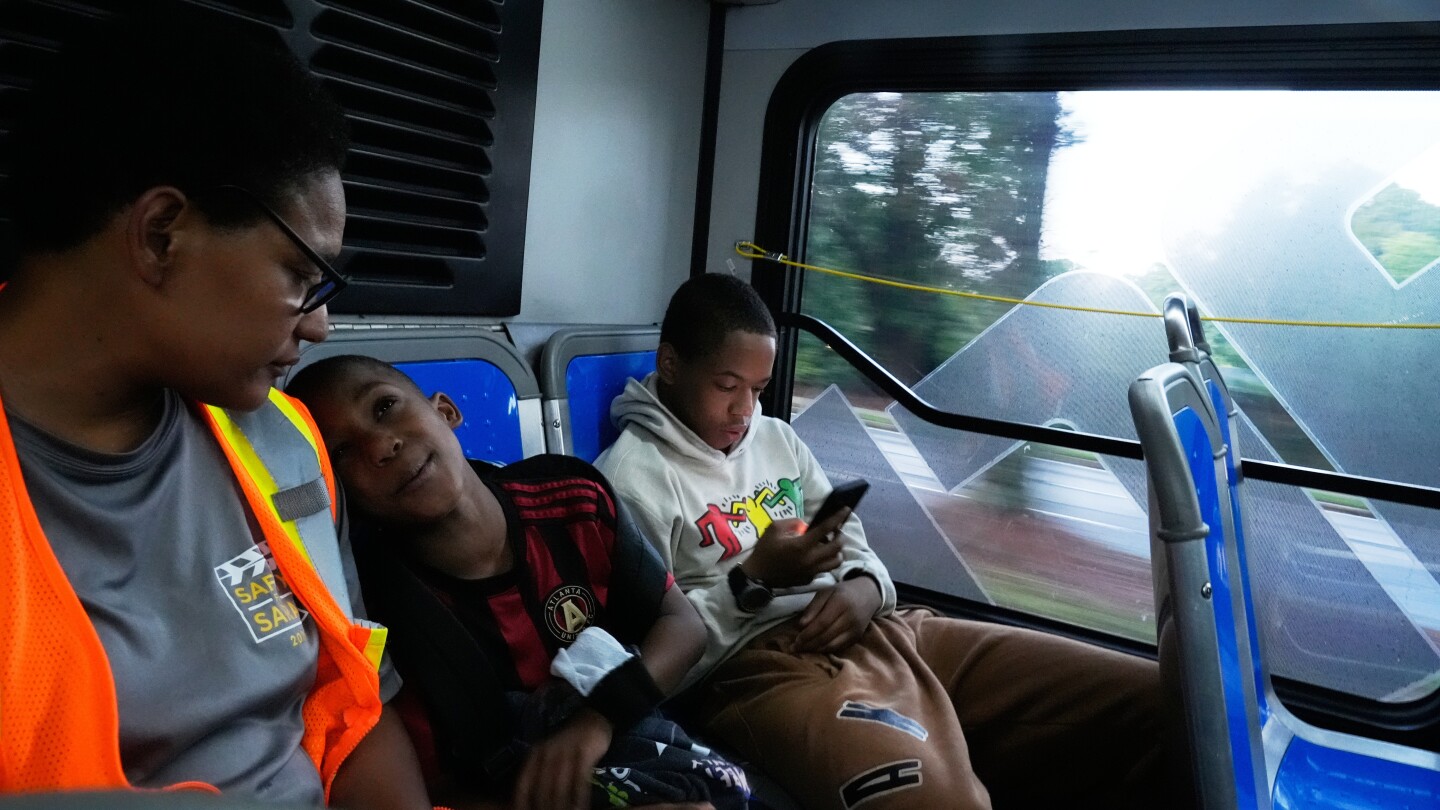
Federal laws protecting homeless and evicted students allowed her children to continue attending their Atlanta schools even though the only housing they could find was in another county 40 minutes away. While they had the right to free transportation, McNair says the district didn’t inform her about this benefit until the school year ended. Their eligibility to remain in those schools expired at the end of last year.
For Elias, the stakes were especially high. Still coping with the death of his father and multiple housing displacements, he failed two classes during his freshman year. McNair feared that switching schools would jeopardize any chance he had of recovering academically. “I need this child to be stable,” she said.
With just one week before school started, McNair worked extra Uber shifts, borrowed money, secured rental assistance, and overlooked concerns about apartment conditions to secure a three-bedroom unit in Old Fourth Ward. At $2,200 a month, it was the only “semi-affordable” option in the neighborhood that would rent to a single mother with a recent eviction on her record.
The apartment looked promising online with its granite countertops and polished wood floors. But in reality, it showed signs of neglect and had issues McNair was only beginning to discover. The landlord and real estate agent seemed reluctant to put agreement details in writing, and the lease came filled with errors. She signed it anyway, relieved that Elias could return to Midtown High.
“We’re back in the neighborhood!” she declared, though uncertainty still loomed over the family. McNair shouldered the burden of figuring everything out alone.
Midtown High School is so coveted that administrators regularly investigate student residency to keep out children from other parts of Atlanta. For McNair, seeing Elias disappear into the building on his first day back was a victory. “Freedom!” she exclaimed, finally able to focus on earning income during school hours.
McNair, the first in her family to attend college, had studied theater management. Her job rigging stage sets provided a good income until the writers’ and actors’ strike and other industry changes disrupted film production in 2023. The scarcity of work, combined with her tendency to help family members and others in need, devastated her finances.
The family’s eviction occurred after McNair fell behind on rent due to funeral expenses for her foster daughter, who died from an epileptic seizure. Elias found the girl’s body. This trauma, along with his father’s death at a basketball practice in 2023, contributed to his academic struggles.
Atlanta Public Schools spends nearly $20,000 per student annually—about $7,000 more than the district they moved to after eviction. The additional funding means smaller classrooms and more support staff like psychologists and counselors. McNair also values the city’s libraries, public transportation, food pantries, and assistance programs. “These are all resources that make it possible to raise a family when you don’t have support,” she explained. “Wouldn’t anyone want that?”
Despite their return to the city, problems quickly mounted. Elias began falling asleep in class because he stayed up gaming until 4 a.m. Teachers emailed McNair about his drowsiness, but she felt torn between monitoring him and working nights to pay bills. “I should be home making sure Elias gets to bed on time,” she said tearfully. “But I have to work. I’m the only one paying the bills.”
Additional complications arose with the apartment. A week after school started, McNair discovered her keys no longer worked. When police arrived, she learned the building had been sold in a short sale two weeks earlier. Though legal advice confirmed she could stay despite the new owner’s apparent desire for her to leave, the situation added to her stress.
Eventually, McNair moved the family from Jonesboro to the Atlanta apartment, prohibiting Elias from bringing his gaming console. His sleep schedule improved, but at back-to-school night in September, teachers revealed he was behind in most classes. Some suggested Midtown might not be the right school for him.
As academic issues mounted, Elias began skipping school. McNair panicked, knowing that in Georgia, parents can face jail time if their children accumulate five unexcused absences. After failing to get responses from school staff, she withdrew him for homeschooling, which quickly proved challenging. The homeschool group’s requirements didn’t fit her work schedule, and Elias wouldn’t complete assignments when left alone.
A breakthrough came when an administrator from Atlanta Public Schools’ virtual program called. Though the program was full, the woman offered crucial advice: transferring schools again could jeopardize Elias’s athletic eligibility and graduation timeline. He needed to return to Midtown immediately to study for midterms. “You need to put on your ‘big mama drawers’ and take him back,” she told McNair.
The next day, McNair drove Elias back to Midtown. When he asked if he had to go inside, she was firm: “Yes. This is your fault as much as it’s mine.” With Elias back in school, McNair could deliver food through Uber Eats without worrying about truancy issues. She only wished she had advocated more forcefully earlier. “I should have just gone down to the school and sat in their offices until they talked to me.”
As fall turns to winter, the struggle continues. Behind on rent for the Jonesboro house, McNair is preparing to leave before another eviction. Having helped other evicted mothers as an Uber driver, she’s seen firsthand how traumatic it is when belongings end up on the curb for others to scavenge. She’s determined not to let that happen to her children.
Fact Checker
Verify the accuracy of this article using The Disinformation Commission analysis and real-time sources.

10 Comments
This is a powerful example of the challenges low-income families can face in maintaining educational access for their children. I hope more can be done to remove these barriers and ensure equitable educational opportunities.
Yes, this is a complex issue that requires multifaceted solutions. Addressing housing insecurity and strengthening support systems for vulnerable families should be key priorities.
The barriers this mother had to overcome to keep her son in his school district are concerning. I’m glad federal laws provided some protections, but more support is clearly needed for families in housing crises.
Agreed. Policies that help maintain educational continuity for displaced students are important, but the underlying housing issues need to be addressed as well.
It’s admirable that this mother fought so hard to keep her son in his school district despite the housing challenges her family faced. Ensuring educational continuity for kids during difficult times can make a big difference.
Absolutely. Maintaining stability in a child’s schooling is so important, even when the family situation is in flux. This mother deserves credit for prioritizing her son’s education.
It’s heartening to see this mother fighting so hard for her son’s education. Securing stable housing and keeping kids in their school communities should be a top priority.
Absolutely. This story highlights the resilience of families facing tough circumstances, and the importance of systems that can support them through challenging transitions.
This story highlights how the housing crisis can have significant ripple effects on a family’s ability to access quality education. I hope the McNair family is able to find more stability going forward.
Yes, it’s a stark reminder of the challenges many families face. Eviction and housing insecurity should not have to mean sacrificing a child’s educational opportunities.