


Listen to the article
Oil Prices Plunge as Strait of Hormuz Reopens, Wall Street Rallies to New Records
Oil prices plummeted more than 10% Friday after Iran announced the reopening of the strategic Strait of Hormuz for commercial tankers, sending U.S. stocks soaring toward another record high.
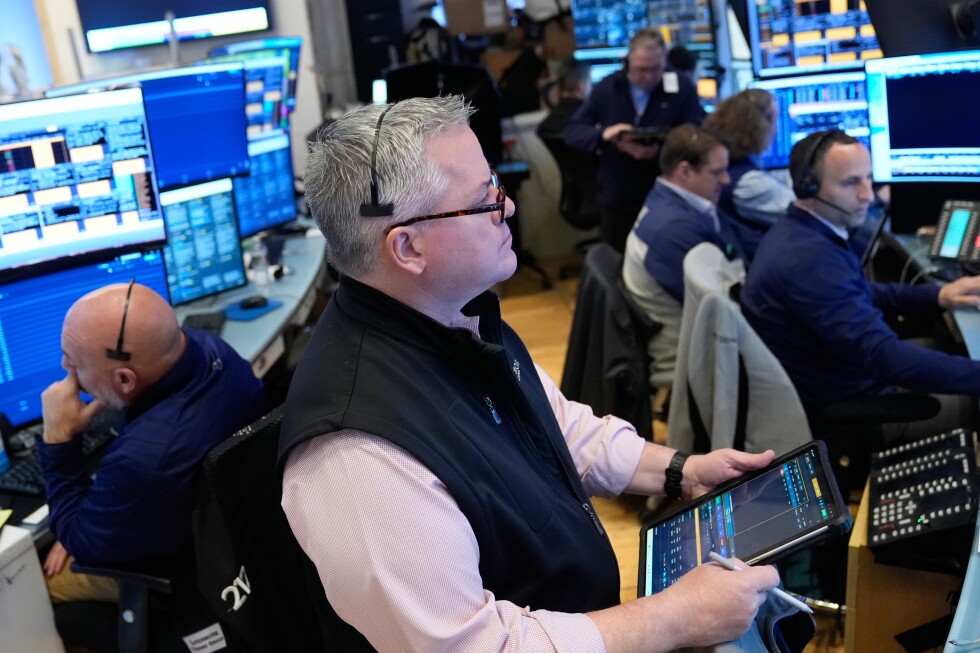
The S&P 500 jumped 1.3%, continuing its third consecutive week of significant gains—the longest such streak since last Halloween. The Dow Jones Industrial Average surged nearly 1,070 points at one point, settling 978 points (2%) higher by late morning. The Nasdaq composite followed suit with a 1.6% increase.
Iranian Foreign Minister Abbas Araghchi declared on X that passage for all commercial vessels through the crucial waterway “is declared completely open” as a ceasefire in Lebanon appears to be holding. He indicated the strait would remain open for the duration of the ceasefire.
This announcement triggered immediate market reactions, with U.S. benchmark crude tumbling 10.8% to $81.38 per barrel, while Brent crude, the international standard, dropped 10.5% to $88.96. Despite these steep declines, prices remain above their pre-conflict levels of around $70, reflecting lingering market caution.
The Strait of Hormuz represents one of the world’s most critical oil chokepoints, with approximately 20% of global oil supply passing through this narrow waterway between Iran and Oman. Any disruption to this passage can cause severe ripple effects throughout global energy markets and the broader economy.
Market optimism was further buoyed by comments from President Donald Trump, who stated on his social media network that while the U.S. Navy’s blockade of Iranian ports remains “in full force” until a deal is reached, negotiations should conclude “very quickly” as “most of the points are already negotiated.”
Companies heavily dependent on fuel costs saw some of the day’s biggest gains. United Airlines surged 8.8%—a welcome development after the International Energy Agency’s warning on Thursday that Europe had “maybe six weeks or so” of remaining jet fuel supplies. Similarly, cruise operators Norwegian Cruise Line and Royal Caribbean Group jumped 7.8% and 9.5%, respectively.
The potential easing of oil prices could have far-reaching economic benefits beyond the energy sector. Lower fuel costs would reduce pressure on prices for transportation-dependent goods, potentially moderating inflation across various sectors from groceries to consumer goods.
Housing and automotive sectors also rallied on the news. With reduced inflation threats, investors anticipate the Federal Reserve might resume interest rate cuts sooner, stimulating economic growth. This prospect pushed the 10-year Treasury yield down to 4.23% from 4.32%, potentially leading to lower mortgage and auto loan rates.
Building supply company Builders FirstSource rose 7.1%, homebuilder Lennar gained 5.7%, and online auto retailer Carvana climbed 9.2% as investors anticipated increased consumer purchasing power through lower financing costs.
The positive market sentiment was further reinforced by strong earnings reports from U.S. financial institutions. State Street rose 4.6% and Fifth Third Bancorp added 1.9% after both exceeded analyst expectations for the latest quarter.
Not all companies shared in the rally, however. Netflix dropped 9.9% despite reporting better-than-expected profits, as investors appeared disappointed by unchanged full-year revenue growth forecasts. The streaming giant also announced that co-founder and chairman Reed Hastings would step down from its board in June when his term expires.
European markets responded enthusiastically to the Strait of Hormuz announcement, with France’s CAC 40 jumping 2% and Germany’s DAX rising 2.3%. Asian markets, having closed before the news broke, ended lower, with Japan’s Nikkei 225 down 1.8% and Hong Kong’s Hang Seng falling 0.9%.
While Friday’s developments signal potential de-escalation, market participants remain vigilant. Since the conflict began, Wall Street has experienced rapid swings between optimism and doubt, resulting in sharp price fluctuations across stocks, bonds, and commodities. Investors appear cautiously hopeful that the reopening of this vital shipping lane marks a significant step toward regional stability and economic relief.
Fact Checker
Verify the accuracy of this article using The Disinformation Commission analysis and real-time sources.

12 Comments
The drop in oil prices and surge in US stocks are certainly good news for the economy, though we’ll have to monitor the situation closely for any further shifts. Reopening a key chokepoint like the Strait of Hormuz is a significant development.
Agreed. It will be interesting to see if this ceasefire holds and whether Iran’s announcement leads to more stability in the region’s energy markets.
Fascinating development in the volatile oil and energy markets. I’m curious to see how this reopening of the Strait of Hormuz impacts global prices and production in the coming weeks.
Yes, the geopolitical tensions in the region have been a major factor affecting oil prices. This could provide some much-needed relief for consumers and businesses.
Interesting to see the energy and equity markets react so strongly to Iran’s announcement. I wonder what the longer-term implications will be for commodity prices and the broader economy.
Time will tell, but this could provide some much-needed relief on the inflation front if oil prices stay down for a sustained period.
With oil prices down over 10%, this could have far-reaching impacts across industries and consumers. I hope the reopening of the Strait of Hormuz leads to a prolonged period of lower energy costs.
Absolutely. Reduced fuel prices would provide a nice boost to businesses and household budgets at a time when inflation remains a concern.
While the stock market rally is good news, I’m a bit skeptical about how long this reopening of the Strait will last. Geopolitical tensions in the Middle East tend to flare up quickly.
That’s a fair point. The situation remains quite volatile, and we can’t assume this ceasefire will hold indefinitely. Caution is warranted.
The reopening of the Strait of Hormuz is certainly a significant development, but I’m hesitant to draw any firm conclusions yet. Geopolitical dynamics in the region remain highly unpredictable.
Agreed. We’ve seen these types of announcements before, only to have tensions flare up again. I’ll be watching closely to see how things unfold.