


Listen to the article
Authorities are raising concerns about security gaps in America’s rail system after the man accused of attempting to assassinate former President Donald Trump at the White House Correspondents’ dinner traveled to Washington with firearms on an Amtrak train. The incident has renewed calls for enhanced passenger screening and security measures at railway stations across the country.
Cole Tomas Allen, the suspect in the attempted assassination, allegedly brought a shotgun and semiautomatic pistol on an Amtrak train from California to Washington, D.C. This case follows another troubling incident from two years ago when a man planning a mass casualty event was apprehended after a rail worker spotted him acting erratically on a Chicago-bound train. Police found guns and materials related to crowd control in his possession.
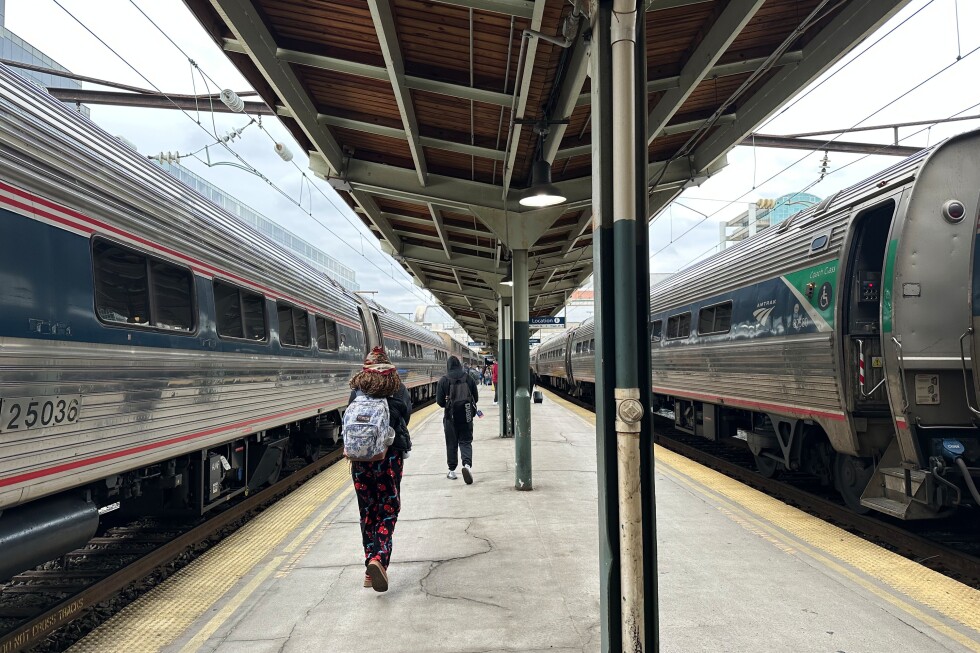
Amtrak currently requires firearms on its trains to be declared, unloaded, secured in hard cases, and transported only in checked baggage. However, unlike airports where the Transportation Security Administration screens all passengers and their carry-on items, train passengers face no such security measures regardless of whether they’re boarding at major hubs like Washington’s Union Station or small unstaffed stops in rural communities.
“It is a little hard to take a train hostage, so it is different than the post-9/11 concerns raised regarding an airplane,” explained Sean Jeans-Gail, vice president of government affairs and policy at the Rail Passengers Association. “Amtrak has been safe from gun violence largely. The main incidents have been police shootings or interdictions.”
When approached for comment about security protocols or whether Allen followed proper procedures for transporting firearms, an Amtrak spokesperson declined to discuss these matters. The company stated it is cooperating with federal investigators by providing Allen’s travel information. Allen’s legal representative noted that he has no criminal record and is presumed innocent.
Rail worker unions have repeatedly requested that Amtrak and other railway companies enhance security measures. These calls intensified during the COVID-19 pandemic when enforcing mask mandates proved challenging, and again following the January 6, 2021 Capitol riots when many participants traveled to Washington by train.
Jared Cassity, national safety and legislative director for the Sheet Metal, Air, Rail and Transportation Workers – Transportation Division union (SMART-TD), highlighted significant safety concerns among railway workers. “Operator assaults are the most common conversations we have with our membership, but guns on trains is second or third in terms of concerns for workers,” Cassity stated.
SMART-TD has successfully advanced state legislation and currently has two bills pending before Congress. These proposed laws would address jurisdictional challenges in prosecuting individuals who assault rail workers during journeys and would make interfering with rail workers a crime comparable to interfering with airline employees.
Security incidents on trains have sometimes had tragic outcomes. In 2022, a fatal shooting on an Amtrak train near Lee’s Summit, Missouri, resulted in a $158 million jury award against Amtrak. The victim’s family successfully argued negligence, including failure to implement reasonable security measures. The train hadn’t stopped to seek medical attention for the victim until reaching a station, delaying potentially life-saving care.
Michael Callanan, a former Amtrak employee now working as a rail safety consultant, noted that the lack of security screenings has led to numerous incidents involving smuggling of drugs and other illegal items. “They never want to spend money on infrastructure or security,” Callanan said. “Maybe this shooter will be a significant enough of an event to push Amtrak to fund things.”
The geographical diversity of Amtrak’s network presents unique challenges for implementing comprehensive security measures. The system includes approximately 500 stations ranging from major urban hubs with multiple access points to small, unstaffed platforms in remote locations.
“The thought of expanding [security screening], even outside of the logistical issues, is very impractical because it ranges from New York’s Penn Station where it’s very active, with many points of access to the station, unlike an airport where all traffic is filtered to specific points,” said Jeans-Gail. “Then you have Whitefish, Montana, on the other side of the spectrum — a rustic structure with not a lot of traffic.”
While acknowledging these challenges, Cassity emphasized the need to begin addressing security gaps. “We have to change the narrative about safety and realize something has to be done to prevent guns from getting onto the trains freely,” he said. “We sympathize with the challenge this is for Amtrak… When you start talking about how you secure the most rural places, and those being the majority of stations, it becomes a daunting task… But we need to have the conversation.”
Fact Checker
Verify the accuracy of this article using The Disinformation Commission analysis and real-time sources.

20 Comments
This is a concerning case that reveals significant security vulnerabilities in the rail system. Implementing TSA-style screening at major train stations could go a long way towards preventing future incidents and protecting passengers.
While the right to bear arms is important, the public’s safety has to be the top priority. Enhanced screening protocols could strike a reasonable balance between individual liberties and collective security.
While the details are still emerging, this case clearly reveals vulnerabilities in the rail system that must be addressed. Passenger safety should be the top priority.
I agree, Amtrak and other rail operators need to take proactive steps to enhance security and close any loopholes that could be exploited by bad actors.
The attempted assassination at the White House Correspondents’ dinner is a shocking event, and the fact that the suspect was able to bring guns on a train is truly disturbing. Stronger security measures are clearly needed.
I agree, this highlights a major security gap that needs to be addressed urgently. Passenger safety should be the top priority for rail operators.
The fact that the suspect was able to transport firearms on an Amtrak train is deeply troubling. This incident underscores the need for a comprehensive review of rail security policies and procedures.
It’s unacceptable that someone could travel across the country with firearms without proper security checks. This incident demands a thorough review of Amtrak’s policies and procedures.
This incident underscores the need for a comprehensive review of rail security across the country. Passengers deserve to travel without fear of violence or attacks.
You’re right, this should prompt a serious reevaluation of Amtrak’s security procedures and potentially the implementation of more robust measures.
This case raises serious concerns about the lack of passenger screening on trains. Amtrak and other rail operators must take decisive action to implement more robust security measures and close these security gaps.
Absolutely. Passengers deserve to feel safe when traveling, and more proactive security protocols could go a long way towards achieving that goal.
While the right to bear arms is an important constitutional freedom, the safety of the traveling public must take precedence. This case highlights the urgent need for enhanced passenger screening on trains.
I agree, a balanced approach that respects individual rights while prioritizing collective security is essential. Stronger security protocols could help achieve that balance.
It’s troubling to hear about firearms being brought onto trains without proper security checks. Amtrak’s current policies seem insufficient – more proactive measures are required to ensure passenger safety.
Absolutely. Implementing TSA-style screening at major train stations would be a sensible step to close these security gaps.
This is a concerning case that highlights the need for enhanced security measures on trains. Passengers should feel safe traveling, and more robust screening protocols could help prevent future incidents.
I agree, the lack of security screening at train stations is a major vulnerability that needs to be addressed.
While the details are still emerging, this incident serves as a wake-up call about the vulnerabilities in our rail system. Comprehensive security upgrades seem essential to protect the traveling public.
The fact that a would-be assassin was able to board a train with firearms is extremely concerning. Stronger passenger screening processes seem essential to prevent future threats.