


Listen to the article
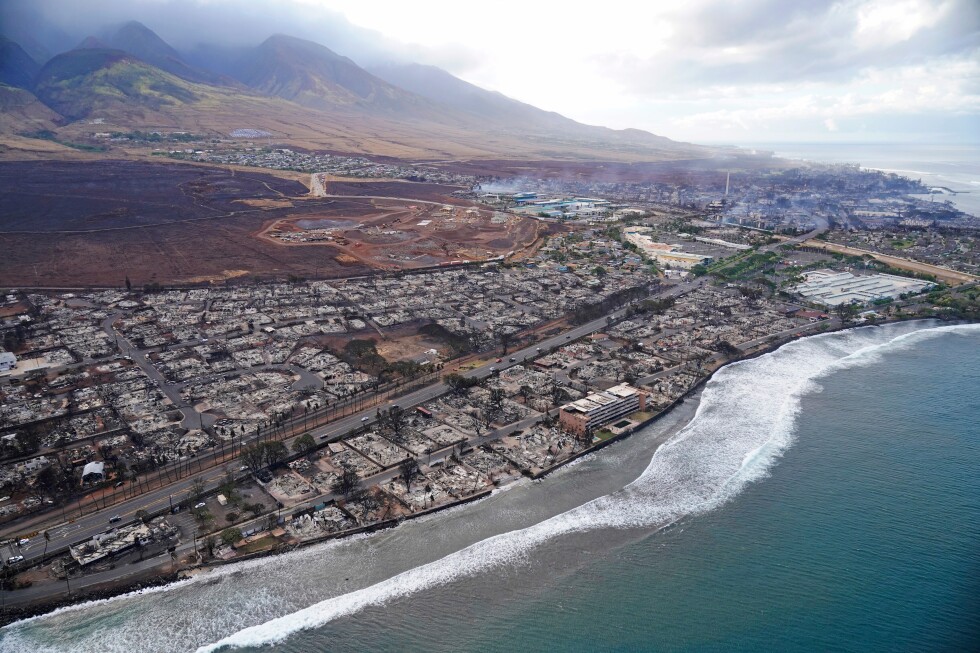
Leslie Clark stares at the burned remains of what was once her family home near Front Street in Lahaina, harboring few illusions about the financial relief headed her way. Despite a massive $4.03 billion settlement for victims of the August 2023 Maui wildfire, Clark, like thousands of others, faces the sobering reality that this compensation will fall far short of making them whole.
“Worrying about something out of your control is not good for your health,” said Clark, 62, who lost the two-story home that sheltered 15 extended family members. “It’s not good for anything.”
While settlement checks could begin reaching victims as early as June, according to Jake Lowenthal, one of four liaison lawyers leading the plaintiffs’ legal team, the distribution remains clouded with uncertainties. A team of claims administrators will allocate funds across ten victim categories, considering factors such as injuries sustained or property lost.
The settlement’s structure reveals several troubling shortfalls. Payments will arrive in four installments spread over time rather than in a lump sum. Insurance companies will claim 10% of settlements from insured homeowners like Clark. Attorneys are requesting 25% of their clients’ awards, though Maui Circuit Court Judge Peter Cahill has expressed skepticism about this figure.
For some victims, these deductions could consume a third of their compensation before they see a penny. Adding to their financial strain, unless Congress reinstates an expired federal tax exemption for wildfire settlements, survivors could face income tax rates as high as 37% on their payouts.
“My personal opinion, having sat with many victims of this disaster, is that none of them are going to be made whole by this,” said Sherry Peterson, a fellow with insurance consumer advocacy group United Policyholders who has been working directly with survivors. “No matter how you dice the carrot, there’s just not enough carrot for the soup.”
The scale of the disaster is staggering. Some 21,750 plaintiffs have filed 94,816 unique claims across the victim categories. Maui County estimates the fires destroyed 5,527 residential housing units, including 1,256 owner-occupied homes and 4,271 rentals.
Judge Cahill has taken a hard stance on legal fees, questioning whether all attorneys deserve the same percentage. During a March hearing, he challenged Lowenthal about the lawyers’ collective request for approximately $1 billion from the settlement pool.
“How about if we propose everybody gets 2 1/2%?” Cahill asked pointedly. “That would solve your problem very easily.”
The judge has proposed a common benefit fund where all attorneys would contribute a portion of their fees, which would then be redistributed based on actual work performed on the case. He has also emphasized the victims’ input on attorney compensation.
When Lowenthal noted the settlement was reached in record time, Cahill refocused on the victims’ continued wait: “The settlement was done in record time… finalized on August 19th, 2024, and today’s March 27th, 2026, and no one’s seen a penny.”
Insurance companies present another layer of complexity. Medical insurers can file liens on settlement money for treatment costs, but property insurers faced a unique situation. Unlike previous wildfire cases, such as the PG&E fires in California where insurers directly sued the responsible company, Hawaii’s Supreme Court prevented insurers from suing Hawaiian Electric Co. directly. Instead, insurers negotiated a 10% claim on policyholders’ settlements.
This arrangement particularly galls Clark, who already struggled to receive adequate compensation from her insurer. Though she secured $1.3 million for rebuilding, it falls short of what’s needed to restore her family home. “It’s a disgrace,” she said of insurers taking settlement funds. “To me it’s unbelievable.”
Insurance coverage gaps compound the problem. According to county estimates, 28% of owner-occupied homes destroyed were completely uninsured. Among those with insurance, about 40% were underinsured, with typical policies falling $400,000 short of actual rebuilding costs.
“Everybody I’ve dealt with has had a shortfall,” Peterson said, describing a typical case where a homeowner received $336,000 from insurance but faces $545,000 in rebuilding costs. “For those victims, it’s troubling that insurers are going to take 10% from the settlements – especially fire survivors who had to fight to get insurers to pay what they were entitled to. It’s insult to injury.”
The settlement money comes from multiple sources: $1.99 billion from Hawaiian Electric, $800 million from Hawaii taxpayers, $807.5 million from Kamehameha Schools’ trust, and the remainder from Maui County, telecommunications companies, and entities affiliated with local landowner Peter Martin.
As survivors wait for clarity on their compensation, many remain in limbo, unable to make crucial rebuilding decisions.
“People need to see what they’re going to get from the lawsuit before they rebuild,” Peterson explained. “If they don’t know what that’s going to look like, how do they plan?”
Fact Checker
Verify the accuracy of this article using The Disinformation Commission analysis and real-time sources.

11 Comments
It’s distressing to hear that so many Maui fire survivors may not be able to break even with the payouts. This underscores the immense scale of the destruction and the challenges in providing adequate compensation. I hope the claims administrators can find ways to maximize the relief for these vulnerable families.
The delayed installment structure and insurance deductions seem problematic. Victims of natural disasters like this need timely and comprehensive support to rebuild their lives. I wonder if there are any advocacy efforts to improve the settlement terms or explore alternative relief options.
This is a heartbreaking situation. While a $4 billion settlement is substantial, the details suggest it may not be enough to truly make the Maui fire victims whole. I hope the claims process can be as streamlined and equitable as possible.
This is a sobering reminder of the long-term impacts natural disasters can have on communities. The fact that few Maui fire survivors will fully recover financially, even with this settlement, is quite troubling. I wonder if there are any innovative approaches being considered to help these families rebuild and recover.
It’s disheartening to hear that many Maui fire survivors may not be able to break even with the payouts. The settlement structure with delayed installments and insurance deductions seems flawed. I hope the claims administrators can find ways to maximize the relief delivered to these vulnerable victims.
The Maui fire settlement highlights the complex challenges in providing adequate compensation after a large-scale disaster. While $4 billion is a significant sum, the details suggest many victims may still face significant financial hardship. I’m curious to learn more about how the funds will be allocated across the different victim categories.
The fact that even insured homeowners will only receive 90% of their settlement is very concerning. This highlights the limitations of insurance coverage and the need for more robust disaster relief programs. I’m curious to learn more about how policymakers are addressing these gaps.
This is a sobering reminder of the long-term financial impacts that natural disasters can have on communities. While a $4 billion settlement is significant, the details suggest it may not be enough to fully compensate the Maui fire victims. I hope the claims process can be as fair and efficient as possible.
Losing one’s home and all possessions in a disaster like this must be devastating. The fact that even insured homeowners will only receive 90% of their settlement is concerning. I wonder if there are any additional support programs available to help these families rebuild their lives.
This is a tragic situation. While the $4.03 billion settlement is substantial, it seems clear that it will not fully compensate the victims for their immense losses. I hope the distribution process can be as fair and efficient as possible.
The fact that even insured homeowners will only receive 90% of their settlement is quite troubling. This highlights the limitations of insurance coverage and the need for more robust disaster relief programs. I’m curious to learn more about how policymakers and community organizations are working to support these families in the long term.