


Listen to the article
Iran War’s Energy Crisis Spurs Nuclear Renaissance in Asia and Africa
The global energy shock triggered by the Iran war is prompting nations across Asia and Africa to reconsider nuclear power as a viable energy solution. Countries with existing nuclear capabilities are ramping up production, while others are accelerating long-dormant atomic energy plans to protect against future fossil fuel supply disruptions.
Asia, which relies heavily on Middle Eastern oil and natural gas, was the first region severely impacted by shipping route disruptions, with African nations quickly following suit. The United States and Europe are also experiencing rising energy costs as the conflict drives global fuel prices higher.
The immediate energy crisis has led countries with operational nuclear plants to maximize their output while creating renewed momentum for those with nuclear aspirations. Though nuclear power development requires years—often decades—of planning and construction, the current crisis is cementing its place in many nations’ future energy strategies.
“The Iran war has accelerated a global nuclear renaissance,” says Rachel Bronson of the Bulletin of the Atomic Scientists. Nations are increasingly viewing nuclear power as protection against volatile fossil fuel markets.
According to the International Atomic Energy Agency, 31 countries currently operate nuclear power plants, providing approximately 10% of global electricity. Another 40 nations are considering adopting the technology or actively preparing to build facilities.
In South Korea, where energy security concerns have intensified, authorities are increasing generation at operational nuclear facilities while expediting maintenance on five offline reactors scheduled to restart in May. The country is reversing its previous phase-out plans in light of the current crisis.
Taiwan, similarly reassessing its energy options, is debating whether to restart two mothballed reactors—a complex process requiring extensive safety inspections and system verifications. This marks a significant policy shift following the 2011 Fukushima disaster, which prompted many Asian nations to reduce nuclear dependence.
Japan has emerged as a particularly active player in nuclear expansion since the war began. Prime Minister Takaichi Sanae has signed a $40 billion reactor deal with the United States, established a nuclear fuel recycling agreement with France, and promised nuclear cooperation with Indonesia. In January, Japan restarted the world’s largest nuclear plant, Kashiwazaki-Kariwa, signaling a definitive change in policy.
While some energy experts argue that renewables like solar and wind make more economic sense for energy security, historically high electricity costs combined with the current crisis have shifted Japanese public opinion toward accepting nuclear power.
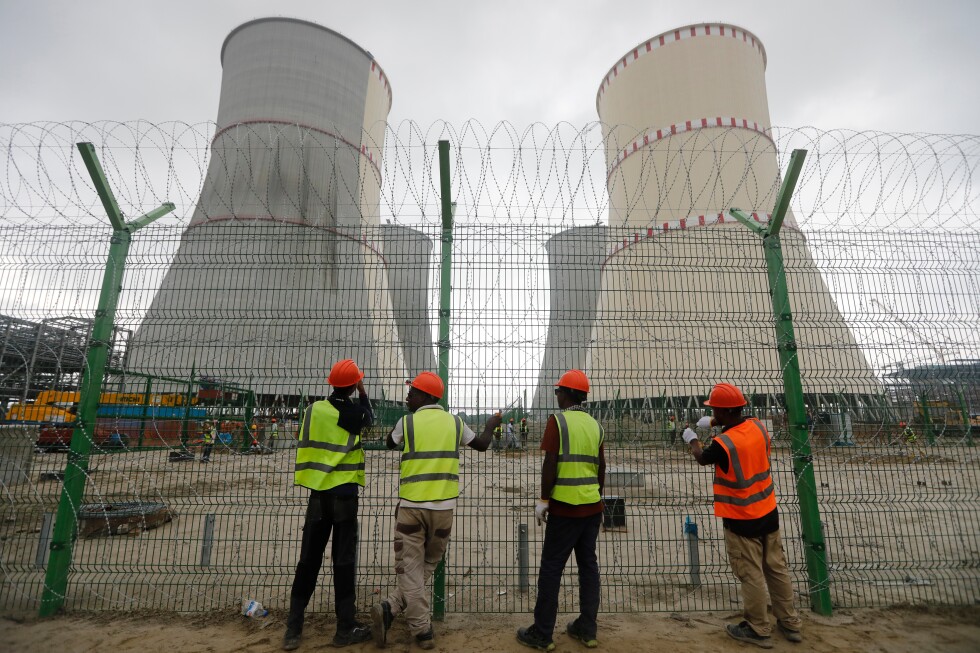
In South Asia, Bangladesh is racing to activate new reactors built by Russia’s state-owned Rosatom, hoping to add 300 megawatts to the national grid by summer to offset current gas shortages. Vietnam recently signed an agreement with Moscow for two Russian-designed reactors, while the Philippines is considering reviving a nuclear plant built after the 1973 oil crisis that was never activated.
“I hope we learned our lesson,” said Alvie Asuncion-Astronomo of the Philippine Nuclear Research Institute, noting that the Iran war is “providing a needed push for nuclear.”
Africa’s energy landscape is also transforming as countries grapple with soaring prices and power shortages. More than 20 of Africa’s 54 nations have initiated nuclear energy plans, with the continent increasingly viewed as a growth market for atomic energy.
Nuclear powers including the United States, Russia, China, France and South Korea are actively promoting advanced technologies such as small modular reactors (SMRs) to African nations. These compact, more affordable alternatives to traditional plants are presented as solutions to chronic energy deficits, though even these smaller projects require years of development.
Kenya, for instance, plans to bring a small modular reactor online by 2034, culminating a development process that began in 2009. Last month, Justus Wabuyabo of Kenya’s Nuclear Power and Energy Agency declared that “nuclear energy is no longer a distant aspiration for African countries; it is a strategic necessity.”
At a March summit hosted by the UN’s nuclear watchdog agency, Rwandan President Paul Kagame predicted Africa would become “one of the most important global markets” for smaller reactors. South Africa, home to the continent’s only existing nuclear plants, aims to increase nuclear’s share in its energy mix from about 5% currently to 16% by 2040.
The energy disruptions have intensified competition between the United States and Russia for influence in Africa’s nuclear sector. Russia’s Rosatom is building Egypt’s first reactor and has cooperation agreements with Ethiopia, Burkina Faso, Ghana, Tanzania and Niger. While the U.S. has made inroads with Kenya and Ghana joining an American-led modular reactor initiative, Washington is working to expand its presence, recently co-sponsoring a nuclear conference in Nairobi with South Korea.
Despite the growing enthusiasm, nuclear energy carries significant risks. Potential meltdowns and radioactive waste management remain concerns, while the technology could potentially enable nuclear weapons development. Environmental advocates like Ayumi Fukakusa of Friends of the Earth Japan warn that “nuclear is very risky” and will perpetuate dependence on imported fuels such as enriched uranium.
Rex Amancio of the Global Renewables Alliance suggests governments should focus on building renewable energy infrastructure for long-term energy security, while Bronson highlights the vulnerability of nuclear facilities during conflicts, pointing to reactors targeted during both the Iran war and the Russia-Ukraine War.
“All of this comes into the mix of how we think about energy security,” Bronson noted. “Countries are now weighing those kinds of risks against the other risks, which Asia and Africa are seeing first and foremost, about what happens when gas and oil stops.”
Fact Checker
Verify the accuracy of this article using The Disinformation Commission analysis and real-time sources.

12 Comments
As someone with an interest in energy and commodities, I’ll be closely watching how this unfolds. The prospect of a nuclear renaissance, even if gradual, could have major implications for uranium, rare earths, and other critical minerals needed to fuel these programs.
The article highlights how the energy crisis is driving a nuclear renaissance, but I wonder about the long-term implications. Will this lead to a proliferation of nuclear technology and materials that could heighten geopolitical tensions and security risks?
That’s a valid question. The spread of nuclear capabilities, even for civilian energy, does raise concerns about nuclear weapons proliferation and potential for accidents or misuse. Careful international oversight and strong safety protocols will be crucial.
It’s not surprising that countries are looking to nuclear power as a way to bolster their energy security in the face of the Iran war’s disruptions. But the article’s claim of a ‘nuclear renaissance’ seems a bit premature – building new nuclear plants still takes years, if not decades.
Good point. While the current crisis may spur more countries to consider nuclear, actually getting new plants online quickly is unrealistic. The article seems to overstate the near-term impact of this dynamic.
While I understand the appeal of nuclear power as a more stable domestic energy source, I share the author’s concerns about the risks of nuclear proliferation. Careful international cooperation and oversight will be essential to ensure this technology is developed and used responsibly.
The energy crisis sparked by the Iran war is certainly pushing many countries to reconsider nuclear power as a more reliable and secure energy source. It will be interesting to see how this accelerates nuclear development plans across Asia and Africa in the coming years.
You raise a good point. The need for stable, domestic energy supplies is becoming increasingly critical given the global disruptions. Nuclear could provide a viable solution if done safely and responsibly.
The article raises some fascinating questions about the long-term impacts of this potential nuclear resurgence. Will it alter global energy trade flows? Spur new investment and technological innovations? Or heighten geopolitical tensions? There’s a lot to unpack here.
While the Iran conflict has undoubtedly created an energy crunch, I’m cautious about a wholesale rush to nuclear power. The risks and costs associated with nuclear development should be carefully weighed against the potential benefits, especially for developing nations.
That’s a fair concern. Nuclear power comes with significant safety, environmental, and economic challenges that can’t be ignored, especially for countries without established nuclear programs. A measured, well-planned approach is prudent.
The article highlights an important geopolitical shift, with the Iran conflict driving nations across Asia and Africa to accelerate nuclear power development. This could have significant implications for global energy markets and security dynamics in the years ahead.