


Listen to the article
Families caught between housing instability and education face impossible choices as a veteran education reporter recently discovered while following the journey of an Atlanta mother of three.
For years, teachers have lamented that some of their students’ most pressing challenges—particularly poverty and housing insecurity—lie beyond schools’ capacity to address. These concerns are well-founded, according to mounting evidence linking housing instability to educational disruption.
Research consistently shows that children facing possible eviction often end up transferring to schools with fewer resources, higher poverty rates, and lower academic performance. These students frequently experience increased absenteeism and, if they do transfer, face higher suspension rates.
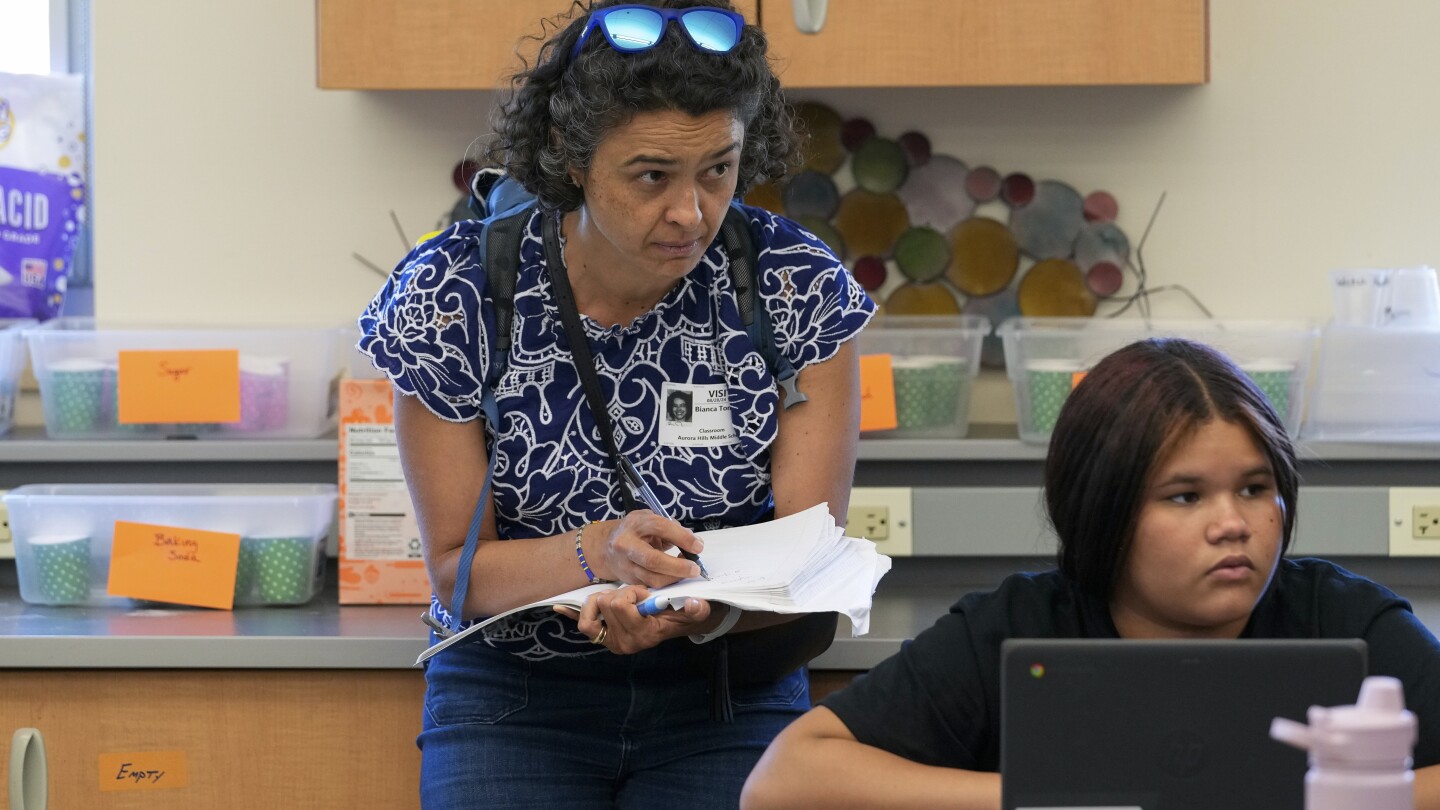
“I’ve witnessed this connection firsthand in my reporting,” says Bianca Vázquez Toness, who covers education and children’s wellbeing for The Associated Press. “When I interviewed students who had missed months of school, many traced their extended absences back to a housing disruption—losing their home, moving in with relatives, and then struggling to re-engage with education.”
To better understand this intersection between housing and education, Toness connected with Sechita McNair, a single mother of three boys fighting to return to Atlanta after an eviction. McNair’s primary goal: keeping her children in their original schools despite mounting obstacles.
“McNair was incredibly forthcoming about her experiences,” Toness explains. “As a film industry veteran, she immediately understood my need for detailed documentation of her journey—from the exact circumstances of receiving an eviction notice to her strategies for advocating for her children’s educational stability.”
Over several months, Toness traveled to Atlanta three times to document McNair’s situation, maintaining regular contact between visits. Their conversations often occurred during McNair’s school drop-offs or while she completed food delivery orders for supplemental income.
“What emerged was a portrait of extraordinary resilience—a single mother swimming upstream while supporting three children,” Toness reflects. “The most heartbreaking aspect is that McNair is doing exactly what education researchers would recommend: prioritizing school stability for her children. Yet despite her best efforts, the challenges remain overwhelming.”
McNair’s struggle illuminates the broader impact of Atlanta’s rapid gentrification, which has displaced numerous families from neighborhoods they’ve called home for generations. As property values rise and affordable housing diminishes, families like McNair’s face impossible choices between financial survival and educational stability.
This housing-education connection represents a growing crisis in metropolitan areas nationwide. When families are forced to relocate due to eviction or unaffordable housing, children often suffer cascading consequences—new schools, broken peer relationships, and disrupted learning—that can derail academic progress for years.
Education experts increasingly advocate for cross-sector solutions that address both housing stability and educational access. Some school districts have begun partnering with housing agencies and nonprofits to provide emergency rental assistance, legal support during eviction proceedings, and transportation options for students forced to move outside their school boundaries.
“The complexity of McNair’s situation reflects the interwoven nature of these challenges,” Toness notes. “Her story demonstrates how housing instability creates ripple effects throughout a family’s life, particularly affecting children’s educational opportunities.”
Despite the obstacles, McNair maintains remarkable optimism and determination. Her belief that persistence will eventually yield results drives her daily efforts to secure stable housing while supporting her children’s education—a juggling act familiar to countless American families caught in similar circumstances.
Toness’s reporting highlights how policies addressing either housing or education in isolation often fail families navigating both systems simultaneously. The intersection demands more integrated approaches that recognize how fundamental housing stability is to educational success.
The Associated Press’ education coverage receives financial support from multiple private foundations, though AP maintains full editorial control over content.
Fact Checker
Verify the accuracy of this article using The Disinformation Commission analysis and real-time sources.

18 Comments
What a powerful and important story. The reporter did a great job highlighting the cascading effects of housing instability on a student’s education. This is a crucial issue that policymakers need to address more holistically.
Absolutely. Ensuring all children have access to stable, affordable housing should be a top priority to support their educational success.
Interesting how housing instability can disrupt a child’s education. Eviction and frequent moving must take a huge toll on their academic progress and wellbeing. It’s good that the AP reporter is shedding light on this important issue.
Absolutely, housing security is crucial for a student’s success. Schools need more resources to support families facing these challenges.
This is a really eye-opening report on the intersection of housing and education. The reporter did a great job illustrating how housing instability can derail a student’s academic progress. It’s a complex systemic issue that deserves much more attention.
Agreed. Providing stable, affordable housing should be a key priority to ensure all students have the foundation they need to succeed in school.
The link between housing insecurity and educational disruption is so concerning. It’s a vicious cycle that traps families and perpetuates inequality. Kudos to the AP reporter for highlighting this important story.
Agreed, this is a complex systemic issue that requires holistic solutions. I hope the report sparks meaningful policy changes to better support vulnerable students and families.
This report underscores how housing insecurity undermines a child’s ability to learn and thrive. It’s a complex, systemic issue that deserves much more attention. Kudos to the AP reporter for tackling this important story.
Heartbreaking to see how housing instability derails a child’s education. The reporter shines an important light on this underappreciated challenge. Schools clearly need more resources to support vulnerable families.
Fascinating to see how something as basic as housing security can have such a profound impact on a child’s education. The AP reporter tackled a sensitive but vital issue. I hope this sparks meaningful change to better support vulnerable families.
This is a sobering reminder that education doesn’t exist in a vacuum. Wider societal issues like housing and poverty have a huge impact on a student’s ability to learn and succeed. Kudos to the AP reporter for tackling this complex story.
Absolutely. Addressing the root causes of educational inequity, like housing insecurity, is crucial. I hope this report spurs productive dialogue and meaningful policy changes.
Eviction and frequent moves must be incredibly destabilizing for students. It’s admirable that the AP reporter is shedding light on this critical intersection of housing and education. Policymakers need to take action to support these families.
Agreed. Providing stable, affordable housing should be a key priority to ensure all students have the foundation they need to succeed in school.
Fascinating to see how housing instability disrupts a child’s schooling. The reporter did a great job highlighting this underreported issue and its damaging consequences. More support for vulnerable families is clearly needed.
This is a powerful example of how broader socioeconomic factors can profoundly impact a child’s education. Kudos to the AP reporter for taking on this sensitive but crucial story.
Yes, the intersections between housing, poverty, and education need much more attention. Holistic approaches are essential to break these detrimental cycles.