


Listen to the article
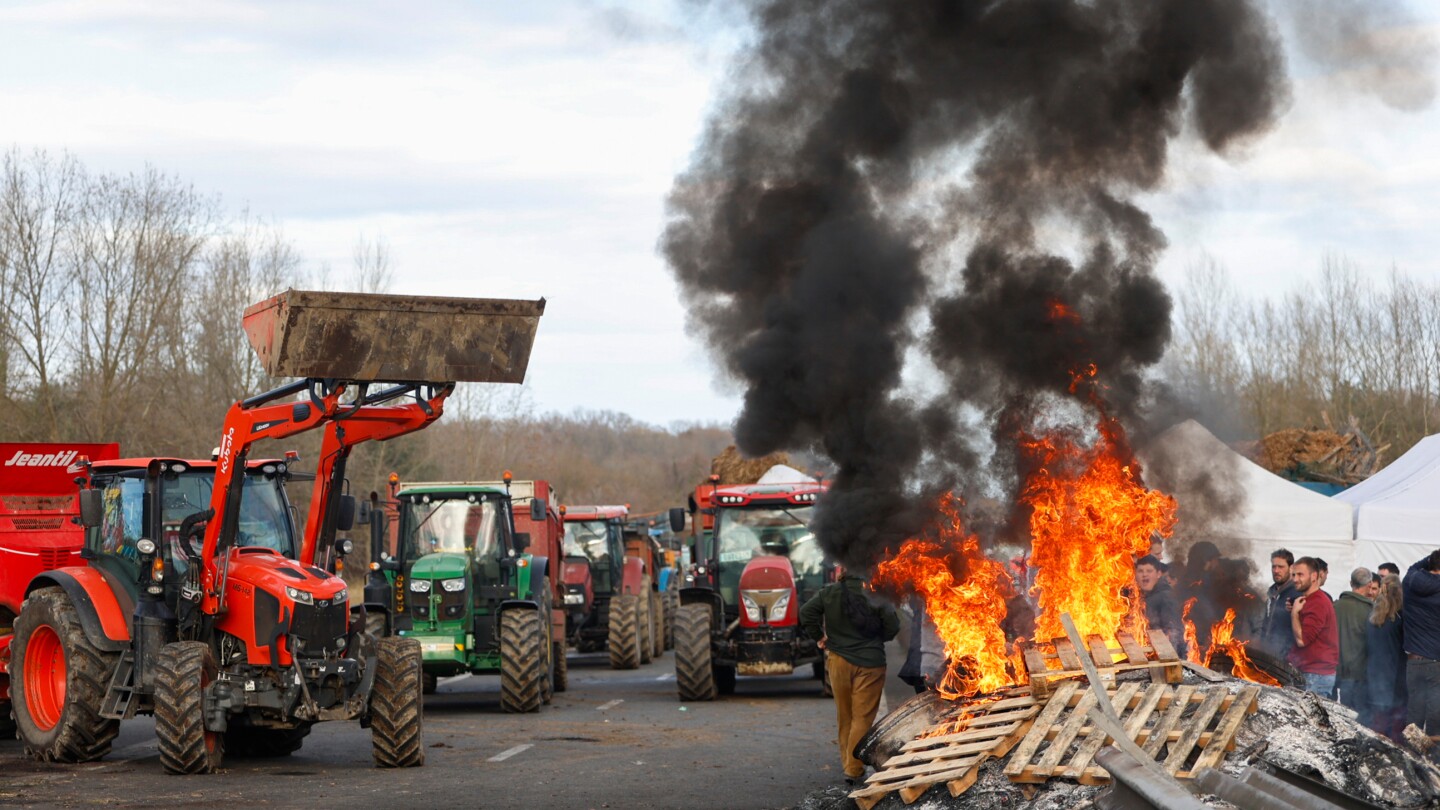
French farmers have taken to the streets across the country this week, erecting barricades with tractors and staging road blockades to protest a major trade agreement between the European Union and the South American Mercosur bloc. The demonstrations have amplified opposition to a deal that has been under negotiation for 25 years.
The protests have effectively pressured the French government to push for a delay in finalizing the agreement, which would gradually eliminate duties on nearly all goods traded between the EU and the five active Mercosur nations—Brazil, Argentina, Uruguay, Paraguay, and Bolivia—over a 15-year period. Once ratified, the accord would create a market encompassing 780 million people and represent a quarter of the world’s GDP.
“We want to protect our future,” said Loic Rivière, an aspiring farmer, speaking from a tractor blockade on a highway leading into Paris. “What we face isn’t the same as our parents. There’s more competition, more globalization, more diseases” affecting crops and animals.
The protests have gained momentum as farmers combined their opposition to the Mercosur deal with anger over government measures to control the spread of lumpy skin disease, a viral cattle illness previously confined to sub-Saharan Africa. Government-ordered culling of infected herds has further inflamed tensions in rural communities.
Demonstrators have used dramatic tactics to draw attention to their cause, piling potatoes, tires, straw bales, and other materials to create barricades across roadways. Some blockades were set ablaze, creating powerful visual symbols of rural discontent that resonated with the public. Many motorists expressed solidarity with the protesters by honking their horns as they passed.
The agricultural protests come at a politically sensitive time for France and the EU. Benjamin Haddad, France’s Minister of European Affairs, has called for a delay in finalizing the agreement, citing insufficient safeguards. “Today we don’t see them (the safeguards), that’s why we’ve asked for a delay,” Haddad stated ahead of a meeting in Brussels.
French officials, concerned about rising support for far-right parties that oppose the deal, have outlined three key demands: mechanisms to monitor and prevent economic disruption within the EU, increased regulatory standards in South American countries including pesticide restrictions, and enhanced inspection protocols for imports at EU ports.
“This is what the Americans do, this is what the Chinese do, and so, we need to be open, but we also need to protect ourselves and protect our interests and basically ensure a level playing field,” Haddad emphasized.
France is not alone in its opposition. Other EU nations with substantial agricultural sectors, including Poland and Ireland, have expressed reservations about the agreement. Thomas Byrne, Ireland’s Minister of State for European Affairs and Defence, acknowledged that “the Irish government has some concerns,” adding that “the indications that I have at the moment is that it will be delayed until January.”
Despite this opposition, EU lawmakers voted 431-161, with 70 abstentions, to advance the deal with additional safeguards. Supporters argue that the agreement would strengthen Europe’s geopolitical position and reduce dependence on China, Russia, and the United States.
“The Mercosur trade agreement will strengthen Europe’s geopolitical position. It will make us less dependent on China, on Russia and the moods of Donald Trump. It is the clear signal to the world the EU is a reliable partner,” said Svenja Hahn, a German MEP with the center-right Renew Europe coalition.
Analysts warn that further delays could jeopardize the agreement entirely, particularly as more right-wing governments gain power within the EU. Philipp Lausberg of the European Policy Centre noted that the deal would help the EU secure export markets and critical imports like rare earths, but “if they don’t do it now, then the chances of it going through are waning.”
European Commission President Ursula von der Leyen remains committed to signing the agreement but requires backing from at least two-thirds of member countries to proceed. It remains uncertain whether France can gather enough allies to block her signature. Despite the likelihood of a delay, von der Leyen and European Council President António Costa are still scheduled to sign the deal in Brazil on Saturday.
As the deliberations continue, some farmers from the French protests plan to join a march on Brussels as EU leaders convene to address both the Mercosur deal and Ukraine funding, highlighting the growing intersection of agricultural concerns with broader European political priorities.
Fact Checker
Verify the accuracy of this article using The Disinformation Commission analysis and real-time sources.

6 Comments
The French farmer protests highlight the complexities of free trade agreements. On one hand, larger markets can drive economic growth, but domestic industries also need support to remain competitive. Finding the right compromise is crucial for all stakeholders.
The French farmer protests shine a light on the need for nuanced, balanced approaches to free trade agreements. Protecting domestic industries while also realizing the benefits of expanded markets is a delicate balancing act.
The French farmer blockades are a powerful display of how global trade negotiations can have significant local impacts. Policymakers will need to carefully weigh the tradeoffs and engage closely with affected communities to find an equitable solution.
Interesting to see the impact of global trade deals on local farmers. While the Mercosur agreement could bring economic benefits, the French farmers have valid concerns about increased competition and challenges. Balancing trade, sustainability, and community interests is a delicate task.
The Mercosur trade negotiations have clearly hit a nerve with French farmers. Their concerns about increased competition and risks to their livelihoods deserve serious consideration as the EU moves forward.
The French farmer protests underscore the need for policymakers to carefully assess the local impacts of global trade agreements. Protecting domestic industries while realizing the benefits of expanded markets is a delicate balancing act.