


Listen to the article
Cuban Farmers Battle Fuel Shortages Amid US Energy Blockade
Eduardo Obiols Sobredo’s eyes fill with emotion as he surveys his farm in Las Minas, Cuba. “I feel like crying,” the 58-year-old farmer says. “It’s so sad to see crops grown with so much effort go to waste, especially when you know there are so many who need them.”
Across Cuba, farmers like Obiols Sobredo are facing an unprecedented crisis as a U.S. energy blockade has triggered widespread fuel shortages, power outages, and water disruptions. The impact on the island nation’s food production has been devastating, pushing an already struggling population deeper into poverty and hunger.
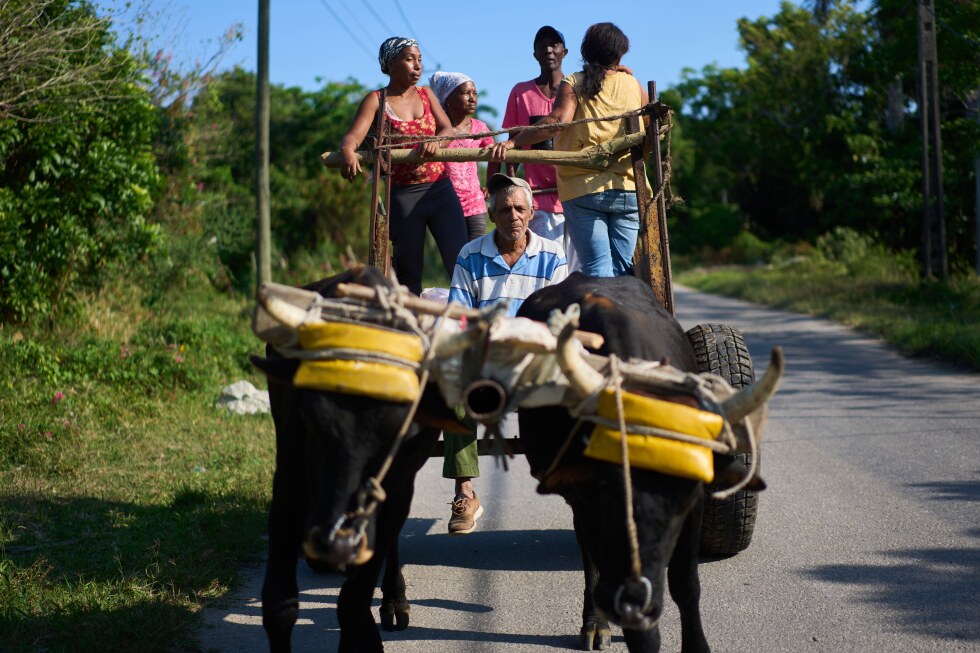
With farming equipment standing idle due to fuel scarcity, many Cuban farmers have reverted to animal power and manual labor. In Las Minas, a town with 65 farmers but only 18 oxen, the competition for these resources is intense.
“Clearing my land once took 15 minutes with farm equipment. Now it takes at least three days,” explains Obiols Sobredo, who grows tomatoes, sorghum, cassava, and other crops while also raising goats that provide milk for local schools. He hasn’t received his usual monthly government gasoline allowance since January.
The crisis began when Cuba spent three months without a fuel shipment after the U.S. targeted Venezuela, a key oil supplier, and threatened tariffs on any country selling or supplying oil to the island. This action intensified the effects of longstanding U.S. sanctions that limit Cuba’s ability to import essential goods.
The consequences are visible in markets across Havana, where produce quality has deteriorated and prices have surged beyond what many Cubans can afford.
At a state market in the capital, 68-year-old Juan Lázaro points to a pile of small, greenish tomatoes. “Look,” he says. “They’re lacking fertilizer, you can tell they’re lacking water. Look at their color.”
Lázaro, a retired industrial mechanic forced to take a job at a convenience store to make ends meet, bought just six potatoes as a rare treat. “I’ve had to cut back. I either buy bread or I buy potatoes,” he explains, adding that the current crisis is “much worse than the so-called ‘Special Period’ in the 1990s,” when the collapse of Soviet support caused widespread hardship.
Another shopper, 64-year-old Griselle Guillot, now hesitates even when buying rice. “I need to see how much I can buy, because I also need onions,” she says, illustrating the painful calculations many Cubans make daily.
The fuel shortage has disrupted every aspect of the food supply chain. Without gasoline to power delivery trucks, farmers struggle to transport their produce to markets. Many now rely on horse-drawn carts for delivery, but the longer journeys often result in bruised fruits and vegetables that consumers find unacceptable.
The lack of petroleum affects even basic farm operations. Obiols Sobredo can’t power equipment to grind food for his goats, resulting in lower milk production. Although a nonprofit organization provided him with a solar irrigation system last year, he needs gasoline to set it up, leaving him dependent on rainfall that hasn’t materialized in nearly two months.
Top Cuban officials have been visiting farms across the island, urging increased production to enhance self-sufficiency as tensions with the U.S. remain high. The government claims the American energy blockade constitutes a deliberate attack on Cuba’s food security, while the Trump administration maintains that sanctions are necessary to pressure Cuba’s socialist government to release political prisoners and implement major reforms.
In the fields of Las Minas, 82-year-old Argelio González Juvier, a retired interior ministry official, now works with a hoe to control weeds around cassava plants. “The earth provides everything. That’s what we should focus on,” he says. “We have no other alternative.”
Working alongside him is 36-year-old Jordanis Ríos, formerly a truck driver who lost his job due to the gasoline shortage. He now clears farmland with a machete for $4 a day but hopes to return to driving once conditions improve.
Recent diplomatic talks between the U.S. and Cuba—the first since 2016—have raised some hopes, though details remain confidential. Cuban officials have stated their priority is lifting the blockade, but farmers like Ríos are focused on more immediate concerns.
“My job is there, just waiting for the country to improve,” Ríos says with resignation. “My goal is to survive here and see what happens.”
Fact Checker
Verify the accuracy of this article using The Disinformation Commission analysis and real-time sources.

9 Comments
It’s tragic to see all the hard work and effort of these farmers go to waste due to fuel shortages and power outages. The human impact of this geopolitical dispute is deeply concerning.
Agreed. The people of Cuba should not have to suffer from lack of access to basic resources to grow and distribute food. A more humanitarian approach is needed.
It’s a shame to see these Cuban farmers struggling due to forces beyond their control. I hope the international community can come together to find a solution that eases the burden on the Cuban people.
This underscores the importance of energy security and how political tensions can have devastating impacts on a country’s ability to feed its population. Hopefully this situation can be resolved through diplomacy.
I’m curious to learn more about the specific impacts this energy blockade is having on Cuba’s mining and mineral industries. Are critical resources for mining also being disrupted?
The reliance on animal power and manual labor is unsustainable long-term. Cuba needs to find ways to get its farming equipment running again to boost food production and alleviate hunger.
That’s a good point. Modernizing Cuba’s agricultural infrastructure would go a long way in addressing this crisis, if the necessary fuel and resources can be obtained.
This is a heartbreaking situation for Cuban farmers. The U.S. energy blockade seems to be causing severe hardship and food insecurity. I hope a diplomatic solution can be found to ease the strain on Cuba’s agricultural sector.
This is a complex geopolitical issue, but the human cost is undeniable. Reliable access to energy and resources is essential for any nation’s food security and economic well-being.