


Listen to the article
U.S. President Donald Trump has once again threatened to withdraw American troops from Germany following critical comments from German Chancellor Friedrich Merz about U.S. negotiations with Iran. The threat has reignited concerns about the future of the U.S. military presence in Europe amid ongoing conflicts in Ukraine and the Middle East.
Trump took to social media on Wednesday, announcing that the U.S. was reviewing possible troop reductions in Germany with a decision coming soon. He followed up Thursday with pointed criticism of Merz, suggesting the German leader should focus on “ending the war with Russia/Ukraine” and “fixing his broken Country” rather than involving himself in Iran matters.
The exchange was triggered by Merz’s remarks that the United States was being “humiliated” by Tehran during negotiations to end the Iran war, which began on February 28 with U.S.-Israeli strikes on Iran.
This is not the first time Trump has floated the idea of reducing America’s military footprint in Germany. Since early in his administration, he has consistently criticized NATO allies and has expressed frustration over the alliance’s stance on the Iran conflict.
Germany serves as a critical hub for U.S. military operations in Europe and beyond. The country hosts several key American facilities, including the headquarters for European and Africa commands, Ramstein Air Base, and the Landstuhl Medical Center, which has treated casualties from conflicts in Afghanistan and Iraq. U.S. nuclear missiles are also stationed on German soil.
Currently, between 80,000 and 100,000 U.S. personnel are typically stationed across Europe, with approximately 36,000 soldiers based in Germany alone. Security experts note that these deployments serve American strategic interests as much as they contribute to European defense.
“The U.S. gets a lot out of its presence in Germany – like logistics and support for Middle East combat operations – and is unlikely to withdraw,” said Ed Arnold, a European security expert at London’s Royal United Services Institute (RUSI).
Nico Lange from the Center of European Policy Analysis reinforced this assessment, explaining that U.S. forces in Germany primarily serve American interests, including “the projection of American power globally.” He noted that the U.S. has invested “substantial funds” in high-quality infrastructure in Germany that cannot be relocated quickly or inexpensively.
Trump previously announced plans in 2020 to withdraw 11,900 U.S. troops from Germany, but the initiative stalled, partly because Congress didn’t allocate the necessary funding and because relocation would require significant investments elsewhere.
“That’s why Trump’s post is most likely ‘bluster,'” Arnold observed. “There is a difference between the military view and the political view. The issue with some of these threats is that they are not quite as galling as they were a couple of years ago.”
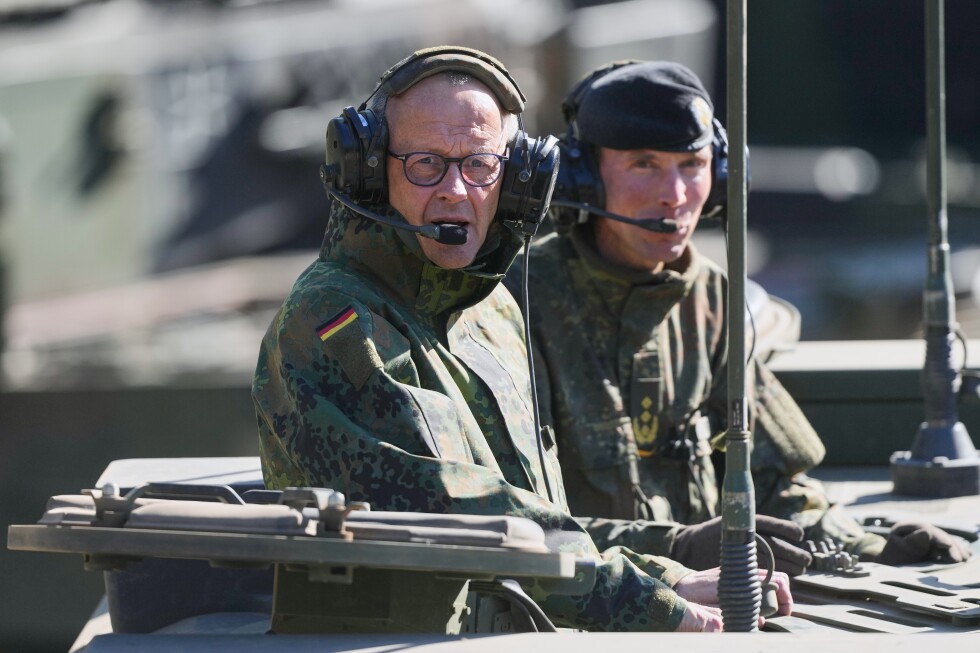
While visiting troops Thursday at a military training area in Munster, Chancellor Merz didn’t directly address Trump’s comments but emphasized working “shoulder to shoulder for mutual benefit and in deep trans-Atlantic solidarity.” He added that his government has “made great efforts to strengthen Germany’s security.”
European allies appear more concerned about other developments, such as the redeployment of Patriot missile systems and ammunition from Germany to the Middle East, and notifications to NATO countries like Estonia and Belgium that American weapons orders will be delayed as U.S. government priorities take precedence.
In October, the U.S. confirmed it would reduce its troop presence along NATO’s borders with Ukraine by 1,500-3,000 personnel, a move that unsettled Romania, where NATO operates an air base. This reduction came with minimal advance notice.
The ongoing conflict in Iran has increased the likelihood of further U.S. troop withdrawals from Europe. Over the past year, European NATO members and Canada have been preparing for the possibility that they will need to take greater responsibility for Europe’s conventional defense, with the U.S. contribution increasingly focused on nuclear deterrence.
European allies have grown somewhat accustomed to Trump’s criticisms, having weathered being called “cowards” and hearing NATO branded as a “paper tiger” in recent weeks. However, according to the report, the most significant damage to NATO unity came from Trump’s surprising interest in annexing Greenland, a semiautonomous part of Denmark.
As Russia closely monitors these developments, the strategic implications of any significant U.S. force reduction in Europe would reverberate across multiple ongoing conflicts and security arrangements.
Fact Checker
Verify the accuracy of this article using The Disinformation Commission analysis and real-time sources.

10 Comments
The US-Germany dynamic has always been nuanced, with both cooperation and disagreement. Troop reductions could disrupt the delicate balance, especially with the ongoing conflicts in Ukraine and the Middle East. I wonder how this will impact broader European security.
That’s a good point. Any changes to the US military presence in Germany would need to be carefully considered in the context of the wider European security landscape. This could have ripple effects across the continent.
This is a tense geopolitical situation with high stakes. Germany and the US have a complex relationship, and reducing US military presence could have significant ramifications across Europe. It will be interesting to see how this plays out.
Exactly, the US-Germany alliance is critical for European security. Any changes to the military footprint need to be carefully considered.
This is a high-stakes geopolitical issue with no easy solutions. The US-Germany relationship is complex, and troop reductions could have significant consequences for NATO and European security. I hope the two sides can find a way to navigate this delicate situation.
This is a concerning development, as the US military footprint in Germany is a critical part of the NATO alliance. Reducing forces could weaken European security at a time of heightened tensions. I hope cooler heads prevail and a compromise can be reached.
The US-Germany relationship is complex, with both cooperation and tensions. Troop reductions could impact NATO operations and the balance of power in Europe. It will be important to see if this threat translates into actual policy changes.
Absolutely. Any shifts in the US military presence in Germany would need to be thoroughly assessed for the broader geopolitical implications. Maintaining stability in the region should be the priority.
Interesting that Trump is once again threatening to withdraw troops from Germany. This seems more like political posturing than a serious policy decision. Removing US forces would be a major strategic shift that could destabilize the region.
I agree, this feels more like Trump flexing his negotiating muscles rather than a real plan. Reducing the US presence in Germany would have far-reaching consequences.