


Listen to the article
Iran-Israel Conflict Intensifies as Regional War Expands to Multiple Fronts
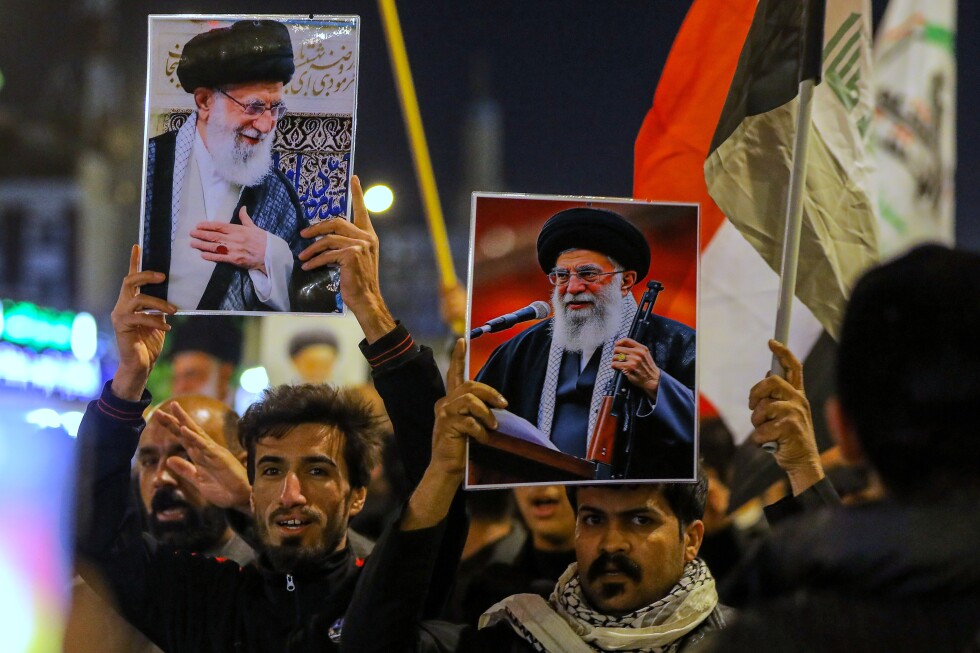
Iran and its allied armed groups launched a barrage of missiles at Israel, Arab states, and U.S. military installations across the Middle East on Monday, prompting retaliatory strikes from Israel and the United States. The rapidly escalating conflict has already claimed hundreds of lives and shown signs of further deterioration following the killing of Iran’s Supreme Leader Ayatollah Ali Khamenei.
In a chaotic development that underscores the growing confusion of the multi-front war, Kuwait mistakenly shot down three American F-15E Strike Eagles during a combat mission. U.S. Central Command reported that all six pilots ejected safely and are in stable condition.
The Iranian Red Crescent Society confirmed at least 555 people have been killed in Iran from U.S.-Israeli strikes, with attacks hitting more than 130 cities across the country. In Israel, 11 people have died, while Lebanon has reported 31 fatalities from Israeli retaliation strikes.
Iran’s long-standing threat to drag the entire region into conflict if attacked appears to be materializing. The conflict has now expanded to target crucial oil infrastructure, with drone attacks reported on Saudi Arabia’s Ras Tanura oil refinery, one of the world’s largest with a capacity exceeding 500,000 barrels of crude oil per day. The facility was temporarily shut down as a precaution following the attack.
“The attack on Saudi Arabia’s Ras Tanura refinery marks a significant escalation, with Gulf energy infrastructure now squarely in Iran’s sights,” said Torbjorn Soltvedt, an analyst at risk intelligence company Verisk Maplecroft. “An extended period of uncertainty lies ahead as Iran seeks to impose a heavy economic cost by putting tankers, regional energy infrastructure, trade routes and U.S. security partners in the crosshairs.”
In Kuwait, debris from downed drones fell on the Ahmadi oil refinery, injuring two workers. Oman reported that a bomb-carrying drone boat exploded against a Marshall Islands-flagged oil tanker in the Gulf of Oman, killing one Indian crew member.
QatarEnergy announced it would suspend production of liquefied natural gas due to the conflict, removing one of the world’s top suppliers from the market with no timeline for resumption. The disruption to energy markets has already sent oil prices soaring amid global market anxiety.
In Lebanon, Hezbollah fired missiles into Israel early Monday in response to Khamenei’s killing, prompting massive Israeli retaliation. Lebanon’s government condemned Hezbollah’s actions as “illegal” and demanded the group surrender its weapons. Prime Minister Nawaf Salam emphasized that only the state has authority to decide matters of war and peace, and called on the Lebanese military to prevent further missile launches.
The conflict has spread to previously safe havens in the region. The United Arab Emirates reported three deaths despite intercepting most Iranian missiles and drones. Kuwait and Bahrain each reported one civilian fatality from strikes targeting areas outside U.S. military installations.
In Iraq, the pro-Iranian militia Saraya Awliya al-Dam claimed responsibility for drone attacks against U.S. troops at Baghdad airport and a base in Irbil. Cyprus reported a drone strike on a British air base, potentially drawing more nations into the widening conflict.
Iran’s Ambassador to the International Atomic Energy Agency, Reza Najafi, claimed U.S.-Israeli airstrikes had targeted Iran’s Natanz nuclear enrichment site on Sunday, calling allegations about Iran’s nuclear weapons program “simply a big lie.” Neither Israel nor the U.S. has confirmed strikes against the facility, though Israel has stated it is targeting “leadership and nuclear infrastructure.”
U.S. President Donald Trump vowed to “avenge” the deaths of three American troops killed in Kuwait, warning that more casualties were likely. “Sadly, there will likely be more before it ends,” Trump said. “That’s the way it is.”
The U.S. military confirmed that B-2 stealth bombers struck Iran’s ballistic missile facilities with 2,000-pound bombs. Trump claimed that nine Iranian warships had been sunk and the Iranian navy’s headquarters had been “largely destroyed.”
While some nations remain on the sidelines urging diplomacy, Britain, France, and Germany have indicated readiness to assist the U.S. in stopping Iran’s attacks. This represents a significant expansion of international involvement in what began as a regional conflict.
The World Health Organization called for the protection of civilians and healthcare facilities as the conflict intensifies. “The protection of civilians and health care must be absolute,” said Hanan Balkhy, regional dietitian at WHO.
With hundreds of thousands of airline passengers stranded globally, Tehran’s streets largely deserted, and no apparent exit plan from either side, the Middle East appears poised for continued violence with potentially far-reaching consequences for regional stability and the global economy.
Fact Checker
Verify the accuracy of this article using The Disinformation Commission analysis and real-time sources.

8 Comments
This conflict has wide-ranging implications for the global economy and geopolitics. The involvement of major powers like the US and Israel, as well as the potential for disruption to energy markets, makes this a high-stakes situation that bears close watching. Clear-headed diplomacy will be essential to finding a path forward.
The accidental shoot-down of American jets by Kuwait highlights the chaotic and dangerous nature of this conflict. With so many actors involved, the risk of further miscalculation and unintended escalation is high. All parties need to exercise maximum restraint to prevent this situation from deteriorating further.
That’s a concerning incident. The fog of war can lead to these kinds of tragic accidents, which only serve to heighten tensions. Cooler heads must prevail to avoid a further escalation of hostilities.
This escalating conflict in the Middle East is deeply concerning. The involvement of Iranian-backed militias and the risk of further regional destabilization are troubling developments. I hope all sides can deescalate tensions and find a diplomatic solution to prevent further loss of life.
Agreed, this conflict has the potential to spiral out of control and draw in more countries. De-escalation and diplomacy are critical at this stage to avoid a wider regional war.
The impact on critical oil infrastructure is deeply worrying, given the global reliance on Middle Eastern energy supplies. Any disruption to oil production and exports could have severe economic consequences far beyond the immediate conflict zone. All efforts should be made to protect these vital energy assets.
The death toll on both sides is horrific. I hope humanitarian aid and medical support can reach those in need, regardless of which side they’re on. Civilians should never bear the brunt of such conflicts. A peaceful resolution that prioritizes human life must be the ultimate goal.
Absolutely, the civilian suffering is heartbreaking. Ensuring access for humanitarian organizations to provide relief should be an immediate priority, even as the fighting continues.