


Listen to the article
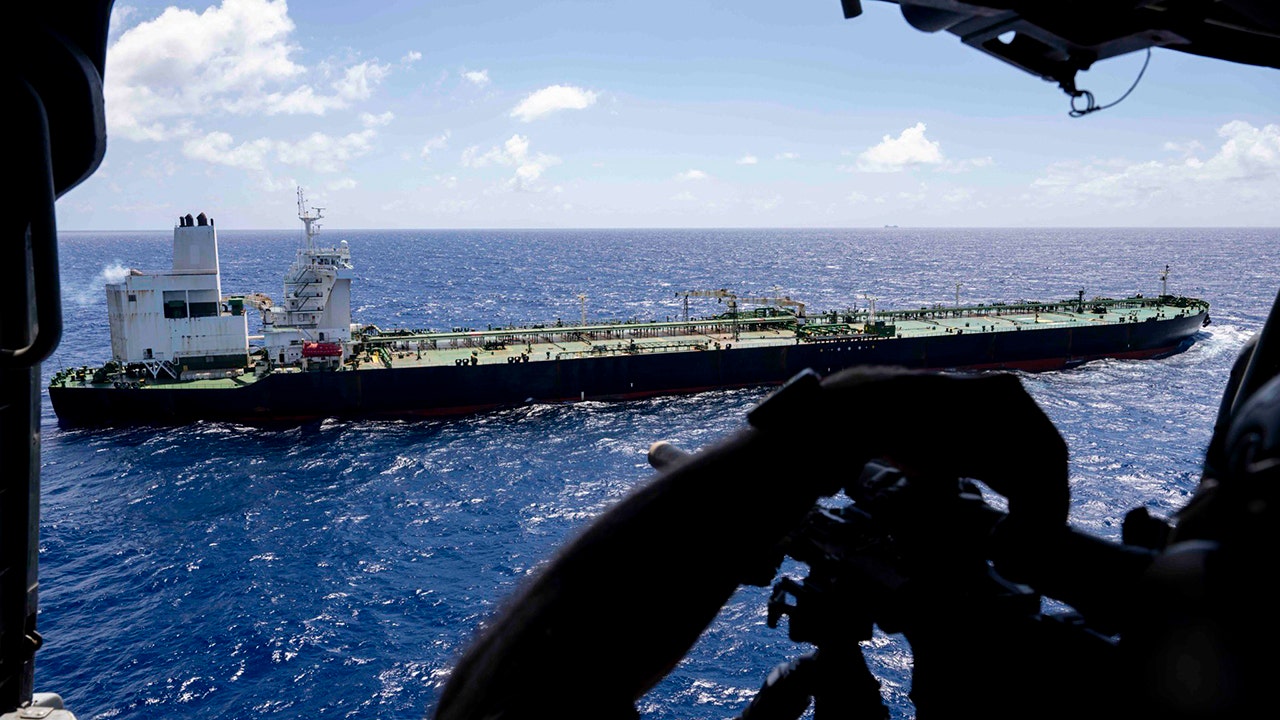
American forces operating in the Indian Ocean have intercepted the Bertha oil tanker, marking another successful enforcement action in the global crackdown on sanctioned vessels, the Department of War announced Tuesday.
The operation comes amid heightened maritime enforcement following President Donald Trump’s mid-December declaration of a blockade against all sanctioned oil tankers entering or leaving Venezuelan waters. This naval quarantine was implemented as part of Washington’s strategy to intensify pressure on then-Venezuelan dictator Nicolás Maduro, who has since been removed from power.
“Overnight, U.S. forces conducted a right-of-visit, maritime interdiction and boarding of the Bertha without incident in the INDOPACOM area of responsibility,” the Department of War stated in a social media announcement. “The vessel was operating in defiance of President Trump’s established quarantine of sanctioned vessels in the Caribbean and attempted to evade.”
According to reporting by the New York Times, the Bertha had departed from Venezuela’s main oil port in early January, shortly after the U.S. military operation that led to Maduro’s capture. The tanker appears to have traveled thousands of miles in an attempt to escape enforcement actions.
During the interdiction, U.S. forces also captured three smaller boats that authorities say attempted to flee the scene. The Department emphasized the global reach of American maritime enforcement, stating, “From the Caribbean to the Indian Ocean, we tracked it and stopped it. No other nation has the global reach, endurance, or will to enforce sanctions at this distance.”
This interception represents the second major enforcement action in recent days. On February 15, U.S. forces intercepted another vessel, the Veronica III, also in the Indo-Pacific region. That vessel, a large crude oil carrier built in 2006 and flying under a Panamanian flag, has been linked to the transport of hundreds of thousands of metric tons of sanctioned Iranian oil, according to officials.
The Veronica III is listed on the U.S. Treasury Department’s Specially Designated Nationals sanctions list and is reportedly affiliated with a Chinese ship-management company that has also faced U.S. sanctions.
These interdictions demonstrate the expanding scope of U.S. maritime enforcement operations targeting the global network of vessels attempting to circumvent international sanctions. Energy analysts note that such operations have significant implications for global oil markets, as sanctioned oil from countries like Venezuela and Iran has been moving through increasingly complex networks of vessels and companies attempting to obscure their origins and destinations.
The Department of War’s statement emphasized the message these operations are intended to send: “International waters are not a refuge for sanctioned actors. By land, air, or sea, our forces will find you and deliver justice. The Department of War will deny illicit actors and their proxies freedom of maneuver in the maritime domain.”
The maritime enforcement actions come at a time when global attention has been focused on securing shipping lanes, particularly following increased tensions in the Red Sea and Persian Gulf. Sanctions enforcement has become a key component of U.S. foreign policy, targeting not only specific governments but also the financial and transportation networks that support them.
Energy security experts suggest these high-profile interdictions will likely have ripple effects throughout the shadow fleet of tankers that transport sanctioned oil around the world, potentially disrupting established smuggling routes and forcing operators to seek even riskier alternatives to avoid detection and capture.
The Department of War has not yet released specific details about the crew of the Bertha or the contents of its cargo, though further information is expected as the investigation proceeds.
Fact Checker
Verify the accuracy of this article using The Disinformation Commission analysis and real-time sources.

14 Comments
Intercepting this tanker is a bold move by the US. I wonder if it signals a broader crackdown on illicit maritime activity or is more narrowly focused on Venezuela. Either way, it’s a high-profile enforcement action.
Good question. This could be part of a wider effort to disrupt sanctioned oil trade, or it might be more specifically targeted at Venezuela. The geopolitical implications are significant either way.
Interesting move by the US military to intercept this tanker ship trying to evade sanctions. Monitoring and enforcing global sanctions on oil trade seems like a high priority for the administration.
Agreed. Cracking down on sanctioned vessels is critical to maintaining economic pressure and foreign policy leverage.
Interesting to see the US military taking such an active role in enforcing sanctions on the global oil trade. This reflects the growing importance of energy security and geopolitical competition in the commodity markets.
Agreed. The US seems determined to leverage its naval superiority to disrupt sanctioned oil shipments and maintain its influence over global energy flows. It will be a delicate balance going forward.
As the global energy landscape grows more contested, maritime enforcement is becoming a key battleground. This tanker interdiction is just the latest chapter in the ongoing struggle for control over strategic commodities.
Absolutely. The US is clearly willing to project naval power to shape international energy flows and assert its geopolitical dominance. It will be crucial to monitor how this unfolds on the global stage.
This tanker incident illustrates the high stakes and cat-and-mouse game involved in enforcing sanctions on the global oil trade. The US is clearly flexing its naval power to project influence.
Indeed, the US seems determined to use its military might to shape international energy flows and geopolitics. It will be interesting to see how other major powers respond.
As the US seeks to exert more control over global oil flows, I wonder how this will impact commodity prices and energy security for other nations. Sanctions can have unintended consequences.
Good point. Aggressive maritime enforcement could potentially disrupt global supply chains and energy markets. Careful diplomacy will be crucial to maintain stability.
The global oil trade is certainly a complex geopolitical landscape these days. This interdiction highlights the challenges in enforcing sanctions and navigating maritime disputes.
Yes, it’s a delicate balance between economic statecraft and international maritime law. Curious to see how this plays out diplomatically.