


Listen to the article
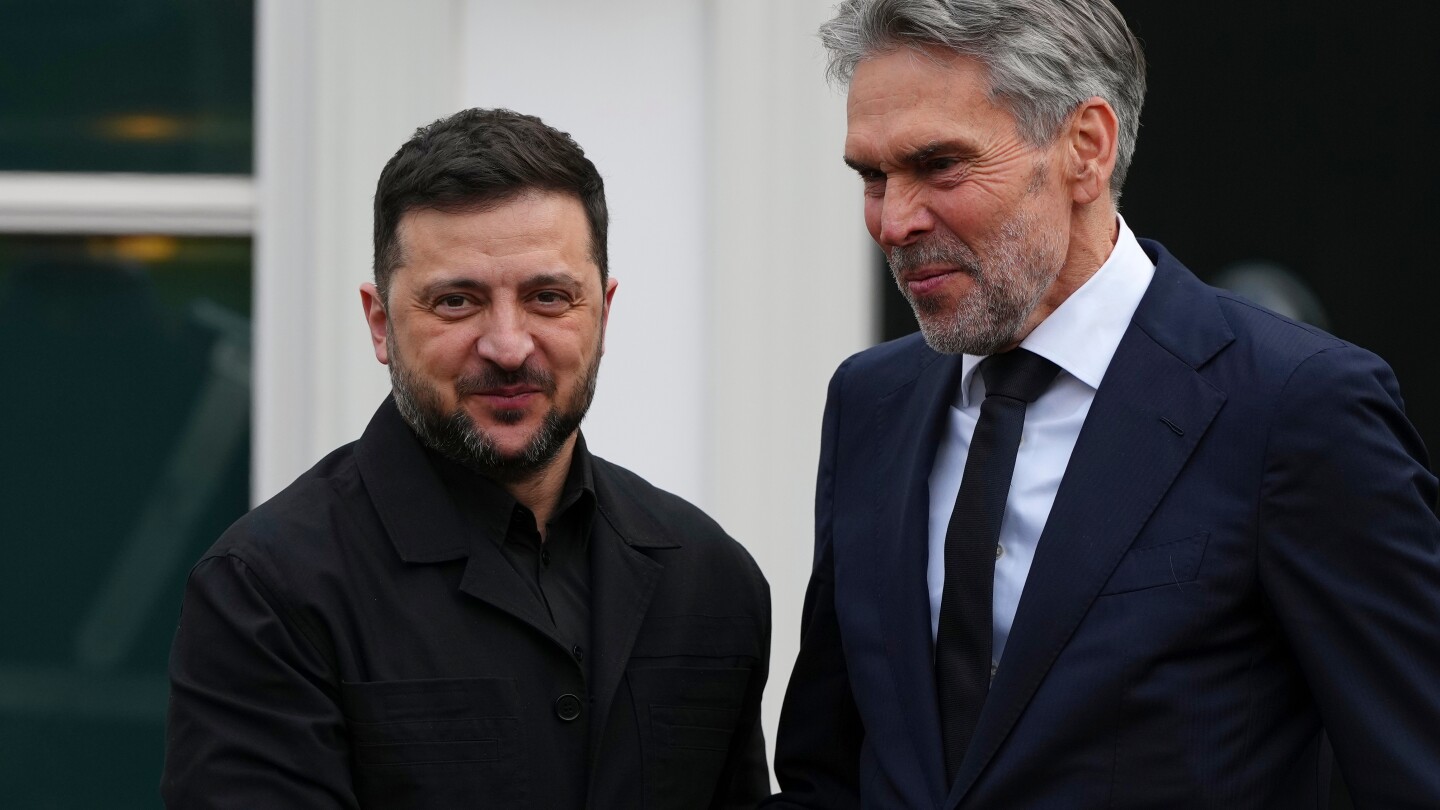
Ukrainian President Volodymyr Zelenskyy and representatives from 34 other nations have formalized plans to establish a compensation mechanism for damages inflicted on Ukraine during Russia’s ongoing invasion, officials announced Tuesday in The Hague, Netherlands.
The International Claims Commission, facilitated by the Council of Europe, will provide a pathway for Ukrainians to seek compensation for damages, losses, and injuries resulting from Russia’s full-scale invasion that began in February 2022.
“The aggressor must pay,” Zelenskyy declared during an address to the Dutch parliament. Speaking later to leaders gathered in The Hague, he expressed hope for robust international support to ensure “any damage caused by the war can be compensated.”
Despite strong diplomatic backing for the initiative, significant questions remain about funding sources. The Council of Europe has firmly stated that Russia should bear financial responsibility, but there is no clear mechanism to compel Moscow’s participation or payment.
One proposal under consideration involves utilizing a portion of the estimated tens of billions of dollars in Russian assets currently frozen in European financial institutions. EU foreign policy chief Kaja Kallas announced at a press conference that the European Union would contribute one million euros ($1.1 million) toward operating the commission, though officials estimate total operational costs at approximately 3.5 million euros ($4.1 million).
The newly established commission will assess claims submitted to the Register of Damages, which has been operational since its launch at a Council of Europe summit in 2023. Officials reported that approximately 80,000 claims have already been filed with the register, which is headquartered in The Hague.
While 35 countries have endorsed the commission, each must now ratify the treaty through their respective legislative processes. Council of Europe officials noted that this level of initial support is unprecedented for one of the organization’s treaties, reflecting widespread international concern about the destruction in Ukraine.
This development comes amid ongoing diplomatic efforts to end the conflict. On Monday, Zelenskyy participated in peace talks in Berlin with representatives from the United States and Germany, including Steve Witkoff, special envoy for President Donald Trump, Trump’s son-in-law Jared Kushner, and German Chancellor Friedrich Merz.
During these discussions, Zelenskyy indicated willingness to compromise on Ukraine’s NATO membership aspirations in exchange for Western security guarantees, though he firmly rejected American suggestions to cede territory to Russia.
“These security guarantees are an opportunity to prevent another wave of Russian aggression,” Zelenskyy told journalists following the talks. “And this is already a compromise on our part.”
Many of the same nations supporting the claims commission have also backed another Council of Europe initiative: the establishment of a specialized international court to prosecute senior Russian officials for their roles in planning and executing the invasion of Ukraine.
The creation of these justice mechanisms reflects growing international determination to hold Russia accountable for damages and alleged violations of international law in Ukraine. Legal experts note that documenting claims now will be crucial for any future settlement, even if immediate Russian payment seems unlikely.
The Register of Damages and the new claims commission represent the most comprehensive international effort to document war damages since similar mechanisms were established following the Gulf War in the early 1990s.
As the war approaches its third year, the financial toll continues to mount. Recent World Bank estimates suggest Ukraine’s reconstruction needs already exceed $400 billion, a figure that grows as infrastructure, housing, and industrial facilities continue to suffer damage from ongoing Russian attacks.
Fact Checker
Verify the accuracy of this article using The Disinformation Commission analysis and real-time sources.

11 Comments
While the path forward may be challenging, this is an important step in the long-term process of rebuilding Ukraine. The international community’s support for this initiative is a positive sign that Ukraine will not be left to shoulder the burden alone.
Securing reliable funding sources for this compensation mechanism will be crucial. The international community must explore all options, including tapping into frozen Russian assets, to ensure Ukraine has the resources it needs to recover and rebuild.
This is an important step in holding Russia accountable for the devastation it has caused in Ukraine. Establishing a compensation mechanism, even with challenges around funding sources, sends a strong message that the international community is committed to supporting Ukraine’s recovery.
As a major commodity producer, Russia’s invasion has disrupted global supply chains and markets. This compensation mechanism could help Ukraine rebuild critical infrastructure and industries, including its vital mining and energy sectors.
Absolutely. Restoring Ukraine’s mining and energy capabilities will be essential for its economic recovery and for meeting global demand for critical minerals and resources.
While the details still need to be worked out, this initiative represents an important step towards accountability and justice for the people of Ukraine. It’s a testament to the resilience and determination of the Ukrainian people and their international allies.
While the details still need to be worked out, this initiative demonstrates the collective resolve to ensure Russia faces consequences for its actions. Securing adequate funding will be crucial to making this compensation body effective.
Agreed. Tapping into frozen Russian assets is a logical approach, but Russia’s cooperation will be key. The international community must remain united in pressuring Russia to contribute to the reparations.
As a major player in global mining and energy markets, Ukraine’s recovery is not just a humanitarian issue but also an economic one. This compensation mechanism could help restore critical supply chains and support the broader global economy.
Excellent point. Ukraine’s mining and energy sectors are vital to global resource markets, so supporting their rebuilding efforts will have far-reaching economic benefits beyond just Ukraine.
The establishment of this compensation body is a significant diplomatic achievement, but the real test will be in its implementation and effectiveness. Ongoing international cooperation and pressure on Russia will be essential to making this initiative a success.