


Listen to the article
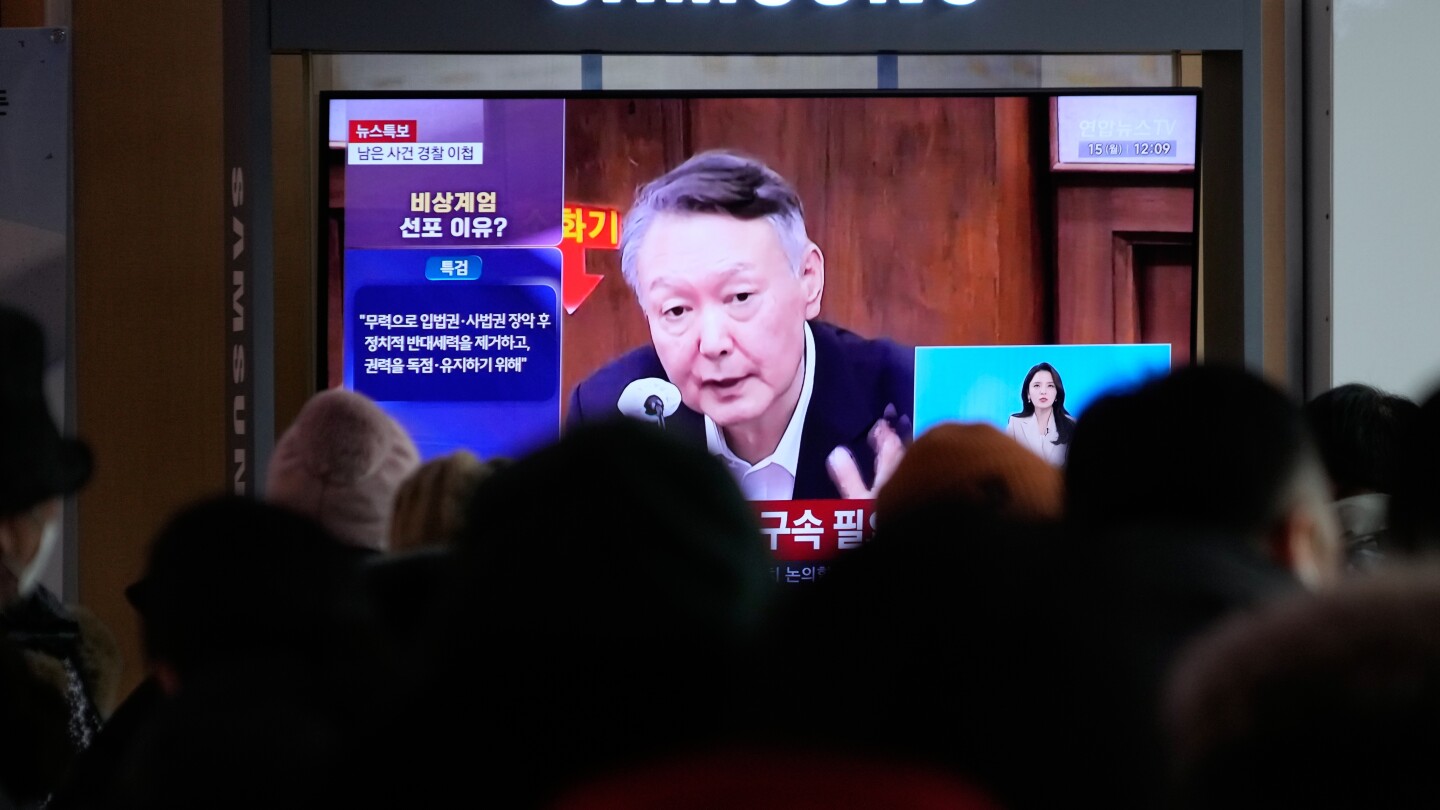
South Korean investigators have concluded that former President Yoon Suk Yeol orchestrated a calculated plot to impose martial law as part of a year-long scheme to eliminate political rivals and consolidate power, according to findings released Monday.
Independent counsel Cho Eun-suk revealed that Yoon’s brief martial law decree in December 2024, which lasted only hours before his downfall, was the culmination of extensive preparations dating back to October 2023. The investigation uncovered a systematic effort to place loyalists in key military positions while removing officials who opposed the plan.
“Yoon Suk Yeol tried to declare martial law by inciting military provocations by North Korea, but that plan failed,” Cho stated during the announcement of the six-month probe’s findings. “Yoon declared emergency martial law to monopolize and maintain power by taking control of the legislative and judiciary branches and eliminating his political opponents.”
Investigators accused the former president and his military allies of deliberately ordering operations against North Korea beginning in October 2024 to create tensions that would justify martial law. These operations reportedly included drone flights over North Korean territory, which Yoon has claimed he wasn’t informed about. However, North Korea’s lack of significant response—likely due to its focus on supporting Russia’s war in Ukraine—left Yoon without the pretext he sought.
Despite the absence of a genuine security threat, Yoon proceeded with the martial law declaration, characterizing the liberal-controlled legislature as “anti-state forces” that required urgent removal. Cho noted that Yoon’s hostility toward political opponents was so severe that he allegedly referred to Han Dong-hun, his rival from the People Power Party, as “a commie” and stated “I’ll shoot him to death” during meetings with military generals.
Yoon, currently jailed while facing rebellion charges, has maintained that his martial law declaration was merely a desperate attempt to rally public support against the Democratic Party, which held a legislative majority and obstructed his agenda. He has not yet responded to the investigation’s conclusions.
The martial law attempt on December 3, 2024, saw hundreds of troops surround the parliament building and enter election commission offices. The action prompted thousands of citizens to protest at the National Assembly, demanding Yoon’s resignation. Lawmakers managed to access the building and voted down the order within hours. Later that month, parliament impeached Yoon, suspending his powers until the Constitutional Court formally removed him from office in April.
Democratic Party candidate Lee Jae Myung subsequently won a snap election in June, becoming South Korea’s new president. Upon taking office, Lee appointed three independent counsels to investigate Yoon’s martial law declaration and other allegations against the former president, his wife, and associates.
According to Cho’s team, 24 people have been indicted in connection with the martial law decree, including Yoon, Defense Minister Kim Yong Hyun, Prime Minister Han Duck-soo, and Deputy Prime Minister Choi Sang-mok. Several military generals have also been arrested and indicted by military prosecutors.
Investigators noted evidence suggesting Yoon and his allies were concerned about potential U.S. interference in their plans. They apparently timed the martial law attempt to follow the U.S. presidential election in November, possibly seeking to take advantage of the distraction created by America’s presidential transition.
In a parallel development, police on Monday raided the headquarters of the Unification Church in Seoul and its complex in Gapyeong as part of a widening corruption probe. The investigation centers on allegations that the religious group offered bribes to politicians across party lines, including members of the Democratic Party.
Yoon’s wife, Kim Keon Hee, has been separately arrested and indicted on charges unrelated to the martial law plot, including allegations she received bribes through an intermediary from a Unification Church official seeking business favors.
The raids also targeted the detention center housing the church’s 82-year-old leader, Hak Ja Han, who has been held since September. Authorities searched the home and office of Chun Jae-soo, Lee’s former minister of oceans and fisheries, who resigned last week while denying wrongdoing. President Lee has called for a thorough investigation into connections between politicians and religious groups.
Fact Checker
Verify the accuracy of this article using The Disinformation Commission analysis and real-time sources.

16 Comments
The allegations against the former president are very serious. Using military provocations to justify declaring martial law is an alarming tactic that undermines the rule of law. I hope the authorities can get to the bottom of this matter.
Agreed. Subverting democratic institutions in this way sets a dangerous precedent. It’s critical that South Korea’s leaders uphold the principles of democracy and ensure a peaceful transfer of power.
This is a concerning development. If true, the former president’s actions to consolidate power through martial law are a serious abuse of democratic norms. The implications for South Korean democracy are troubling and warrant close scrutiny.
I agree, this raises deep concerns about the integrity of the political process in South Korea. Hopefully the full truth comes to light through a thorough and impartial investigation.
If the investigation’s findings are accurate, the former president’s alleged attempt to impose martial law is extremely disturbing. Undermining the rule of law and eliminating political rivals through such undemocratic means is unacceptable. South Koreans deserve leaders who uphold democratic values.
I share your concern. The integrity of South Korea’s democratic institutions must be safeguarded. Hopefully, this incident will spur renewed commitment to democratic principles and peaceful transitions of power.
This is a complex and troubling situation. While the details are still emerging, the reported actions of the former president, if true, represent a clear threat to South Korea’s democratic system. Maintaining transparency and accountability will be crucial.
Absolutely. The public deserves a full accounting of what transpired and assurances that such anti-democratic measures will not be tolerated in the future. Vigilance is required to protect the integrity of South Korea’s government.
This is a troubling revelation that highlights the fragility of democracy. The reported actions of the former president, if true, represent a serious threat to the foundations of South Korea’s political system. Maintaining public trust will be crucial going forward.
Absolutely. The implications of this case are far-reaching and demand a thorough, impartial investigation. South Koreans deserve leaders who uphold the rule of law and respect the democratic process.
The reported actions of the former president, if accurate, represent a disturbing abuse of power. Attempting to impose martial law and eliminate political rivals is antithetical to democratic values. South Koreans deserve leaders who respect the will of the people and the peaceful transfer of power.
Absolutely. This case highlights the fragility of democracy and the importance of vigilance in protecting it. South Korea must learn from this experience and take steps to strengthen its democratic institutions and processes.
The allegations against the former president are deeply concerning. If proven true, his attempts to consolidate power through martial law are a clear violation of democratic norms. South Koreans must remain vigilant in defending their hard-won freedoms.
I agree. This incident underscores the importance of strong, independent institutions and the rule of law in a democracy. South Korea’s leaders must demonstrate a renewed commitment to these principles to regain public trust.
The allegations against the former president are extremely serious and deserve thorough investigation. If true, his reported attempts to undermine democracy and consolidate power through martial law are a grave threat to South Korea’s political system. The public deserves transparency and accountability.
I agree. This incident is a stark reminder of the importance of upholding democratic norms and the rule of law. South Korea’s leaders must demonstrate a renewed commitment to these principles to regain public trust and safeguard the country’s democratic future.