


Listen to the article
Serbian Culture Minister Stands Trial Over Controversial Kushner Real Estate Deal
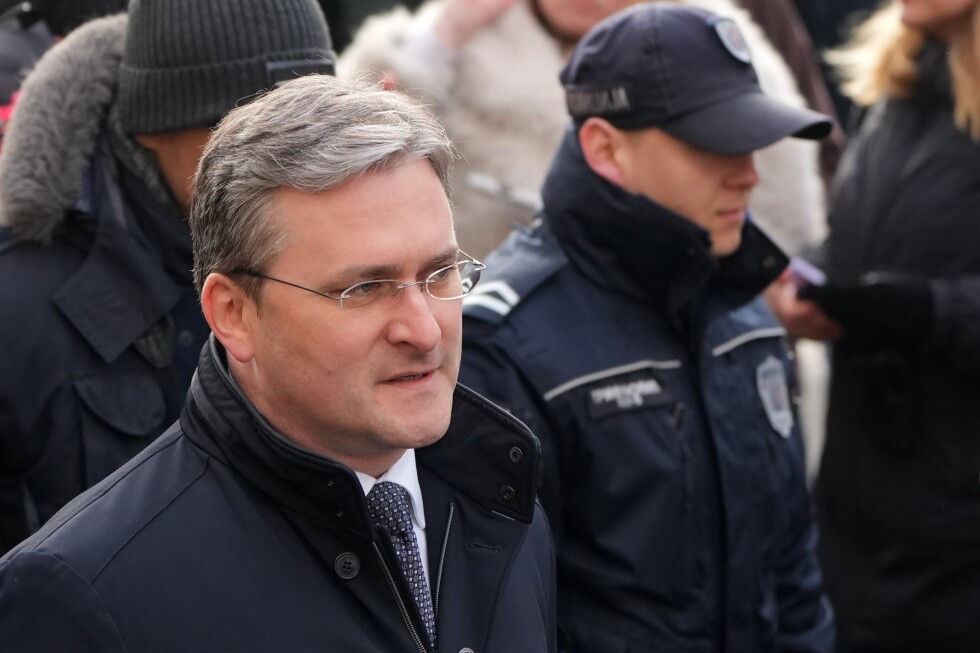
Serbia’s Culture Minister Nikola Selakovic and three other officials faced court on Wednesday, charged with abuse of office and document falsification related to a high-profile real estate project that was previously linked to Jared Kushner, former U.S. President Donald Trump’s son-in-law.
The officials are accused of illegally removing protected status from a historically significant site in central Belgrade to facilitate a multi-million dollar development. Kushner has since withdrawn from the investment, which would have transformed a bombed-out military complex into a luxury development featuring a hotel, apartments, offices, and retail spaces.
The project had strong backing from Serbia’s President Aleksandar Vucic, who viewed it as an opportunity to strengthen U.S.-Serbian relations. However, it faced significant opposition from Serbian citizens and international heritage organizations concerned about preserving the site’s cultural significance.
The military building at the center of the controversy was designed by renowned Yugoslav architect Nikola Dobrović and is considered a masterpiece of modernist architecture. It was damaged during NATO’s 1999 bombing campaign against Serbia during the Kosovo conflict—an intervention that still evokes strong emotions among many Serbs.
Prosecutors allege that in 2024, Selakovic and his co-defendants illegally removed the site’s protected status by falsifying documentation. Alongside Selakovic, the defendants include Slavica Jelaca, a culture ministry secretary; Goran Vasic, acting head of Serbia’s institute for cultural monument protection; and Aleksandar Ivanovic, acting manager of Belgrade’s cultural institute.
All four pleaded not guilty as the trial opened. If convicted, they could face up to three years in prison.
Selakovic’s attorney, Vladimir Djukanovic, dismissed the charges, arguing there was no evidence of personal gain for any of the accused. “The only damage was done to the Republic of Serbia because a lucrative arrangement, something that could have improved our relationship with the United States, was destroyed,” Djukanovic told reporters outside the courthouse.
The trial attracted dozens of anti-government protesters who gathered outside the organized crime court, chanting “thieves!” as the defendants arrived. Student protester Dimitrije Radojevic described the proceedings as “a test for all of us” and “for the future of Serbia as a functional democratic country.”
The case unfolds against a backdrop of growing political tension in Serbia. The trial commenced just days after the Serbian parliament passed controversial legal amendments that critics say will undermine the independence of the country’s judiciary, particularly targeting organized crime prosecutors handling high-profile cases.
European Union Enlargement Commissioner Marta Kos urged Serbia to withdraw these amendments, describing them as “a serious step back on Serbia’s EU path.” In response to the legislation, prosecutors held a silent protest outside their offices on Wednesday.
President Vucic has recently faced unprecedented pressure from a wave of nationwide protests following a fatal train station disaster in November 2024. Sixteen people died when a concrete canopy collapsed at a station in Novi Sad, with many Serbians attributing the tragedy to corruption and substandard renovation work. The incident triggered large-scale demonstrations that have challenged Vucic’s decade-long grip on power.
Youth-led protests have become almost daily occurrences, representing the most significant challenge to Vucic’s leadership since his right-wing populist party rose to power. Although Vucic has publicly committed to leading Serbia into the European Union, critics point to his strengthening ties with Russia and China and increasing restrictions on democratic freedoms.
The trial has been adjourned until April 15, with observers noting its potential significance for Serbia’s judicial independence and the rule of law. Meanwhile, Vucic has not held back in his criticism of organized crime prosecutors, labeling them a “corrupt gang” and “criminals” in public statements.
Fact Checker
Verify the accuracy of this article using The Disinformation Commission analysis and real-time sources.

12 Comments
This case underscores the importance of balancing economic development with the preservation of cultural heritage. I’ll be following the trial closely to see how the courts navigate this complex issue.
The connection to Kushner adds an intriguing geopolitical dimension to this case. I’m curious to see if any broader implications or influence-peddling emerge during the trial proceedings.
It’s concerning to see allegations of document falsification and abuse of office related to this development. Proper processes and public consultation must be followed when dealing with historically significant sites.
The cultural and architectural significance of this site underscores the need for a thorough, impartial investigation. I hope the trial leads to a fair and transparent outcome.
This seems like a concerning case of potential abuse of power and lack of regard for cultural heritage. I hope the trial sheds light on the decision-making process and whether proper procedures were followed.
It’s good to see this issue being investigated thoroughly. Preserving historically significant sites should be a priority, even when there are commercial interests at play.
The involvement of a high-profile figure like Kushner raises eyebrows and heightens the need for a thorough, impartial investigation. Transparency and accountability are crucial in cases like this.
Allegations of document falsification and abuse of office are very serious. I hope the trial leads to a clear understanding of what happened and appropriate consequences if wrongdoing is found.
This case highlights the tensions that can arise between commercial interests and heritage preservation. I’ll be curious to see if the trial uncovers any improper influence or conflicts of interest.
Protecting culturally important sites should be a priority, even when there are lucrative development opportunities involved. I hope this trial sets a strong precedent for responsible decision-making.
The involvement of high-level officials and a connection to Kushner raises a lot of questions about the motivations and transparency behind this real estate project. I’ll be following this case closely.
Removing protected status from a culturally important site is a major decision that deserves intense scrutiny. I hope the trial results in accountability and better safeguards for the future.