


Listen to the article
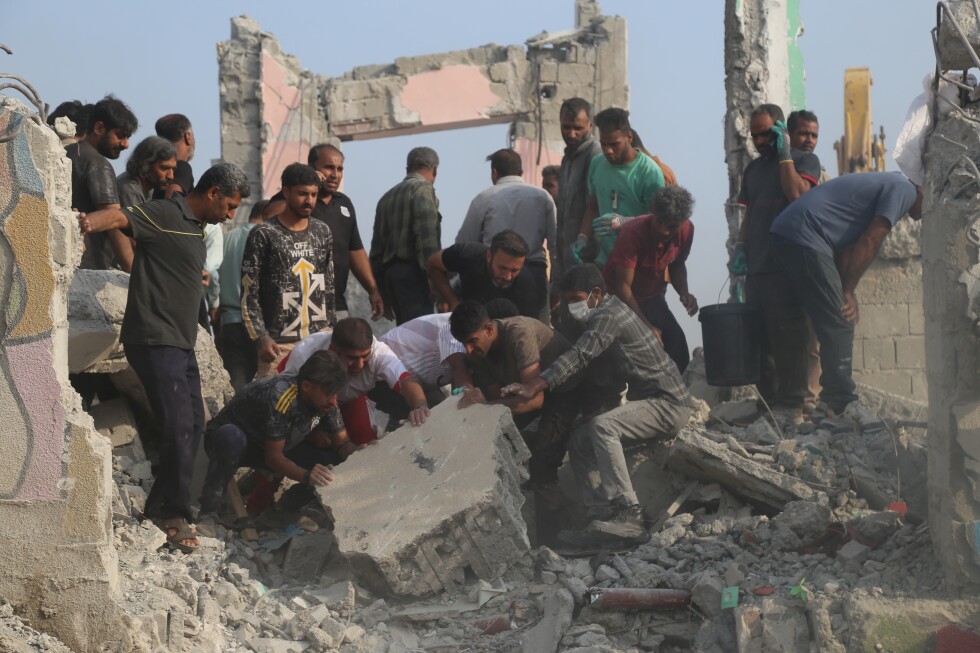
New evidence has emerged suggesting U.S. responsibility for a deadly February explosion at an Iranian school that killed over 165 people, primarily children. Footage analyzed by investigative group Bellingcat shows what appears to be an American Tomahawk cruise missile striking a compound in southern Iran, just meters from the school where the blast occurred.
The video, initially circulated Sunday by Iran’s semiofficial Mehr news agency, captures a missile hitting a building near the school in Minab, located in Iran’s southern Hormozgan Province. Dark smoke can be seen rising from the impact site, consistent with satellite imagery of the area that shows a flat-roofed building, power lines, and vehicles matching those visible in the footage.
Bellingcat researcher Trevor Ball identified the munition as a Tomahawk cruise missile, a weapon exclusively possessed by the United States in the current Middle East conflict. This represents the first evidence of the specific type of munition used in the February 28 strike.
A U.S. official, speaking anonymously to The Associated Press due to the sensitivity of the matter, acknowledged that the strike was likely American. Adding to the evidence, U.S. Central Command previously released a photograph showing the USS Spruance, part of the USS Abraham Lincoln aircraft carrier group positioned within range of the school, firing a Tomahawk missile on the same day as the explosion.
Despite the mounting evidence, President Donald Trump denied U.S. involvement when questioned by reporters on Saturday. “No, in my opinion, based on what I’ve seen, that was done by Iran,” Trump stated without providing evidence, adding that Iran is “very inaccurate” with its munitions. Defense Secretary Pete Hegseth immediately noted that an investigation was underway.
Several factors strengthen the case for U.S. responsibility. The Pentagon has launched an assessment of the incident, a step typically taken only after initial determinations suggest U.S. military culpability, according to the military’s protocols for investigating civilian harm.
The school’s proximity to a Revolutionary Guard base and naval unit barracks also aligns with the U.S. military’s targeting patterns in the region. Throughout the conflict, American forces have concentrated on Iranian naval targets and have acknowledged conducting strikes in Hormozgan Province, including in the vicinity of the school.
Israel, which has also denied responsibility, has primarily conducted operations in areas of Iran closer to its own territory and has not reported any strikes as far south as Hormozgan, which lies approximately 800 kilometers (500 miles) from Isfahan, the southernmost point of previously acknowledged Israeli operations.
Independent verification remains challenging as no international investigators have accessed the site during the ongoing conflict, and images of bomb fragments from the blast have not been made public.
Janina Dill, an international law expert at Oxford University, noted that even if the strike resulted from misidentification—with attackers believing the school was part of the neighboring Revolutionary Guard base—it would still constitute “a very serious violation of international law.” She emphasized that “attackers are under an obligation to do everything feasible to verify the status of targeted object.”
The Trump administration’s approach to international humanitarian law appears less constrained. At a March 2 press conference, Defense Secretary Hegseth characterized the U.S. operation as “unleashing the most lethal and precise air power campaign in history,” adding: “No stupid rules of engagement. No politically correct wars. We fight to win, and we don’t waste time or lives.”
The strike occurred at the beginning of the escalating Middle East conflict, with tensions continuing to rise as regional powers become increasingly involved in the hostilities. If confirmed as a U.S. action, the incident could further complicate diplomatic efforts in the region and raise additional questions about civilian protection in conflict zones.
Fact Checker
Verify the accuracy of this article using The Disinformation Commission analysis and real-time sources.

10 Comments
If these reports are accurate, this would be a horrific violation of international law and human rights. We must demand a full accounting from the US government and hold them accountable if they are found responsible. The loss of innocent young lives is truly heartbreaking.
Absolutely, accountability is critical in such a grave situation. The international community should press for a thorough, independent investigation to determine the facts and ensure justice is served.
While the evidence seems concerning, I think it’s important we withhold judgment until a full investigation is complete. Civilian casualties in conflict zones are always devastating, and we must ensure the truth comes to light, no matter where it leads. My heart goes out to the victims and their families.
I agree, caution and objectivity are crucial here. A thorough, impartial investigation is the only way to determine the facts and ensure appropriate accountability, if warranted.
This is a tragic and concerning development. While the evidence seems compelling, I think we need a thorough, impartial investigation to determine the full facts before drawing conclusions. Civilian casualties are always devastating, and we must ensure accountability regardless of who is responsible.
I agree, an unbiased inquiry is essential here. The potential involvement of a US cruise missile strike against a school is deeply troubling and requires a transparent process to uncover the truth.
This is a deeply troubling development. If the US is found responsible, it would represent a grave violation of international law and human rights. We must demand full transparency and accountability from the US government. The loss of innocent lives, especially children, is truly heartbreaking.
I share your concern. An independent inquiry with unfettered access is essential to uncover the truth and ensure justice is served, no matter where the evidence leads.
The potential involvement of a US cruise missile strike against a school is extremely concerning. While the evidence seems compelling, I think it’s prudent to withhold final judgment until a thorough, impartial investigation is completed. Civilian casualties are always a tragedy, and we must ensure accountability.
This is a sobering and disturbing development. I’m concerned about the potential broader geopolitical implications if the US is found culpable. Regardless of the perpetrator, the loss of life is a tragedy that deserves our deepest condolences. A transparent process is essential to uncover the truth.