


Listen to the article
Iran’s maritime targeting in Gulf of Oman appears “indiscriminate,” intelligence firm reports
Iran has launched a campaign of “indiscriminate” vessel targeting across the Gulf of Oman and Persian Gulf following U.S.-Israeli strikes under Operation Epic Fury, according to maritime intelligence firm Windward AI.
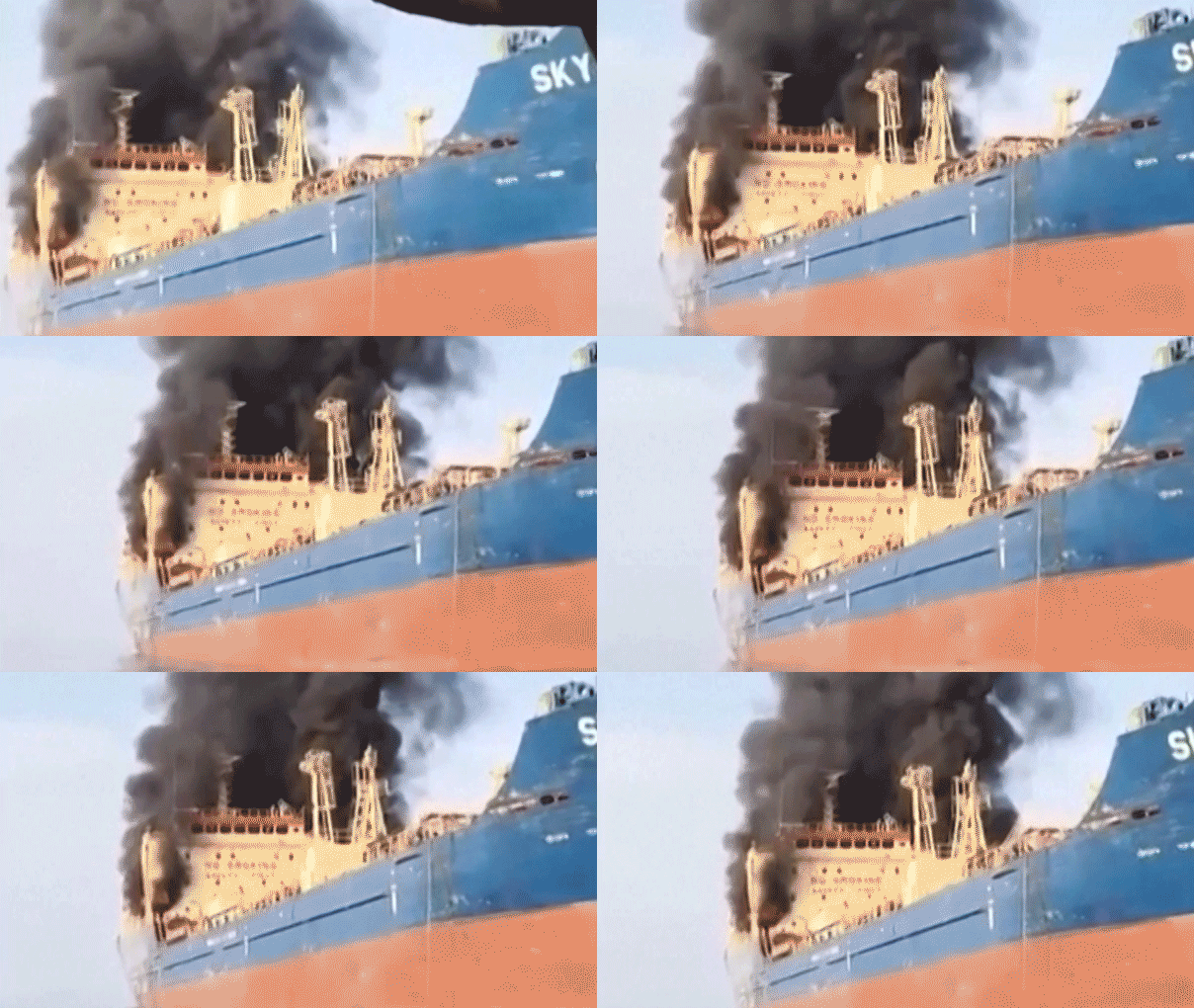
The sanctioned Palau-flagged tanker Skylight was among several vessels hit as regional conflict intensified into its second day. Notably, the Skylight carried Iranian nationals among its crew and maintained ties to the Iranian regime, yet was still targeted.
“Analysis of vessel affiliations, targeting patterns, and cargo data points to a strategy of indiscriminate area denial — not precision targeting — aimed at demonstrating Iran’s capability to disrupt the Strait and deter commercial shipping,” Windward reported on Monday.
The attacks represent a significant escalation in Iran’s retaliatory measures, which have included missiles and drones targeting U.S. and allied positions throughout the Middle East, including facilities in Qatar, Kuwait and the United Arab Emirates.
Maritime traffic through the Strait of Hormuz, which connects the Gulf of Oman to the Persian Gulf, has been severely impacted. The strait represents the world’s most critical energy chokepoint, with approximately one-fifth of global oil supply passing through this narrow waterway daily.
While three other vessels have reportedly been attacked since hostilities escalated on February 28, Windward described the Skylight as “the highest-risk vessel in the group and the most anomalous target,” highlighting the seemingly random nature of Iran’s maritime offensive.
The United Kingdom Maritime Trade Operations (UKMTO) Center has confirmed attacks on multiple vessels, including the Skylight, MKD Vyom and Hercules Star. The organization has warned of significant military activity across the Gulf of Oman, Persian Gulf, North Arabian Sea and Strait of Hormuz, raising concerns about the safety of commercial shipping in the region.
The Skylight itself has a complicated history. The vessel was sanctioned by the U.S. Treasury’s Office of Foreign Assets Control in December 2025 for transporting Iranian petroleum products. According to intelligence reports, it was operated by United Arab Emirates-based Red Sea Ship Management LLC, which Windward indicates has documented connections to front companies linked to Iran’s Ministry of Defense.
At the time of the attack, the Skylight had been anchored since February 22 and carried a multinational crew of 20 members, including 15 Indians and 5 Iranians.
“The Skylight anomaly — striking a vessel with an Iranian crew, Iranian operational ties, and active OFAC sanctions — is the single strongest piece of evidence against deliberate targeting by affiliation,” Windward concluded, suggesting that Iran’s strategy appears focused on creating maximum disruption rather than selecting specific targets.
Reuters reported on March 1 that the Palau-flagged tanker was struck off Oman’s Musandam Peninsula in the Gulf of Oman, resulting in injuries to four crew members. Oman’s Maritime Security Center later confirmed that the Skylight was attacked approximately 5 nautical miles north of Khasab Port, caught fire, and was subsequently evacuated.
The maritime attacks come amid a broader regional conflict that has seen Iranian forces targeting locations across the Middle East, including reported strikes on facilities in Dubai that resulted in a hotel fire and multiple injuries.
Energy markets are responding with increased volatility as traders assess the potential impact on global oil supplies. Security analysts warn that continued disruptions in the Strait of Hormuz could lead to significant price increases and supply chain challenges if the conflict extends beyond the immediate term.
International shipping companies are now reassessing their routes through the region, with some considering the longer journey around Africa’s Cape of Good Hope despite the additional time and cost implications.
Fact Checker
Verify the accuracy of this article using The Disinformation Commission analysis and real-time sources.

10 Comments
The situation in the Gulf of Oman is clearly deteriorating. Iran’s reported indiscriminate targeting of vessels, including those with links to their own regime, is an alarming escalation. I worry this could lead to further conflict and instability in the region, with potential ramifications for global commodity markets.
Geopolitical tensions in the Middle East continue to simmer. Iran’s reported attacks on vessels in the Gulf of Oman, including one with Iranian crew, suggest they are willing to take provocative actions that could spiral into further conflict.
Absolutely, the lack of discrimination in these strikes is very worrying. It seems Iran is trying to send a message, but the risks of miscalculation or unintended consequences are high.
The news of Iran’s latest military operations in the Gulf region is deeply concerning. Indiscriminate attacks on commercial shipping could have severe impacts on global commodity and energy markets. I hope regional leaders can find a diplomatic solution to de-escalate the situation.
The intensifying conflict in the Gulf region is really troubling. Iran appears to be expanding its military operations across land, air and sea. This could have serious implications for energy and commodity markets if shipping through the Strait of Hormuz is disrupted.
I agree, the potential for supply chain disruptions is a major concern here. Stability in the Strait of Hormuz is critical for global energy and trade flows.
Concerning news out of the Gulf of Oman. Iran’s reported indiscriminate targeting of vessels, including one linked to their own regime, seems like a dangerous escalation. I wonder what the strategic objective is behind these strikes.
You’re right, the lack of precision in these attacks is quite worrying. It could be an attempt by Iran to disrupt regional shipping and trade as retaliation.
This latest flare-up of tensions in the Gulf is a troubling development. Iran’s reported willingness to strike vessels with Iranian crew onboard raises serious questions about their strategic objectives. The potential disruption to critical maritime trade routes is a major risk factor to monitor.
Agreed. The lack of precision in these attacks is highly concerning. Iran seems intent on demonstrating its ability to disrupt shipping through the Strait of Hormuz, which could have far-reaching economic consequences.