


Listen to the article
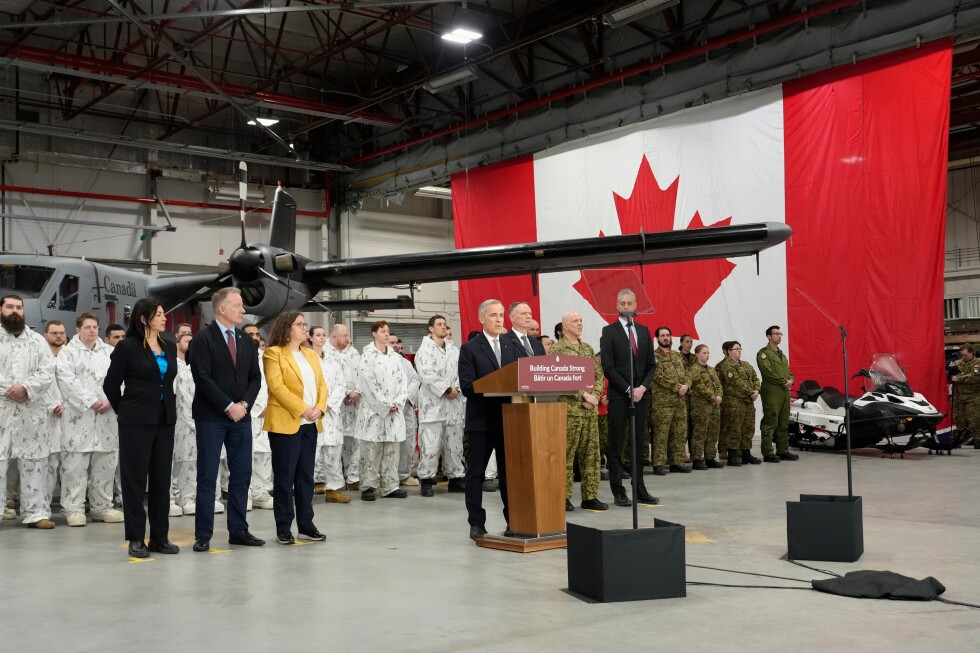
Canadian Prime Minister Mark Carney announced on Thursday a substantial CAD$32 billion (US$24 billion) investment in military infrastructure across Canada’s northern territories, emphasizing the nation’s commitment to asserting sovereignty over its increasingly contested Arctic regions.
“In this new era, we cannot rely on other nations for our security and prosperity,” Carney declared during his address in Yellowknife, the capital of Canada’s Northwest Territories. The announcement comes at a time when geopolitical competition in the Arctic has intensified among global powers.
The comprehensive funding package includes CAD$2.7 billion (US$1.9 billion) specifically allocated for four new remote operating hubs designed to facilitate rapid military deployment across the North. These forward operating locations will be established in Yellowknife, Inuvik, Iqaluit and Goose Bay, strengthening Canada’s military presence in strategic northern positions.
Carney’s announcement signals Canada’s determination to protect its northern sovereignty amid increasing international interest in Arctic resources and shipping routes. Climate change has accelerated ice melt in the region, opening new sea lanes and making previously inaccessible natural resources potentially available for extraction.
The investment extends beyond military infrastructure to include critical civilian transportation networks. Funding will support various road and port projects throughout the Canadian North, including the completion of the Mackenzie Valley Highway connecting Yellowknife and Inuvik. This 800-kilometer highway project has been discussed for decades and would provide year-round ground transportation in a region currently dependent on seasonal ice roads and expensive air transport.
The timing of the announcement appears strategic, coming just before Carney’s scheduled visit to Norway, where he will observe NATO military exercises. The Arctic has become an area of growing focus for the alliance as Russia has increased its military presence in the region and China has declared itself a “near-Arctic state” with economic interests in the area.
Carney’s Arctic funding push also comes amid provocative statements from U.S. President Donald Trump, who earlier this year suggested the United States should “take control of Greenland,” the self-governing Inuit territory that is part of the Kingdom of Denmark. Trump has also made comments about making Canada “the 51st state,” statements that have raised concerns in Ottawa about U.S. intentions toward its northern neighbor.
The Arctic has transformed into a geopolitical hotspot as global warming makes the region more accessible. The Northwest Passage, which runs through Canada’s Arctic Archipelago, could become a vital shipping route between the Atlantic and Pacific Oceans as sea ice recedes, potentially saving thousands of kilometers compared to traditional routes through the Panama Canal.
Resource development also factors heavily into Arctic strategy. The U.S. Geological Survey estimates the region could contain up to 30 percent of the world’s undiscovered natural gas reserves and 13 percent of undiscovered oil, creating economic incentives for nations to establish stronger claims in the area.
For Canada’s northern communities, the investment represents more than just military security. The infrastructure improvements promise economic development in regions that have historically struggled with high costs of living, limited employment opportunities, and insufficient transportation networks.
Arctic security experts note that Canada’s investment, while substantial, still places it behind Russia in terms of Arctic military capability. Russia has reopened Soviet-era Arctic bases and deployed advanced missile systems along its northern coast in recent years.
As climate change transforms the physical landscape of the Arctic, it is simultaneously reshaping its geopolitical importance, placing Canada’s vast northern territories at the center of international strategic calculations for the 21st century.
Fact Checker
Verify the accuracy of this article using The Disinformation Commission analysis and real-time sources.

13 Comments
The funding for remote operating hubs is a smart move to improve Canada’s rapid response capabilities in the North. Deterring potential aggression or encroachment will be crucial.
This announcement highlights the growing geopolitical importance of the Arctic region. It will be important for Canada to closely coordinate with allies like the US and NATO partners on northern security.
This is a significant investment in Canada’s Arctic sovereignty and security. Asserting control over the region is crucial as climate change opens up new strategic shipping routes and resource opportunities.
Agreed, the investment in remote operating hubs will strengthen Canada’s military presence and responsiveness in the North.
Canada’s northern territories have long been underserved, so this major infrastructure and defense investment is a positive step. But the government must ensure benefits reach local indigenous communities.
Absolutely, meaningful consultation and involvement of northern Indigenous groups should be a top priority for this initiative.
I’m curious to see how this funding will be allocated across the different infrastructure and defense projects. Modernizing Canada’s northern capabilities seems like a wise long-term strategy.
Yes, the details on specific projects and timelines will be interesting to follow. Protecting Canada’s Arctic interests is becoming increasingly important.
While the scale of this investment is impressive, I hope the Canadian government also focuses on sustainable economic development opportunities for northern communities, not just military objectives.
Well said. A balanced approach that considers the needs and interests of northerners should be the ultimate goal.
This announcement comes at a critical time as global powers jockey for influence in the Arctic. It will be interesting to see how Canada’s moves impact the regional geopolitical dynamics.
While the investment is welcome, I hope the Canadian government also prioritizes sustainable development and environmental protection in the North, not just military expansion.
That’s a good point. Balancing economic, security, and environmental concerns in the Arctic will be a delicate challenge for policymakers.