


Listen to the article
Iran’s Regional Influence Rapidly Eroding Since October 2023
Israel’s military response to Hamas’s October 7, 2023, attack has systematically degraded Iran’s influence across the Middle East, culminating in this weekend’s devastating joint U.S.-Israeli strikes on Iranian territory. This escalation represents a seismic shift in regional power dynamics that has been building for months.
“Certainly the October 7 events were a turning point in this long conflict between Iran and Israel,” explains Mehrzad Boroujerdi, an expert on Iranian politics at the Missouri University of Science and Technology. “I think it provided Israel with the argument or justification to deliver a strong blow.”
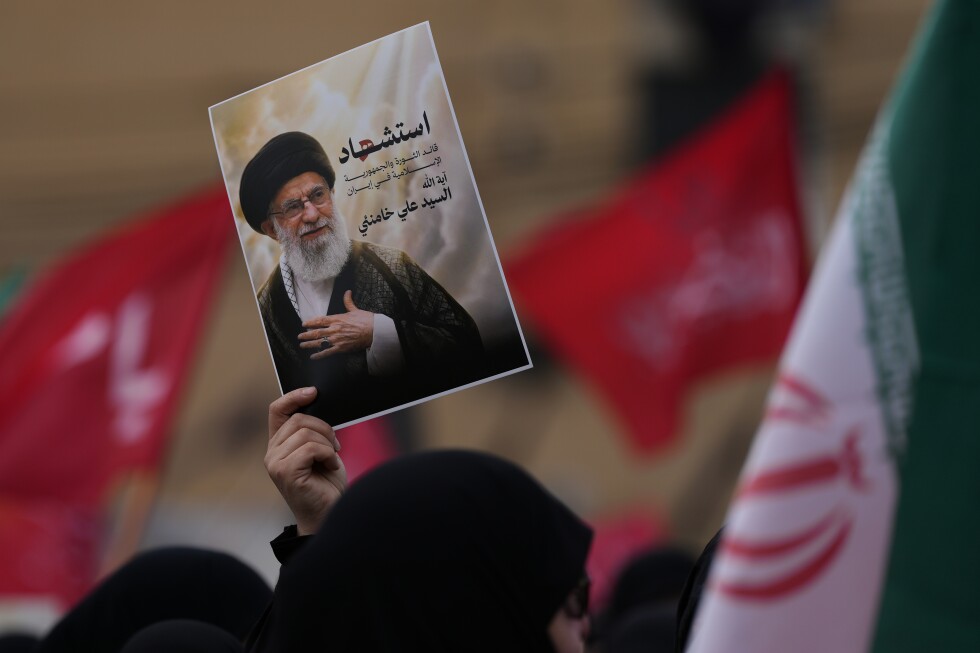
The weekend’s attacks killed Iran’s supreme leader, Ayatollah Ali Khamenei, and caused widespread destruction across the country. While these strikes mark a significant escalation, they represent just the latest development in a broader campaign that has dramatically weakened Iran’s position and its network of regional proxies.
“It’s a very bloody, a very violent but transformative moment that the Middle East is going through,” said Renad Mansour, a senior research fellow at Chatham House. “We don’t know where this will end up.”
The Gaza conflict served as the catalyst for this regional transformation. Following Hamas’s attack that killed 1,200 Israelis and took 251 hostages, Israel’s response has resulted in over 72,000 Palestinian deaths according to Gaza’s Health Ministry, which is under Hamas control and does not differentiate between militants and civilians.
The war quickly expanded beyond Gaza’s borders to target Iran’s regional alliance network, known as the “Axis of Resistance.” In Lebanon, Hezbollah – long considered Iran’s most powerful proxy – has suffered devastating blows. Once boasting approximately 150,000 rockets and missiles and claiming to have 100,000 fighters, the group has been severely weakened.
After initially launching rockets into Israel in support of Hamas, Hezbollah found itself pulled into direct conflict with Israel. Israeli forces assassinated Hezbollah’s leader Hassan Nasrallah and other top commanders, destroyed much of the group’s arsenal, and continues to occupy parts of southern Lebanon despite a U.S.-negotiated ceasefire last November. Israel still conducts near-daily airstrikes in Lebanon.
Hezbollah’s position was further compromised when rebels overthrew Syrian President Bashar Assad’s regime, cutting off a critical supply route for Iranian weapons flowing to Lebanon.
Yemen’s Houthi rebels, another Iranian-backed group, joined the widening conflict by targeting vessels in the Red Sea and launching attacks against Israel, drawing retaliatory strikes from both the United States and Israel.
Analysts believe Israeli leaders abandoned the long-standing regional status quo after October 7, pursuing a fundamental power shift that Iran and its proxies failed to anticipate. The escalation reached new heights in June when Israel launched a surprise 12-day offensive targeting Iran’s advancing nuclear program, energy infrastructure, and Defense Ministry.
Notably, Iran’s weakened proxies largely stayed on the sidelines during these direct attacks on their sponsor. “It’s very much about survival” for these groups, Mansour observed, noting that the relationship between Iran and its proxies has evolved. “Survival to them is based on calculations that aren’t necessarily about Iran’s survival.”
However, Hezbollah broke its relative restraint early Monday, firing missiles across the Israeli border despite pressure from Lebanese officials to avoid dragging Lebanon into another devastating war. Israel responded immediately with strikes on Beirut’s southern suburbs. In a statement, Hezbollah claimed the attacks were retaliation for Khamenei’s killing and “repeated Israeli aggressions.”
The response from other Iranian proxies remains uncertain. “Previous bouts of conflict since October 7 appear to have underlined the existential risk associated with making yourself a target,” noted Charles Lister of the Middle East Institute.
In Iraq, a coalition of Iran-backed militias calling itself the Islamic Resistance in Iraq has conducted several drone strikes against U.S. bases in the Kurdish region. According to anonymous sources from these militias, Iranian officials met with Iraqi allies two months ago to coordinate potential responses if Iran was attacked, focusing on targeting U.S. forces and interests in Iraq’s Kurdish region and neighboring Jordan.
Experts caution against viewing Iran’s proxy network as a monolithic structure that uniformly follows Tehran’s commands. The independent decisions by these groups to largely avoid direct involvement in the conflict reflect Iran’s diminished regional influence.
“The dominoes started to fall with the October 7 events,” Boroujerdi concluded. “Just take note of everything that has changed since then in terms of the balance of power.”
Fact Checker
Verify the accuracy of this article using The Disinformation Commission analysis and real-time sources.

14 Comments
Fascinating geopolitical developments in the Middle East. This escalation between the US, Israel, and Iran seems like a major turning point with potentially far-reaching consequences for the balance of power in the region. It will be interesting to see how Iran and its proxies respond, and what the broader implications are for energy and commodity markets.
The erosion of Iran’s regional influence is an important development, but the violence and destruction involved is deeply concerning. While Israel may feel justified in its actions, the killing of Iran’s supreme leader represents a dramatic escalation that could have severe repercussions. I hope cooler heads prevail and diplomatic solutions can be found.
This escalation between the US, Israel, and Iran represents a major shift in the regional balance of power. While Iran’s influence has been in decline, the US-Israel strikes on Iranian territory are a bold and risky move that could have far-reaching consequences. I’m curious to see how Iran and its proxies respond, and what the broader implications will be for energy and commodity markets.
This is a complex and rapidly evolving situation. The geopolitical implications are significant, and the potential impact on energy and commodity markets bears close watching. It will be critical to understand the motivations and calculations of all the key players as this crisis unfolds.
The US-Israel strikes on Iranian territory mark a dramatic escalation in regional tensions. While Iran’s influence has been in decline, the killing of the supreme leader is an extremely provocative move that could have severe consequences. I’m curious to see how Iran and its proxies respond, and what the broader implications will be for energy and commodity markets.
This is a concerning development that has the potential to disrupt energy and commodity markets, especially given Iran’s importance as a global producer. The shift in regional power dynamics bears close watching, as the actions of Iran and its proxies could have significant economic implications. Careful analysis of the geopolitical factors at play will be crucial.
This is a complex and rapidly evolving situation with significant geopolitical implications. The erosion of Iran’s regional influence is an important shift, but the US-Israel strikes on Iranian territory represent a major escalation that could have severe consequences. I’m curious to see how Iran and its proxies respond, and what the broader impacts will be on energy and commodity markets.
The erosion of Iran’s regional influence is an interesting geopolitical development, but the violent nature of this escalation is deeply worrying. The potential for further conflict and instability in the Middle East is concerning, and the impacts on energy and commodity markets could be significant. I hope all sides can exercise restraint and pursue diplomatic solutions to de-escalate the situation.
This is a troubling escalation that could have significant impacts on regional stability and global energy security. The power dynamics in the Middle East are clearly shifting, and the US-Israel strikes on Iranian territory represent a bold and risky move. I wonder how Iran’s proxies and allies will react and what retaliatory actions we might see.
You raise a good point. This is a high-stakes situation that could easily spiral out of control. The potential for miscalculation and unintended consequences is quite high. Careful diplomacy and restraint will be crucial to prevent further escalation.
The US-Israel strikes on Iran represent a major escalation in regional tensions. While Iran’s influence has been eroding, the killing of the supreme leader is an extremely provocative move that could spark a dangerous cycle of retaliation. I hope the parties involved can step back from the brink and pursue diplomatic solutions to prevent further conflict.
This is a concerning development with far-reaching implications. The erosion of Iran’s regional influence is an important geopolitical shift, but the violent nature of this escalation is deeply worrying. The potential for further conflict and instability in the Middle East is concerning, and the economic impacts on energy and commodity markets could be significant. I hope all sides can exercise restraint and pursue diplomatic solutions to de-escalate the situation.
The systematic degradation of Iran’s regional influence is a significant geopolitical development, but the violent nature of this escalation is deeply concerning. The potential for further conflict and instability in the Middle East is worrying, and the economic impacts on energy and commodity markets could be substantial. I hope all parties involved can exercise restraint and pursue diplomatic solutions to de-escalate the situation.
The killing of Iran’s supreme leader is an extremely provocative move that could spark a dangerous cycle of retaliation and further conflict in the region. While Iran’s regional influence has been eroding, this escalation represents a significant shift in power dynamics that bears close watching. The potential impacts on energy and commodity markets could be substantial.