


Listen to the article
Asian Markets Retreat as Oil Surges Above $100 Amid Iran Tensions
Asian stock markets fell Friday as oil prices climbed back above $100 per barrel, reflecting ongoing anxiety over the Iran conflict and its impact on global energy supplies.
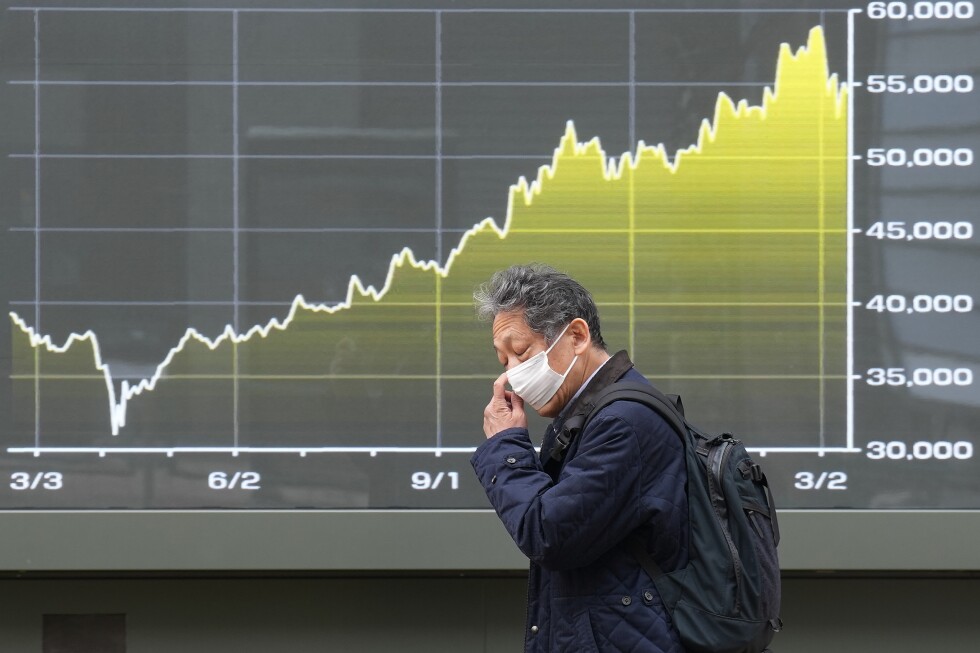
The Nikkei 225 in Tokyo declined 1.2% to 53,819.61, with technology stocks bearing the brunt of the selloff. SoftBank Group was particularly hard hit, dropping 4.5% during the session.
Other regional markets followed suit, with South Korea’s Kospi falling 1.7% to 5,487.24. Hong Kong’s Hang Seng lost 1% to 25,450.78, while mainland China’s Shanghai Composite slipped 0.8% to 4,095.45. Australia’s S&P/ASX 200 edged slightly lower by 0.1% to 8,617.10, while Taiwan’s Taiex dropped 0.5% and India’s Sensex tumbled 1.8%.
The downward trend extended to U.S. futures markets, with S&P 500 futures down 0.3% and Dow Jones Industrial Average futures declining 0.2%.
Oil markets remained on edge, with Brent crude, the international benchmark, trading at $102 per barrel on Friday. This follows a volatile week that saw prices briefly surge to nearly $120 before easing. U.S. benchmark West Texas Intermediate crude rose 1.3% to $96.97 per barrel.
The ongoing tensions in the Middle East intensified after Iran’s new Supreme Leader, Ayatollah Mojtaba Khamenei, made his first public statements since assuming leadership. He vowed Iran would continue its military campaign and leverage its control over the Strait of Hormuz against the United States and Israel. The strategic waterway has experienced significant disruptions to marine traffic in recent days.
Energy security concerns have heightened dramatically as approximately 20% of the world’s oil supplies flow through the Strait of Hormuz. Analysts at Mizuho Bank noted that attacks on ships in the region have already raised serious worries “over the scale of supply disruption and persistent shipping bottlenecks.”
Khamenei’s hawkish rhetoric came shortly after U.S. President Donald Trump described the conflict as “very complete,” creating uncertainty about the duration and scope of the hostilities.
The International Energy Agency attempted to calm markets on Wednesday by announcing that its members would release a record 400 million barrels of oil from emergency reserves. However, many economists remain skeptical about the effectiveness of this measure, suggesting it may provide only temporary relief to tight global supplies.
The energy crisis threatens to worsen global inflation, with rising fuel costs already impacting consumers worldwide. Some market analysts have pointed out secondary effects, noting that elevated energy prices could increase production costs across various sectors, including semiconductor manufacturing and AI development.
Wall Street reflected these concerns on Thursday, with major indexes closing firmly in negative territory after a volatile month of trading. The S&P 500 dropped 1.5%, the Dow Jones Industrial Average fell 1.6%, and the tech-heavy Nasdaq composite declined 1.8%.
Companies particularly vulnerable to fuel cost increases experienced sharper declines. Cruise operator Carnival Corporation saw its shares plummet 7.9%, while United Airlines dropped 4.6% as investors factored in the impact of higher jet fuel prices on the transportation sector.
In other market movements Friday, precious metals retreated, with gold prices falling 0.5% to $5,099.40 per ounce and silver declining more substantially by 2.3% to $83.16 per ounce.
Currency markets showed modest movements, with the U.S. dollar trading at 159.39 Japanese yen, slightly higher than Thursday’s 159.34 yen. The euro weakened marginally to $1.1497 from $1.1512.
As the weekend approaches, market participants remain cautious, closely monitoring developments in the Middle East and assessing potential impacts on global economic growth and inflation in the coming weeks.
Fact Checker
Verify the accuracy of this article using The Disinformation Commission analysis and real-time sources.

9 Comments
Concerning to see the ripple effects of geopolitical tensions in the energy markets. This volatility in oil prices is likely to impact businesses and consumers across many sectors. I wonder if we’ll see further destabilization if the situation with Iran escalates.
The surge in oil prices above $100 is certainly a concerning development, with potential ramifications across the global economy. As an investor, I’ll be closely watching how this impacts commodity-linked equities and the broader market sentiment in the coming days and weeks.
This is a timely reminder of the importance of energy security and the vulnerability of global supply chains to geopolitical events. As the world transitions to cleaner energy sources, managing price volatility in traditional fossil fuels will remain a key challenge.
The volatility in oil and equities reflects the heightened uncertainty around the Iran conflict and its potential impact on energy supplies. While these market fluctuations can be unsettling, it’s important to maintain a long-term perspective and diversified investment strategy.
The jump in oil prices above $100 is certainly concerning, as it could put pressure on consumer spending and corporate profits. As an analyst, I’ll be watching to see how this development affects the outlook for energy-related equities and the broader market sentiment.
Interesting to see the diverging trends between equities and commodities. While Asian shares are down, oil is spiking on supply concerns. This highlights the complex interplay between energy, geopolitics, and financial markets. It will be important to monitor how this plays out.
The volatility in Asian markets and the surge in oil prices are a stark reminder of the geopolitical risks facing the global economy. As an investor, I’ll be closely monitoring the situation and looking for opportunities to position my portfolio for potential shifts in the energy and commodities landscape.
The swings in oil and stock prices highlight the complexity of the current market environment. As an investor, I’ll be closely monitoring the situation and looking for opportunities to position my portfolio for potential shifts in the energy and commodities landscape.
This is a good example of how interconnected the global economy has become. Tensions in one region can quickly ripple through financial markets and impact businesses and consumers worldwide. It will be critical for policymakers to carefully navigate these challenges.