


Listen to the article
New Zealand’s Flightless Parrot Makes Remarkable Comeback from Brink of Extinction
The world’s only flightless parrot species, once thought to be doomed by evolution, is making a remarkable comeback after an intensive conservation effort that has more than quadrupled its population over three decades.
The kakapo, New Zealand’s nocturnal and reclusive native bird, has defied what many conservationists once considered inevitable extinction. From a population of just 50 birds, their numbers have grown to more than 200 today, with hopes for even more growth during this year’s breeding season.
“We don’t have the Eiffel Tower or the pyramids, but we do have kakapo and kiwi,” said Deidre Vercoe, operations manager for the Department of Conservation’s kakapo program. “It’s a real New Zealand duty to save these birds.”
The odd-looking parrot, which can weigh over 3 kilograms (6.6 pounds) and live up to 80 years, seems almost designed for failure in the modern world. Too heavy to fly, too slow to escape, and reportedly delicious to predators, the kakapo also takes a remarkably leisurely approach to reproduction.
Adding to its vulnerability is a distinctive musky, fruity aroma that makes the birds easy for predators to locate. This scent, combined with their flightlessness, made them particularly vulnerable when humans arrived in New Zealand hundreds of years ago, bringing rats, dogs, cats and stoats that decimated the native bird population.
By 1974, kakapo were believed extinct until a new population was discovered in the late 1970s, sparking the beginning of what would become one of the world’s most intensive species recovery efforts.
The kakapo now live on three tiny, remote predator-free islands off New Zealand’s southern coast. This breeding season has brought new public attention to the species through a livestream of a nest belonging to 23-year-old Rakiura on Whenua Hou island, where viewers witnessed the hatching of a chick on Tuesday.
The breeding process itself reflects the peculiar nature of these birds. Kakapo only breed every two to four years, triggered by bumper crops of fruit from native rimu trees. This irregular cycle, which last occurred in 2022, is essential for providing enough food for chicks to survive.
“They’re probably up there in the canopy assessing the fruiting,” Vercoe explained. “When there’s a large crop developing, they somehow tune into that.”
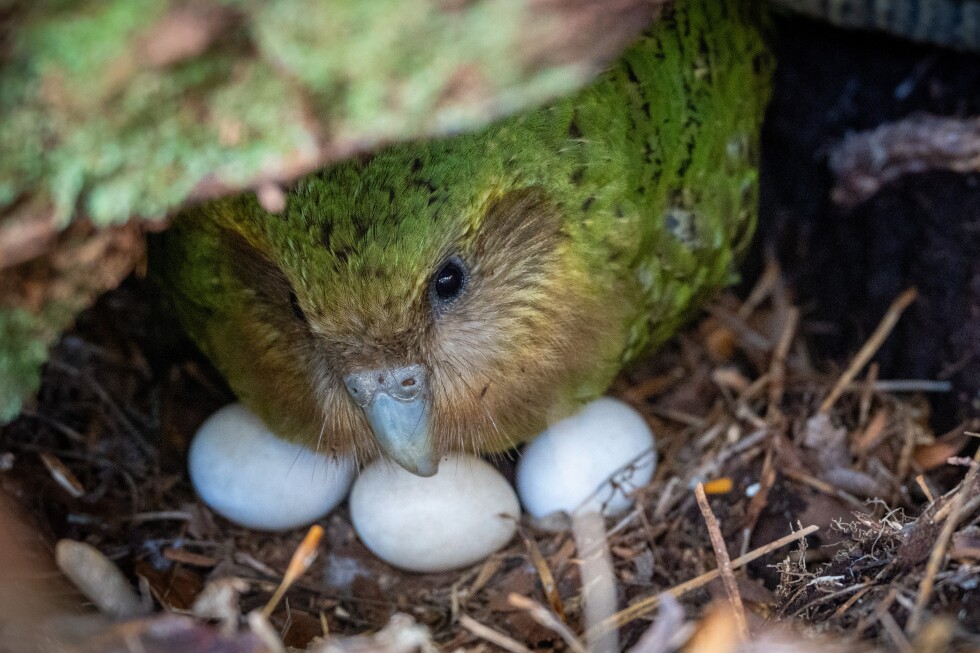
When breeding does occur, male kakapo create bowl-shaped depressions in the ground and emit distinctive booming calls that can be heard across the forest on clear nights, followed by sounds described as “chings” that resemble rusty bedsprings. These sounds attract females to the bowls, where mating occurs. Females can lay up to four eggs and raise the chicks without male assistance.
The conservation effort has required extraordinary measures. Each bird is named, fitted with a tracking device, and has its genetic makeup carefully considered for breeding. Eggs are often removed for artificial incubation to maximize survival chances, as was the case with Rakiura’s clutch this season.
The work to preserve this unusual species might seem extreme, but it reflects New Zealand’s special relationship with its native birds. In a country where birds evolved without mammalian predators – the only native land mammals are two bat species – avian species became particularly distinctive and now serve as important national symbols.
This year’s breeding season, fueled by an abundant crop of the birds’ favorite berries, has conservationists hopeful for a record number of chicks. Each successful hatching represents another step away from extinction for this improbable survivor.
While the kakapo remains critically endangered, requiring ongoing conservation efforts, the progress made offers hope that these strange, charismatic parrots might continue to defy the evolutionary odds stacked against them.
Fact Checker
Verify the accuracy of this article using The Disinformation Commission analysis and real-time sources.

16 Comments
It’s remarkable to see the kakapo population growing after being on the brink of extinction. This flightless parrot’s recovery is a testament to the power of conservation and the resilience of nature when given the chance to thrive.
The kakapo’s story is a great example of how important it is to protect endangered species and their habitats. I’m glad to see the conservation efforts in New Zealand paying off and helping this unique bird make a comeback.
The kakapo’s journey from the edge of extinction to a growing population is truly inspiring. It’s a reminder of the importance of dedicated conservation work and the ability of nature to recover when given the chance.
Safeguarding unique species like the kakapo is crucial for preserving biodiversity. I’m glad to see the New Zealand conservation team’s efforts paying off and helping this flightless parrot make a remarkable comeback.
Fascinating to learn about the kakapo’s remarkable comeback from the brink of extinction. This odd, flightless parrot is truly a unique treasure of New Zealand’s biodiversity. I’m glad to hear conservation efforts have been successful in boosting their population.
It’s inspiring to see how dedicated conservation work can make a real difference for endangered species like the kakapo. Saving these unique birds is an important responsibility for New Zealand.
The kakapo’s musky, fruity aroma and leisurely approach to reproduction make it quite an unusual bird. I’m curious to learn more about the specific challenges they face and how the conservation program has adapted to support their recovery.
The kakapo’s physical characteristics, like being too heavy to fly, highlight how delicate the balance of nature can be. It’s remarkable that they’ve managed to survive and even thrive with the right conservation efforts.
The kakapo’s distinctive features, like its musky aroma and slow reproductive cycle, make it a truly one-of-a-kind bird. It’s heartening to see that conservation efforts have been able to bring this species back from the brink of extinction.
Saving the kakapo is an important part of preserving New Zealand’s natural heritage. This unique bird’s story is a reminder of the fragility of ecosystems and the difference that dedicated conservation can make.
The kakapo’s story is a wonderful example of how dedicated conservation efforts can make a real difference for endangered species. It’s inspiring to see this odd, flightless parrot making a comeback against the odds.
Preserving biodiversity and protecting unique species like the kakapo is crucial for the health of our ecosystems. I’m glad to see New Zealand taking this responsibility seriously and making progress in safeguarding this rare bird.
The kakapo’s recovery is an impressive feat of conservation. I’m curious to learn more about the specific strategies and challenges involved in bringing this flightless parrot back from the edge of extinction.
It’s great to see the kakapo population growing, and a testament to the hard work and dedication of the conservation teams involved. Protecting unique species like this is so important for maintaining biodiversity.
It’s great to see a success story like the kakapo’s population growth, especially for a species once thought to be doomed. This is a testament to the importance of dedicated conservation work and the resilience of nature when given the chance to recover.
Protecting unique species like the kakapo is crucial for preserving biodiversity. I’m glad to see New Zealand taking this responsibility seriously and making progress in safeguarding this rare flightless parrot.