


Listen to the article
The legacy of Cleopatra VII, the last active ruler of the Ptolemaic Kingdom of Egypt, continues to be tarnished by Roman propaganda more than two millennia after her death, according to historians and cultural experts.
Cleopatra, who ruled Egypt from 51 BCE until her death in 30 BCE, has long been portrayed in Western culture as a seductress who used her feminine wiles to influence powerful Roman leaders, particularly Julius Caesar and Mark Antony. This characterization, scholars argue, stems largely from accounts written by her Roman adversaries, particularly during the reign of Octavian (later Emperor Augustus) who defeated her and Mark Antony at the Battle of Actium.
“What most people think they know about Cleopatra comes from narratives crafted by her enemies,” explains Dr. Sarah Richardson, professor of ancient history at Oxford University. “The Romans, particularly Octavian, had a vested interest in portraying her as a foreign temptress who corrupted Roman values and threatened the Republic.”
Historical records indicate that Cleopatra was actually a formidable ruler in her own right. She was highly educated, reportedly speaking nine languages, and demonstrated exceptional political acumen in maintaining Egypt’s independence during a period of expanding Roman influence in the Mediterranean.
The queen’s diplomatic skills allowed her to forge strategic alliances with Rome that protected Egyptian sovereignty for decades. However, these achievements are often overshadowed by sensationalized stories of her romantic relationships with Caesar and Antony.
Modern scholarship has begun to challenge these Roman-centric narratives. Archaeological evidence and a more critical reading of historical texts suggest Cleopatra was primarily motivated by protecting Egypt’s autonomy and securing her dynasty’s future, rather than personal romantic entanglements.
“Octavian’s propaganda campaign against Cleopatra was remarkably effective,” notes Dr. Miguel Fernandez of the University of Barcelona’s Department of Classical Studies. “He portrayed her as a foreign queen who bewitched Mark Antony and threatened to subvert Rome from within. This narrative helped justify his war against Antony and subsequent annexation of Egypt.”
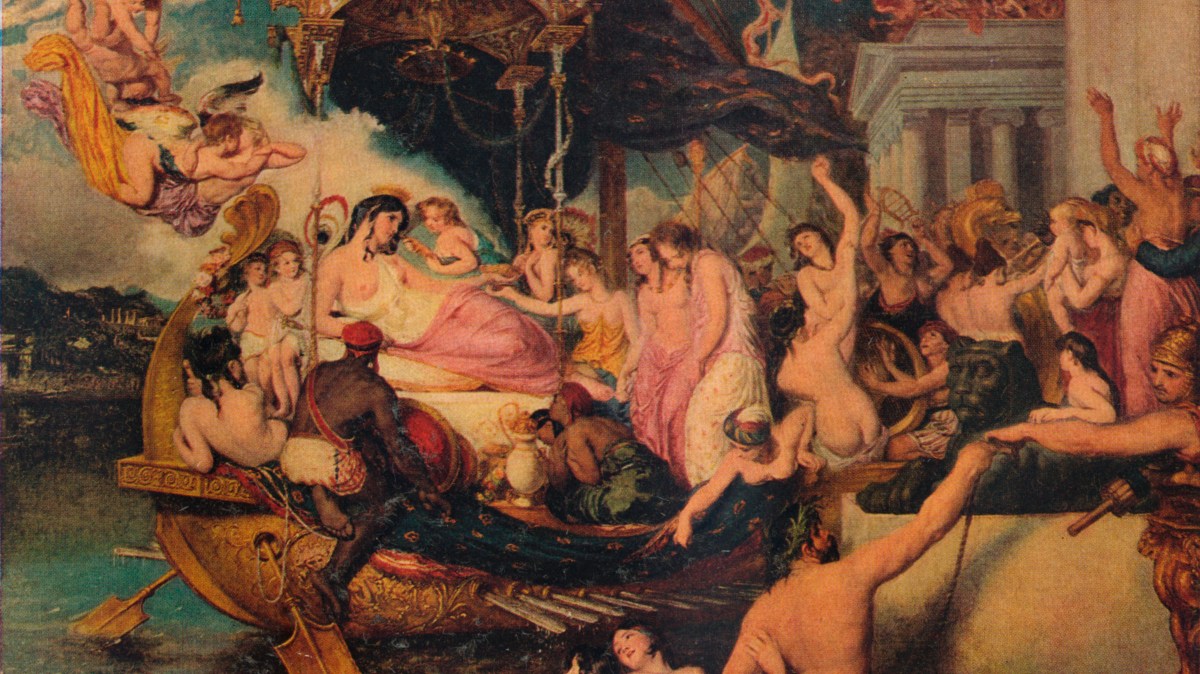
This propagandistic view has persisted through Western art, literature, and film. From Shakespeare’s “Antony and Cleopatra” to Hollywood productions starring Elizabeth Taylor and more recently Gal Gadot, the queen is typically depicted through the lens Roman writers created – exotic, seductive, and dangerous.
The impact of these portrayals extends beyond mere historical inaccuracy. They reflect broader patterns of how powerful women have been characterized throughout history, often reducing their political and intellectual achievements to matters of sexuality and appearance.
Recent archaeological discoveries continue to provide new insights into Cleopatra’s reign. Ongoing excavations at Taposiris Magna, a temple complex west of Alexandria, have unearthed artifacts from the Ptolemaic period that may help scholars develop a more nuanced understanding of her rule.
Additionally, renewed interest in Hellenistic Egypt has led researchers to reevaluate contemporary Egyptian and Greek sources that offer alternative perspectives to the Roman accounts. These sources typically present Cleopatra as a capable administrator who maintained Egypt’s prosperity during tumultuous times.
The endurance of Roman propaganda about Cleopatra also highlights how historical narratives can be shaped by political motivations. “Octavian’s smear campaign against Cleopatra remains perhaps the most successful character assassination in history,” says Dr. Richardson. “It’s a powerful reminder of how the ‘victors’ often control historical narratives.”
Efforts to reclaim Cleopatra’s legacy have gained momentum in recent years, with museum exhibitions, scholarly publications, and documentary films attempting to present a more balanced view of the queen and her accomplishments.
As modern audiences become more critical of historical biases, particularly those involving gender and ethnicity, Cleopatra’s story serves as a compelling case study in how propaganda can shape historical memory for millennia. The queen who once ruled one of the ancient world’s wealthiest kingdoms continues to battle for an accurate representation, long after her death on the shores of the Mediterranean.
Fact Checker
Verify the accuracy of this article using The Disinformation Commission analysis and real-time sources.

10 Comments
This article highlights an important issue in historical scholarship – the need to critically examine sources and not simply accept the dominant narratives. I’m glad to see researchers challenging the long-held Roman characterization of Cleopatra. Exploring alternative perspectives is crucial for gaining a more nuanced understanding of the past.
Well said. Deconstructing biased historical accounts is essential for getting closer to the truth. I hope this research inspires a reevaluation of Cleopatra’s legacy and her place in the ancient world.
The fact that Cleopatra’s legacy has been so heavily influenced by Roman propaganda is a sobering reminder of how the victors can shape the historical narrative. I’m curious to learn more about her actual reign and accomplishments, beyond the seductress stereotype. This article has piqued my interest in exploring a more balanced perspective on this influential figure.
Agreed. It’s important to challenge the traditional depictions of historical figures, especially when they seem to be rooted in the biases of their conquerors. I look forward to seeing how scholars continue to uncover the nuances of Cleopatra’s life and reign.
This article highlights an important issue in historical scholarship – the need to critically examine sources and not simply accept the dominant narratives. I’m glad to see researchers challenging the long-held Roman characterization of Cleopatra. Exploring alternative perspectives is crucial for gaining a more nuanced understanding of the past.
Well said. Deconstructing biased historical accounts is essential for getting closer to the truth. I hope this research inspires a reevaluation of Cleopatra’s legacy and her place in the ancient world.
Fascinating insight into the biases that have shaped Cleopatra’s legacy. It’s a good reminder to be cautious of historical narratives written by the victors. I wonder what other perspectives on her reign and character might emerge as historians continue to uncover the full story.
I agree, it’s important to look beyond the one-sided Roman accounts. Cleopatra was clearly a complex and accomplished ruler, and I’m curious to learn more about her own views and how she navigated the power dynamics of her time.
The fact that Cleopatra’s legacy has been so heavily influenced by Roman propaganda is a sobering reminder of how the victors can shape the historical narrative. I’m curious to learn more about her actual reign and accomplishments, beyond the seductress stereotype. This article has piqued my interest in exploring a more balanced perspective on this influential figure.
Agreed. It’s important to challenge the traditional depictions of historical figures, especially when they seem to be rooted in the biases of their conquerors. I look forward to seeing how scholars continue to uncover the nuances of Cleopatra’s life and reign.