


Listen to the article
South African ruling party official Gwen Ramokgopa has strongly condemned what she termed “propaganda of blatant falsehoods” regarding claims of “white genocide” in South Africa, describing these narratives as part of a coordinated international effort to undermine democracy in the country.
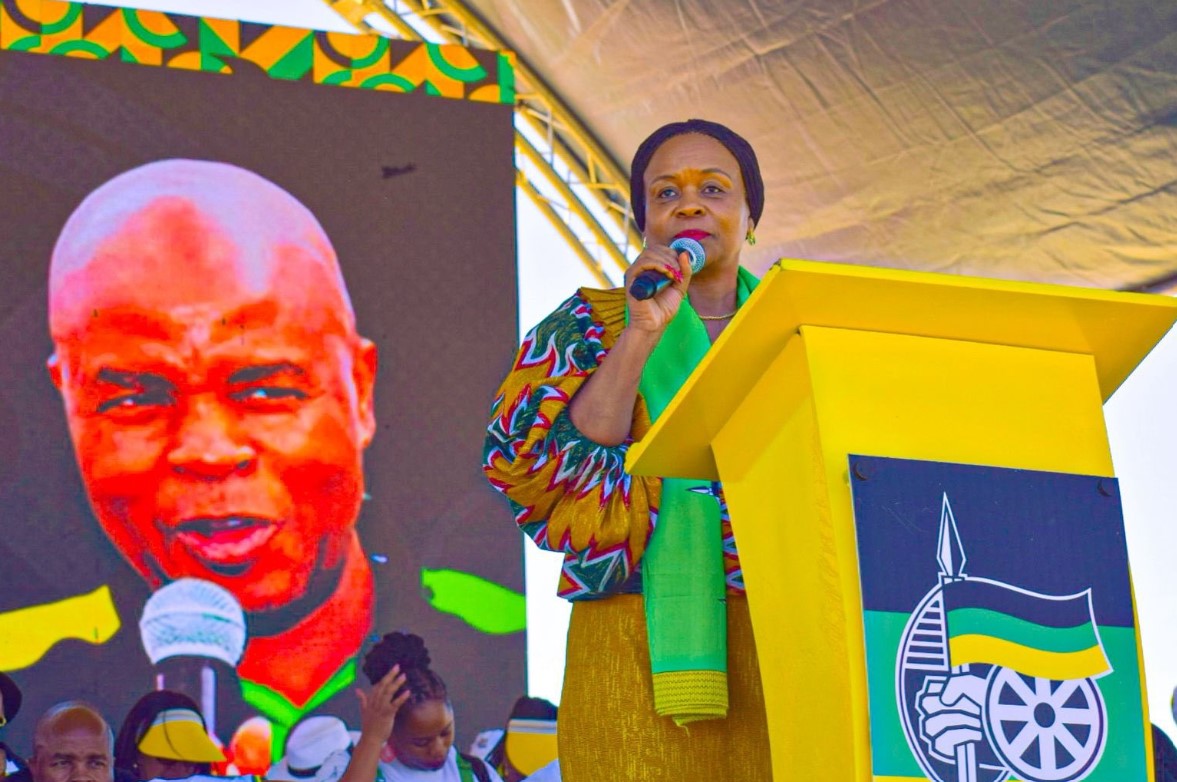
Speaking at the African National Congress (ANC) January 8 anniversary rally in Secunda, Mpumalanga province, Ramokgopa told party supporters that such false narratives were designed to “attract sympathy and solidarity from global racist movements and individuals” while simultaneously working to “demonise the ANC and progressive forces.”
“We are here to bring you this message and priorities that must guide our work as the people’s movement as we advance our mission to build a more just society at the service of our communities, our people and our nation,” said Ramokgopa, who serves as the ANC’s Treasurer-General.
The rally, held at the Lillian Ngoyi Stadium, saw Ramokgopa call on ANC members to form a “united front” to protect South Africa’s constitutional democracy while addressing pressing domestic challenges including gender-based violence and deteriorating public services.
Claims of “white genocide” in South Africa—often centered around farm murders and land reform policies—have been repeatedly debunked by researchers and fact-checkers. Studies consistently show that violent crime affects all communities in South Africa, with the vast majority of murder victims being Black South Africans. Farm-related killings constitute only a small percentage of the country’s overall homicide rate.
Despite being refuted by crime data and court findings, these false narratives gained international attention when amplified by figures including former U.S. President Donald Trump. Security analysts note that such misinformation often serves political agendas both domestically and internationally.
Ramokgopa connected these challenges to broader global pressures on democratic values, suggesting that foreign actors are attempting to delegitimize governments focused on addressing historical inequalities. “The sin of Venezuela is that they wanted to use their natural resources to build a shared prosperity for their nation and their people,” she said, drawing an international parallel.
She warned that these forces seek to revive “dark days” by undermining South Africa’s constitutional order through what she described as “multifaceted tactics.”
Turning to domestic governance challenges, Ramokgopa acknowledged the ANC needs to address service delivery failures that have plagued municipalities across the country. She specifically mentioned problems with water provision, electricity infrastructure, and road maintenance.
In a pointed criticism of governmental inefficiency, she highlighted that infrastructure funds are being returned to the national treasury unspent. “The time of sending back infrastructure funds must come to an end. There must not be any money that is fed back to the national treasury whilst our communities need it to improve local services,” she said.
The ANC official also addressed crime, corruption, and gender-based violence, noting that the South African government has formally classified gender-based violence and femicide as a national disaster requiring coordinated response efforts.
Defending the ANC’s controversial “step-aside” rule, which requires party members facing serious allegations to temporarily withdraw from official positions, Ramokgopa said: “Our step-aside policy is to enable us to distance ourselves and send a zero-tolerance posture and message against crime, corruption, GBVF [gender-based violence and femicide] and those malfeasances.”
The comments come as the ANC continues to navigate governance challenges while facing increased electoral pressure ahead of upcoming elections. Political analysts note that addressing service delivery concerns while maintaining party unity remains a delicate balancing act for the long-ruling party.
Fact Checker
Verify the accuracy of this article using The Disinformation Commission analysis and real-time sources.

16 Comments
The ‘white genocide’ claims are clearly false and intended to undermine democracy in South Africa. I’m glad to see the ANC taking a strong stance against this kind of harmful propaganda.
The ‘white genocide’ myth is a dangerous and divisive narrative that has been thoroughly debunked. I’m glad to see South African leaders taking a firm stance against this kind of propaganda.
Agreed, spreading misinformation to undermine democracy is unacceptable. Fact-based policymaking and inclusive governance should be the priority.
I appreciate the ANC’s efforts to call out this propaganda and reaffirm their commitment to democracy and serving the people. Robust public discourse is vital, but it must be grounded in facts, not fear-mongering.
This seems like a classic case of political propaganda being used to sow division and undermine democracy. I hope the ANC and other leaders can continue to call out these false narratives and instead focus on practical solutions to improve the lives of all South Africans.
While claims of ‘white genocide’ are clearly false, it’s still important to address issues like gender-based violence and public service delivery that affect all South Africans. A united, inclusive approach is needed.
Absolutely, the focus should be on improving lives and livelihoods for everyone, not promoting harmful conspiracy theories.
While I appreciate the ANC’s efforts to call out this propaganda, I hope they will also focus on concrete steps to address pressing challenges like gender-based violence and public service delivery. A comprehensive, inclusive approach is needed.
Absolutely, addressing the root causes of social and economic issues should be the top priority, not engaging in divisive political rhetoric.
It’s concerning to see these kinds of false narratives being pushed, likely with the intent of sowing discord and undermining progress in South Africa. I hope the government and civil society can work together to address real issues.
It’s important to separate fact from fiction when it comes to issues like this. While the ‘white genocide’ narrative is demonstrably false, the government should still work to address genuine concerns and challenges facing all South Africans.
Agreed, a focus on evidence-based policymaking and inclusive governance is crucial for making real progress on the country’s problems.
This seems like a concerning case of political propaganda being used to undermine democracy and progress in South Africa. I hope the government and civil society can work together to address real challenges while rejecting false narratives.
Agreed, it’s important to separate fact from fiction and focus on constructive solutions rather than divisive rhetoric.
While the ‘white genocide’ claims are clearly false, it’s still important for the government to address legitimate concerns around issues like gender-based violence and public service delivery. A balanced, evidence-based approach is needed.
Absolutely, tackling real problems while rejecting harmful misinformation should be the top priority for South African leaders.