


Listen to the article
Poets of World War I: The Voices That Revealed War’s True Face
In the final days of World War I, as church bells rang throughout Shrewsbury, England on November 11, 1918, heralding the long-awaited peace, a doorbell chimed at the home of Wilfred Owen’s parents. They received a telegram informing them their son had been killed in action just days earlier, caught in a German machine gun attack on November 4.
Death, however, does not always have the last word. Fame and recognition that eluded Owen in life would find him posthumously, transforming him into one of Britain’s most celebrated war poets.
Just days before his death, Owen had written to his mother: “So thick is the smoke in this cellar that I can hardly see by a candle twelve inches away. And so thick are the inmates that I can hardly write for pokes, nudges, and jolts.” He reassured her, “There is no danger down here — or if any, it will be well over before you read these lines.”
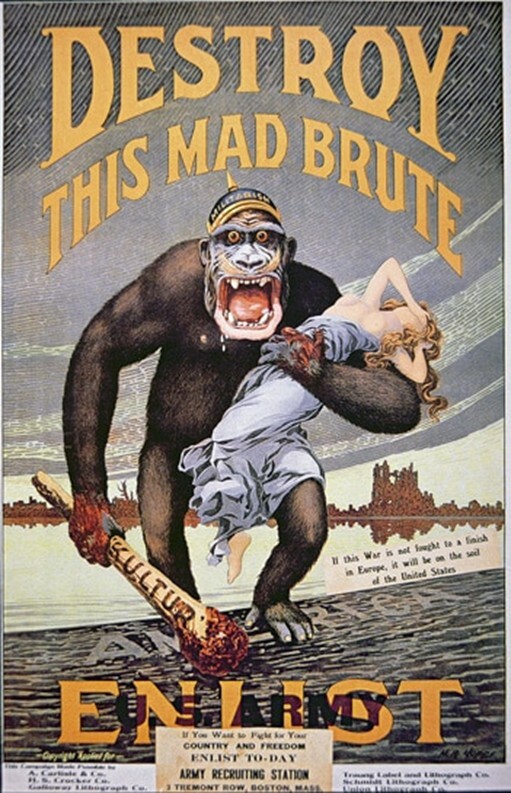
Owen’s most famous poem, “Dulce et Decorum Est,” stands as a powerful critique of wartime propaganda. The poem vividly depicts the futility of war and the horrific conditions faced by soldiers during chemical gas attacks in the trenches. Its title, derived from Roman poet Horace’s ode, translates to “how sweet and fitting it is to die for one’s country” — a sentiment Owen fiercely rejected, though ironically, that’s exactly what he did.
After recovering from shell shock at Craiglockhart War Hospital in late 1917, Owen returned to France. He had planned to publish a collection of war poems in 1919, writing in the preface: “My subject is War, and the pity of War. The Poetry is in the pity. All a poet can do today is warn. That is why true Poets must be truthful.”
Owen was not alone in his disillusionment with the war. Siegfried Sassoon, another prominent British war poet, came from an affluent background and enlisted the day after war broke out. Initially enthusiastic, his feelings soon gave way to cynicism and outrage. Despite his criticism of the war’s conduct, Sassoon remained motivated by a strong sense of duty and displayed remarkable bravery, earning the nickname “Mad Jack” from his men for his daring forays into enemy territory.
In 1917, disgusted by the callousness of military leadership, Sassoon published a letter in The Times stating his belief that the war was being “deliberately and unnecessarily prolonged by the authorities.” He narrowly avoided court-martial when Robert Graves intervened, convincing a military review board that Sassoon was suffering from shell shock.
Sassoon was sent to Craiglockhart military hospital, where he met and befriended Wilfred Owen. After the war, Sassoon would edit and arrange the publication of Owen’s work, ensuring his friend’s poetic legacy would endure.
The psychological impact of trench warfare was profound. During this era, hundreds of thousands of men suffered from “shell shock,” now recognized as Post-Traumatic Stress Disorder. In his poem “Mental Cases,” Owen depicted the mental devastation experienced by soldiers: “These are men whose minds the Dead have ravished. Memory fingers in their hair of murders, Multitudinous murders they once witnessed.”
The war affected other literary figures profoundly. Rudyard Kipling, a staunch advocate of British imperialism and Nobel Prize-winning author, strongly encouraged his son Jack to enlist. After being rejected twice due to severe nearsightedness, Jack was finally accepted through his father’s political connections. In 1915, Jack was reported missing during the Battle of Loos. Kipling, searching desperately for his son, wrote “My Boy Jack” — a heart-wrenching cry of anguish from a concerned parent. Years later, Private Bowe, one of Jack’s friends who had been suffering from shell shock, informed the Kiplings that their son had been killed in September 1915, just three weeks after arriving in France.
After the war, Sassoon continued to write, publishing anti-war works and authoring three volumes of semi-autobiographical fiction inspired by his experiences. He lived until 1967, reaching the age of eighty. Similarly, Robert Graves survived the war and spent most of his life in Majorca, Spain. He wrote one of the most memorable accounts of World War I, “Goodbye to All That,” and later gained fame for his historical novel “I, Claudius.” Graves passed away in 1985 at the age of 90.
The tragedy of World War I lies in its futility and senseless destruction. As British military historian John Keegan noted, by July 1914, the momentum toward war had become virtually impossible to reverse. November 11, 1918, the final day of the war, was particularly deadly, with more than 11,000 pointless casualties in the hours immediately before the armistice — exceeding those of the D-Day invasion of Normandy — as both sides sought to inflict maximum punishment on the enemy.
The “war to end all wars” failed in its purpose. Instead, it left a legacy of shattered ideals and widespread suffering, fed by hatred and resentment between nations, ethnicities, and classes — all of which would lead, just 20 years later, to another devastating global conflict.
As Prussian General Carl von Clausewitz stated, war is simply the continuation of politics by other means. The outbreak of hostilities represents a failure of diplomacy and conflict resolution — a lesson these war poets understood all too well, and captured in verse that continues to move readers a century later.
Fact Checker
Verify the accuracy of this article using The Disinformation Commission analysis and real-time sources.

5 Comments
It’s a sobering reminder that the true costs of war are often obscured or downplayed, especially in the context of national celebrations and commemorations. Poets like Owen played a crucial role in revealing the human toll and senseless suffering.
Commemorating veterans is important, but we must also grapple with the complexities and controversies surrounding how wars are remembered and represented. Nuance and critical examination are essential.
Sobering to read about the tragic fate of Wilfred Owen, one of the great war poets who exposed the brutal realities of World War I. His poetry provides an important counterpoint to the propagandistic narratives that often surround wartime commemorations.
Owen’s poem “Dulce et Decorum Est” is a powerful critique of the glorification of war. His vivid descriptions of the horrors faced by soldiers in the trenches were a necessary antidote to the sanitized, patriotic portrayals.
The propaganda and poetry dynamic during times of war is a fascinating and complex topic. It’s crucial to understand how narratives are shaped and to give voice to those who expose the harsh realities, like Owen did with his unflinching work.