


Listen to the article
Kazakhstan is set to consider legislation that would ban what lawmakers describe as “LGBTI propaganda,” drawing sharp criticism from human rights organizations who view the move as a threat to freedom of expression and LGBTI rights in the Central Asian nation.
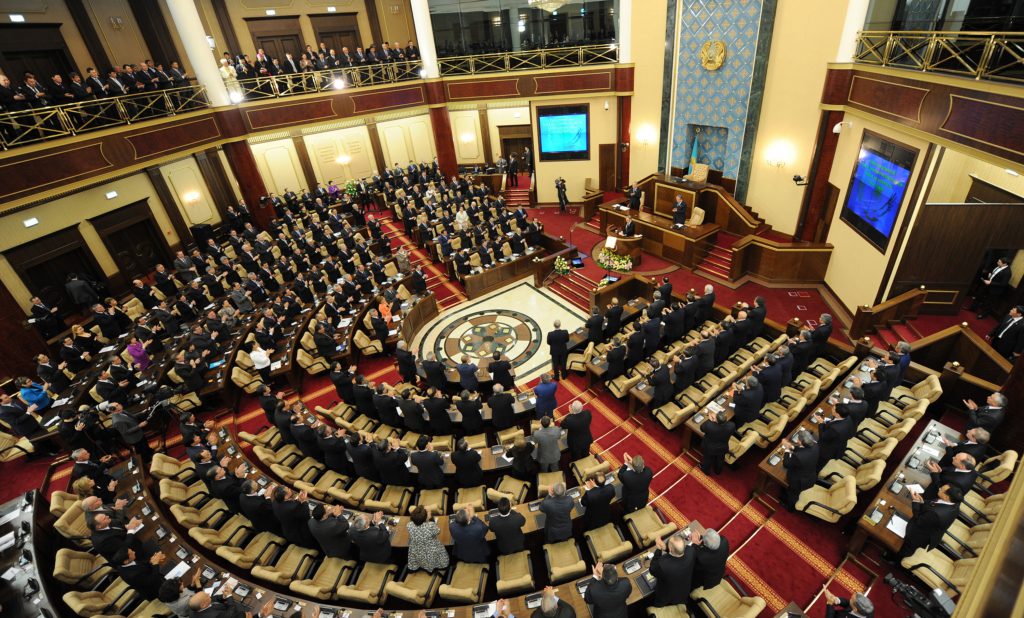
The Majilis, Kazakhstan’s lower house of parliament, is expected to hold a full reading of the draft amendments on November 12. The proposed legislation would prohibit “propaganda of non-traditional sexual orientation and pedophilia,” a phrasing that human rights advocates say deliberately and harmfully conflates sexual orientation with criminal behavior.
Marie Struthers, Amnesty International’s Eastern Europe and Central Asia Director, condemned the proposed law in unequivocal terms. “Banning so-called ‘LGBTI propaganda’ is not about protecting children, it’s about institutionalizing stigma, fear and censorship,” Struthers said.
The bill has already gained significant momentum after being endorsed by a Majilis working group on October 28. According to parliamentary sources, lawmakers are attempting to fast-track the amendments before the legislature adjourns for the New Year recess in early January 2026.
If passed, the law would require mandatory labeling for any public materials featuring LGBTI themes, including books, films, and media content. Violations could result in fines or short-term detention. Perhaps most concerning to digital rights advocates, the amendments would grant authorities the power to suspend access to websites and digital content without requiring a court order, raising serious concerns about censorship and due process.
Civil society organizations have criticized both the content and the process behind the amendments. The provisions were added to an unrelated bill concerning national archives without public consultation or expert review, a legislative tactic that critics say was designed to minimize debate and scrutiny.
The legislative push appears to be responding to growing conservative sentiment within segments of Kazakhstani society. It follows a 2024 petition reportedly signed by 50,000 citizens demanding restrictions on public LGBTI representation. Last year, Kazakhstan also banned LGBTI people from adopting or mentoring orphans, marking a pattern of increasing restrictions on LGBTI rights in the country.
This is not the first attempt to introduce such legislation in Kazakhstan. A similar set of proposals aimed at outlawing “LGBTI propaganda” through amendments to the mass media law was introduced in April 2024 but later withdrawn.
Human rights organizations, including Amnesty International, are urging Kazakhstani lawmakers to reject these draft amendments, arguing that they contradict Kazakhstan’s own constitutional commitments to human rights and non-discrimination.
“If the Kazakhstani authorities truly want to protect and nurture young people, they should rebuff this harmful initiative and instead reaffirm the country’s commitment to human rights and principles of non-discrimination already enshrined in the constitution and other binding legislation,” said Struthers. “There is no need to police love, literature or imagination.”
Kazakhstan’s move mirrors similar legislation in neighboring Russia, which passed a “gay propaganda” law in 2013 that was later expanded. Similar laws have also been enacted in other post-Soviet states, raising concerns among international human rights monitors about a regional trend of using legislation to limit LGBTI visibility and rights.
As Kazakhstan continues to position itself as an increasingly important regional power and seeks closer ties with both Russia and Western nations, its approach to human rights issues like LGBTI rights takes on added significance in its international relationships and domestic governance.
Fact Checker
Verify the accuracy of this article using The Disinformation Commission analysis and real-time sources.

10 Comments
It’s disheartening to see Kazakhstan, a country with a reputation for stability, considering such a regressive and discriminatory law. I hope the government reconsiders this proposal and upholds its obligations to protect the rights of all citizens.
Agreed, this law would be a major setback for Kazakhstan’s human rights record. I hope the international community continues to apply pressure and urge the government to respect LGBTI rights.
While the desire to protect children is understandable, this law appears to be a thinly-veiled attempt to censor and stigmatize the LGBTI community in Kazakhstan. Censorship is never the answer and will only serve to further marginalize vulnerable groups.
Exactly, the language used in this law is deeply problematic and reveals the underlying motivations. This is a concerning development that threatens fundamental human rights in Kazakhstan.
This proposed ‘LGBTI propaganda’ law is a concerning development that deserves close scrutiny. Banning any discussion of sexual orientation under the guise of protecting children is a clear violation of fundamental human rights.
I share your concerns. This law seems to deliberately conflate homosexuality with criminal behavior, which is extremely harmful and discriminatory. Kazakhstan must uphold its obligations to protect the rights of all citizens.
This proposed ‘LGBTI propaganda’ law in Kazakhstan is highly concerning. Banning any discussion of sexual orientation under the guise of protecting children is a clear violation of human rights and freedom of expression.
I agree, this law seems to deliberately conflate homosexuality with criminal behavior, which is extremely harmful and discriminatory.
While I understand the desire to protect children, this law appears to be a thinly-veiled attempt to censor and stigmatize the LGBTI community. Censorship is never the answer and will only serve to further marginalize vulnerable groups.
Exactly, the language used in this law is deeply problematic and reveals the underlying motivations. This is a concerning development for human rights in Kazakhstan.