


Listen to the article
Iran’s AI-Generated Memes: When Propaganda Meets Pop Culture
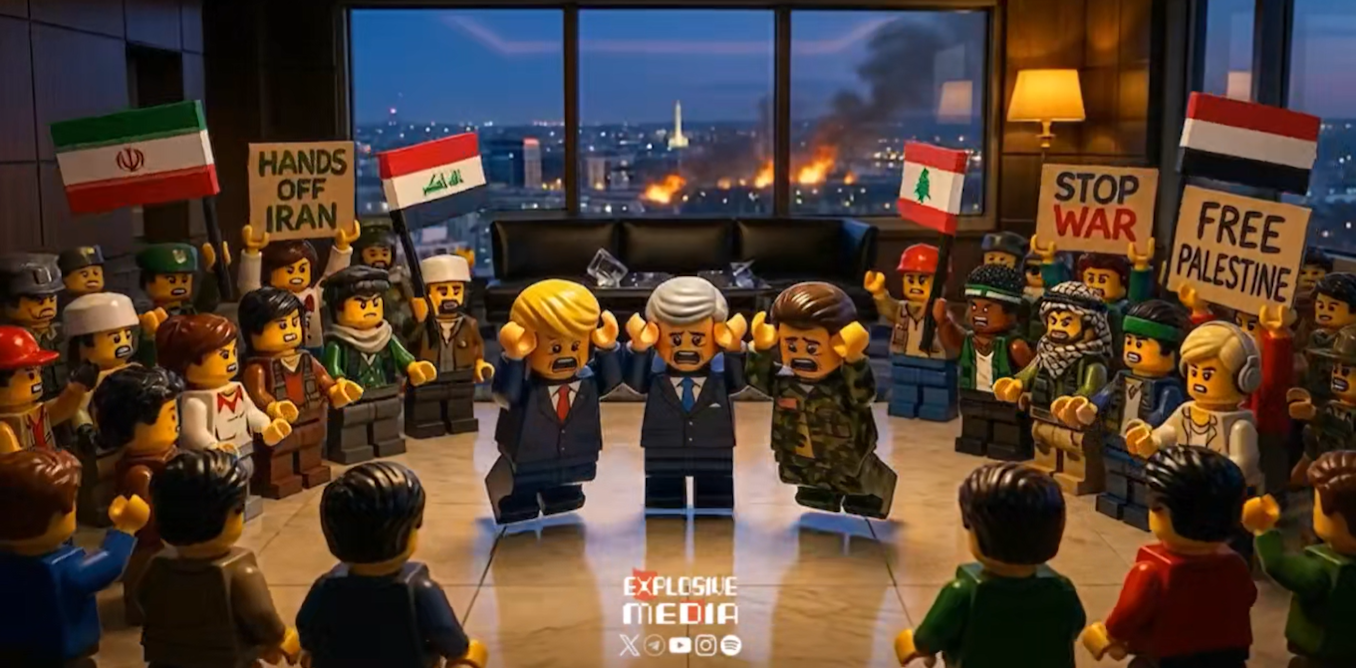
In recent months, pro-Iranian media groups have launched a sophisticated digital campaign using AI-generated videos that blend humor, familiar imagery, and political messaging to reach Western audiences. Most notably, an X account called Explosive Media has flooded social media with Lego-style animations set to rap soundtracks that mock Donald Trump, Benjamin Netanyahu, and U.S. foreign policy.
One such video opens with a Lego-style Iranian military commander rapping: “Our inbox is flooded with Americans saying they don’t watch the news. They listen to our songs instead since your media is full of shit.” This encapsulates a growing reality in modern politics—news increasingly reaches audiences not through traditional journalism but through humor, memes, and entertainment.
Despite a spokesperson for Explosive Media acknowledging to the BBC that the Iranian government is a client, these videos bear little resemblance to conventional state propaganda. Instead, they capture the internet zeitgeist: fast-paced, visually engaging content designed specifically for virality.
These videos have accumulated billions of views online, demonstrating remarkable effectiveness at penetrating Western social media spaces. Their success lies in a clever audience strategy that doesn’t target people actively seeking news about the Middle East. Instead, they mimic everyday internet culture to reach those who would otherwise scroll past geopolitical content.
“This kind of content reaches politically uninvested people who otherwise wouldn’t have engaged with war-related content,” notes Emerson Brooking, a U.S.-based disinformation expert.
The videos function as digital Trojan horses. They draw viewers in with recognizable imagery, cultural references, and popular music while subtly communicating narratives about American overreach and corruption. Humor serves not as the message but as the delivery system—packaging geopolitical arguments inside “diss tracks” and shareable clips before audiences even register they’re consuming political content.
This approach exploits a media landscape where audiences have been primed to receive political information through entertainment. For nearly two decades, Americans and increasingly European viewers have processed political news through satire. Shows like Jon Stewart’s “The Daily Show,” along with those hosted by Stephen Colbert, John Oliver, and others, built massive audiences by making politics funny and accessible in ways traditional journalism often failed to do.
These programs implicitly conveyed that humor wasn’t merely complementary to political commentary but potentially a more honest form of it. This largely progressive phenomenon established an expectation that political content should entertain, legitimizing comedy as a vehicle for political understanding.
Populist politicians, particularly Donald Trump, have recognized this shift. Trump’s appearances on comedy podcasts, his publicity stunts at McDonald’s drive-throughs, and his embrace of meme culture aren’t distractions from his political strategy—they are his strategy. He successfully reached millions of typically disengaged voters who had stopped consuming political news in traditional formats.
Iran appears to have studied this playbook carefully. “Iran is using popular culture against the No.1 pop culture country, the United States,” observes Nancy Snow, an American propaganda scholar. The choice of Lego aesthetics, rap beats, 1980s pop covers, and specific humor styles demonstrates precise calibration to penetrate Western attention spans.
The resulting content doesn’t register as foreign propaganda but rather as entertainment, making it particularly effective for audiences already accustomed to learning about politics through comedy.
This represents a profound irony. The very cultural conditions that produced shows like “The Daily Show”—eroding trust in mainstream political communication and growing demand for authenticity over formal rhetoric—have created a media environment where foreign state propaganda can reach millions of Americans while feeling indistinguishable from domestic entertainment.
While late-night satire and Iranian AI content aren’t equivalent, they operate in the same media ecosystem where humor has become a primary method of political communication. What’s unsettling is the implication for our information environment: when propaganda becomes indistinguishable from satire, and entertaining content accumulates millions of views while traditional news struggles for attention, the boundary between political entertainment and political persuasion effectively collapses.
The people most affected are precisely those who believe they aren’t following international conflicts at all—while unwittingly consuming politically charged content designed to shape their perceptions.
Fact Checker
Verify the accuracy of this article using The Disinformation Commission analysis and real-time sources.

10 Comments
While the production value of these AI-generated memes is impressive, we must be cautious about the underlying propaganda. The blending of entertainment and political messaging is a concerning trend that warrants close scrutiny.
Agreed. The ability to rapidly create and distribute this type of content using AI technology is a powerful tool that can be easily abused. We must stay vigilant and fact-check claims before sharing or believing them.
The use of humor and familiar cultural references to deliver political messaging is a shrewd tactic. However, it’s important to look beyond the entertainment value and critically examine the facts and agenda behind these AI-generated memes.
Well said. The viral nature of this content makes it all the more important to approach it with a skeptical eye and seek out reliable information from credible sources.
This is a prime example of how AI can be leveraged for propaganda purposes. The visually appealing and humorous nature of these memes makes them highly shareable, but we must not forget to critically analyze the messaging and its source. Disinformation can be dangerously effective when packaged this way.
Well said. The viral potential of this content is concerning, as it can quickly spread misinformation and sway public opinion. Maintaining a critical eye and fact-checking are essential in navigating this landscape.
Interesting use of AI to create propaganda-laced viral content. While the humor and visuals may be engaging, we should be cautious about the underlying message and motives. It’s important to think critically about the source and agenda behind this type of content.
Agreed, the blending of entertainment and political messaging is a concerning trend. Disinformation can be difficult to spot when it’s packaged this way.
This demonstrates the power of AI and social media to quickly spread propaganda and shape public opinion. While the production value is high, we must be vigilant about the veracity of the claims and the true intent behind these videos.
Absolutely. The ease with which misinformation can go viral online is alarming. Fact-checking and media literacy are crucial to combat these manipulative tactics.