


Listen to the article
Israeli Military’s Gaza Visualization Campaign Exposed as Digital Fabrication
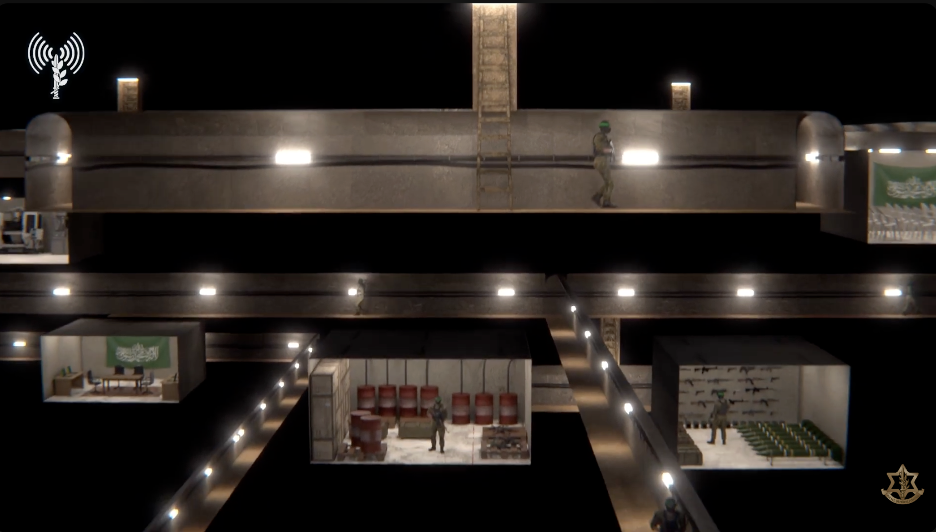
An extensive investigation has revealed that the Israeli Defense Forces (IDF) used generic commercial images rather than genuine intelligence materials to create 3D visualizations of alleged Hamas command centers in Gaza, including the controversial depiction of tunnels beneath Al-Shifa Hospital.
The collaborative investigation by +972 Magazine, Local Call, Viewfinder, Switzerland’s SRF network, and Scotland’s The Ferret analyzed 43 IDF animations released after October 7 and found significant evidence of fabrication in the visualizations that had been widely cited as justification for military operations.
The Al-Shifa Hospital animation, which portrayed an elaborate Hamas command center beneath Gaza’s largest medical facility, contained generic elements that appeared in previous IDF visualizations. Researchers discovered that the surrounding streets featured fictional businesses from commercial asset libraries, including “Fabio’s Pizzeria,” “Andre’s Bakery,” and “Revolution Bike Shop.”
“No such base was ever discovered,” the investigation concluded, contradicting the IDF’s claims that had been widely reported by international media as factual evidence.
An IDF reservist, speaking anonymously to investigators, admitted the purpose of these visualizations: “They look sexy, they look professional, and obviously the average person doesn’t go down into the details. The models just make the military look more professional, like a high tech company with cool diagrams and cool technology.”
The revelations raise serious questions about media verification standards, particularly among major news organizations that reported extensively on the IDF’s claims. The New York Times, BBC, CNN, Forbes, and The Telegraph all published reports referencing the alleged command center beneath Al-Shifa, with the Times alone publishing at least 38 articles mentioning the facility starting in November 2023.
These findings come amid growing criticism of mainstream media coverage of the Gaza conflict. Several independent journalist collectives, including Media Against Apartheid and Displacement and Writers Against the War on Gaza, have emerged to challenge narratives they view as uncritically accepting official Israeli government positions.
The deceptive nature of the visualizations is particularly troubling given their impact on public opinion and policy decisions. By presenting commercially available 3D assets as intelligence-derived evidence, the IDF created compelling visual narratives that proved influential in justifying controversial military operations that ultimately left Al-Shifa Hospital, once Gaza’s premier medical facility, largely destroyed.
Digital forensics experts note that the IDF animations borrowed stylistic elements from organizations like Forensic Architecture that typically use similar techniques to document and expose state violence. This appropriation of visual language normally associated with human rights investigations created a layer of perceived legitimacy that helped the animations gain traction in international media.
The investigation highlights the evolving nature of information warfare in modern conflicts. As Israeli Prime Minister Benjamin Netanyahu has stated on multiple occasions, the “digital battlefield” carries comparable significance to physical combat operations in the current conflict.
For media organizations, the revelations underscore the necessity of independently verifying government claims, particularly when such claims are used to justify military actions with significant humanitarian implications. The investigators hope their work will promote greater visual literacy among journalists and audiences when assessing similar visual evidence in the future.
The Al-Shifa Hospital case represents a particularly significant example of how digital visualizations can shape public understanding of conflict zones that remain largely inaccessible to independent verification. After months of controversy surrounding the facility, this investigation provides concrete evidence that at least some elements of the official narrative were deliberately constructed using generic commercial assets rather than actual intelligence findings.
Fact Checker
Verify the accuracy of this article using The Disinformation Commission analysis and real-time sources.
