


Listen to the article
Iran’s Leader Calls for Resistance Against Western Media Influence
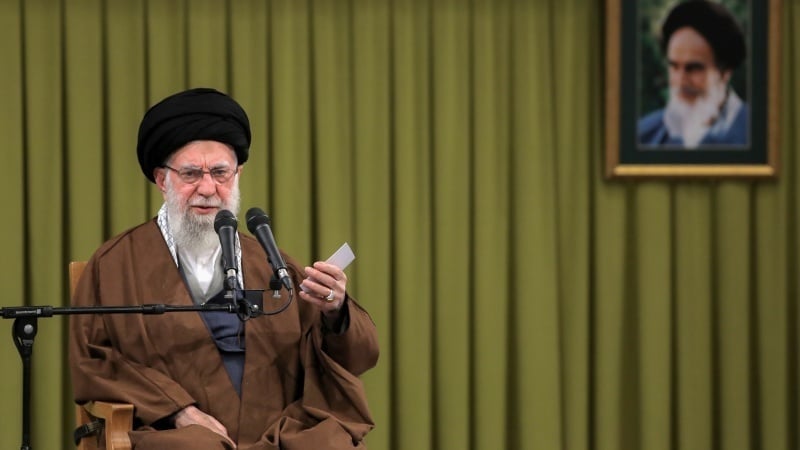
Ayatollah Khamenei addressed thousands of followers at a ceremony celebrating the birth anniversary of Lady Fatimah al-Zahra, asserting that standing firm against Western propaganda campaigns is challenging but achievable for the Iranian nation.
Speaking at the Hussainiyah of Imam Khomeini in Tehran on Thursday, the Leader of the Islamic Revolution congratulated attendees on the blessed occasion that coincided with the birth anniversary of Ayatollah Khomeini, the founder of the Islamic Republic. The event was marked by spirited celebrations across Iran.
During his address, Ayatollah Khamenei emphasized that through its national resistance, Iran has successfully thwarted enemy efforts to alter what he described as the country’s “religious, historical, and cultural identity.” He acknowledged ongoing challenges and shortages facing the nation but maintained that Iran continues to move forward despite these obstacles.
“The Islamic Revolution rendered all those efforts futile, and in recent decades, the nation—through its steadfastness and refusal to surrender in the face of continued widespread pressure from its enemies—has once again defeated them,” Khamenei stated, referring to what he characterized as more than a century of attempts by global powers to reshape Iranian identity.
The Supreme Leader identified the United States as “the center of this wide and active front” against Iran, supported by European countries and what he termed “domestic mercenaries and traitors residing in Europe seeking personal gain.”
In his assessment of geopolitical motivations, Ayatollah Khamenei outlined various objectives behind Western pressure campaigns against nations like Iran. These include territorial expansion, as he claimed is currently happening with U.S. activities in Latin America, control over natural resources, and attempts to change lifestyles. However, he emphasized that the primary goal is “identity alteration.”
The Leader urged followers to emulate Lady Fatimah’s virtues in all aspects of life—from piety and justice-seeking to family matters. “Despite the need for a well-organized defensive and offensive strategy against the enemy’s propaganda and media operations aimed at influencing minds, hearts, and beliefs, Iran continues to progress,” he added.
Pointing to regional developments, Ayatollah Khamenei highlighted what he described as the expansion of resistance ideology from Iran to neighboring countries and beyond. “If the enemy had done to any other country what it has done to Iran and the Iranian people, that nation and country would have been wiped out instantly,” he claimed.
The Supreme Leader’s remarks come amid ongoing tensions between Iran and Western nations, particularly the United States, over issues including Iran’s nuclear program, regional influence, and human rights concerns. These tensions have intensified following Iran’s support for allies in the region during recent conflicts.
Iran has faced multiple rounds of international sanctions that have significantly impacted its economy, though government officials regularly portray these challenges as part of a broader Western campaign to undermine the Islamic Republic’s sovereignty and revolutionary ideals.
Ayatollah Khamenei concluded his address on an optimistic note about Iran’s future trajectory, stating: “The Iranian people are gradually building honor for Islam day by day. They are showing that Islam means steadfastness, Islam means strength, Islam means sincerity and purity, and Islam means benevolence and the pursuit of justice.”
The celebration at the Hussainiyah of Imam Khomeini represents one of the regular public appearances by the 85-year-old Supreme Leader, who has led Iran since 1989 following the death of Ayatollah Khomeini.
Fact Checker
Verify the accuracy of this article using The Disinformation Commission analysis and real-time sources.

9 Comments
Khamenei’s call to resist Western media influence reflects Iran’s longstanding concerns about cultural and ideological encroachment. While the task is daunting, Iran’s commitment to maintaining its revolutionary spirit and national identity is admirable.
Khamenei’s remarks highlight the delicate balance Iran must strike between engaging with the global media landscape and preserving its unique cultural and religious identity. Navigating this challenge will require sustained effort and creativity.
Khamenei is right to emphasize the importance of resisting Western media influence, as preserving a nation’s cultural and historical identity is crucial. However, the task of combating global information flows is an immense challenge for any country.
Khamenei’s speech underscores Iran’s determination to chart its own course in the face of Western media dominance. While the struggle is ongoing, Iran’s revolutionary spirit and refusal to surrender appears to be a source of resilience.
It will be interesting to see how Iran’s media and propaganda strategies evolve to counter Western influence while promoting their own narrative on the global stage.
Resisting Western media influence is a constant battle for Iran, but their national resolve and refusal to surrender is commendable. Khamenei’s call for the people to stand firm against propaganda campaigns is a strong statement of defiance.
Khamenei’s call to resist Western propaganda is a bold stance, but the practicalities of doing so in the modern media landscape must be daunting for Iran. Their ability to maintain a distinct national identity is certainly being tested.
Khamenei’s message highlights the challenges Iran faces in preserving its cultural and religious identity in the face of Western media influence. However, the country’s revolutionary spirit and steadfastness seem to be sustaining them through these obstacles.
It will be interesting to see how Iran navigates this ongoing struggle for ideological sovereignty against the global influence of Western media narratives.