


Listen to the article
Mistaken Identity Causes Media Scandal as Wine Importer Confused with Former NYC Mayor
A case of mistaken identity has sparked a media firestorm after a Long Island wine importer named Bill DeBlasio was erroneously approached for political commentary by a reporter from the Times of London, who believed he was contacting the former mayor of New York City with the same name.
The confusion led to an embarrassing retraction after the newspaper published the wine importer’s critical assessment that New York State Assembly member Zohran Mamdani’s policy proposals “doesn’t hold up under scrutiny, and the political hurdles are substantial.” When the article appeared, the former mayor accused the Times of fabricating quotes, prompting the newspaper to delete the story amid growing confusion.
“I’m Bill DeBlasio. I’ve always been Bill DeBlasio,” the wine importer told Semafor in an interview following the incident. “I never once said I was the mayor. He never addressed me as the mayor. So I just gave him my opinion.”
The incident highlights the potential pitfalls of rushed reporting and insufficient source verification in modern journalism, particularly when dealing with namesakes of public figures.
Department of Labor Campaign Draws Criticism for Propaganda-Like Imagery
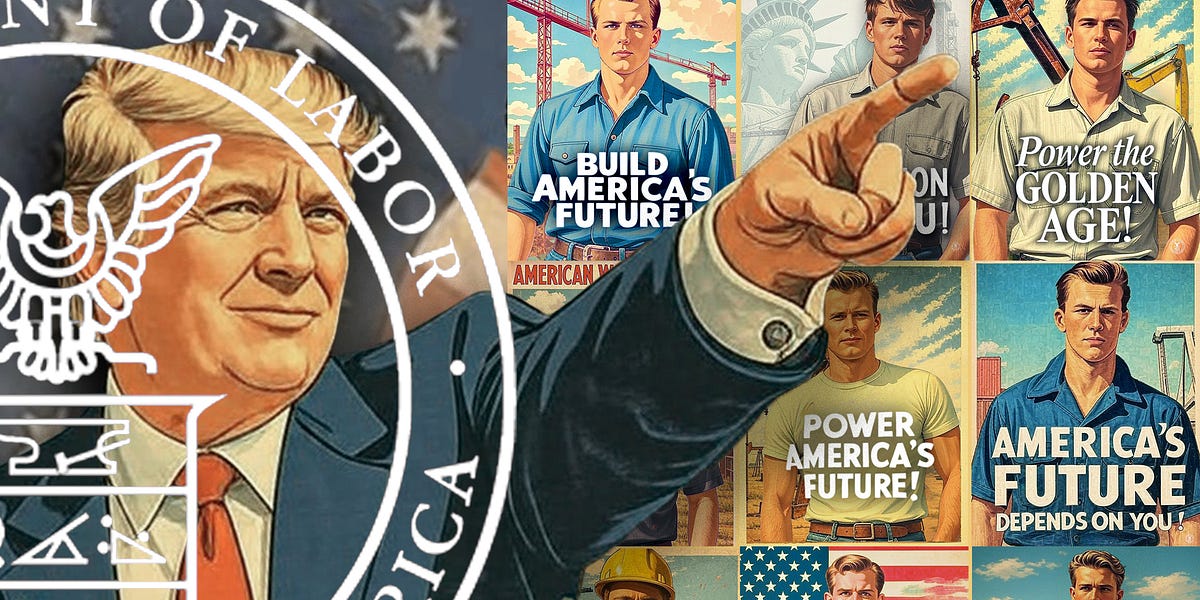
Meanwhile, a social media campaign from the U.S. Department of Labor has sparked controversy for its use of AI-generated images that many critics say bear an uncomfortable resemblance to authoritarian propaganda from the 1930s.
The campaign features artificially generated images of young, blond, white men with strong jawlines and cleft chins, wearing blue-collared workmen’s shirts against backgrounds featuring American symbols like white-steeple churches, construction cranes, oil rigs, and the Statue of Liberty. The imagery is rendered in a distinctive yellow-tinted palette characteristic of AI-generated content.
Critics have noted similarities between these images and the “Heroic Realism” style that characterized Nazi propaganda posters and similar patriotic imagery later produced in the United States. The aesthetic features monumental proportions, overt symbolism, and idealized human figures that appear reminiscent of authoritarian visual campaigns.
The Department of Labor has been using these images to promote “Project Firewall,” an enforcement initiative targeting H-1B visa fraud and abuse. Launched last month alongside a presidential proclamation restricting certain immigrant workers and imposing steep fees on employers hiring H-1B visa holders, Project Firewall has been described as the “MOST AGGRESSIVE” effort to investigate employers for visa violations.
While the administration frames the initiative as protection for American workers, critics argue it appears designed to target companies hiring foreign employees, particularly in the tech sector. The campaign’s focus on blue-collar imagery seems misaligned with the reality that most H-1B visas are used in technology and information sectors, not manual labor.
The visual campaign appears to have begun in July with imagery promoting apprenticeship programs under slogans like “Blue Collar Boom.” More recently, the Department even tested an artificially generated image of former President Trump with text proclaiming “AMERICA IS HOT!” and describing the American economy as “the HOTTEST in the world!”
Justice Department Prosecutors Placed on Leave After January 6 References
In a separate development, two assistant U.S. attorneys were placed on administrative leave hours after filing a sentencing brief that referred to the January 6, 2021 Capitol attack as carried out by “thousands of people comprising a mob of rioters.”
Prosecutors Carlos Valdivia and Samuel White were handling the case of Taylor Taranto, a Washington man convicted of weapons charges and making a hoax bomb threat after driving to Washington, D.C. with multiple guns and hundreds of rounds of ammunition. Taranto, who had attended the January 6 events, had posted online threats against prominent Democrats and driven around the Kalorama neighborhood after former President Trump posted what was purported to be Barack Obama’s address.
Shortly after Valdivia and White were placed on leave, a new set of prosecutors filed an updated sentencing brief that removed all references to January 6 and eliminated suggestions that Trump’s social media post had influenced Taranto’s actions prior to his arrest.
The situation has raised concerns about political pressure influencing prosecutorial independence within the Justice Department, particularly regarding how events surrounding January 6 are characterized in official documents.
These developments come as the House Oversight Committee continues to question the validity of pardons issued during the final months of the Biden administration and as the Federal Reserve navigates economic uncertainties amid the ongoing government shutdown.
Fact Checker
Verify the accuracy of this article using The Disinformation Commission analysis and real-time sources.
