


Listen to the article
Two thousand years after her death, Cleopatra VII continues to suffer from an image problem created by her Roman enemies, according to historians who are working to rehabilitate the reputation of ancient Egypt’s last pharaoh.
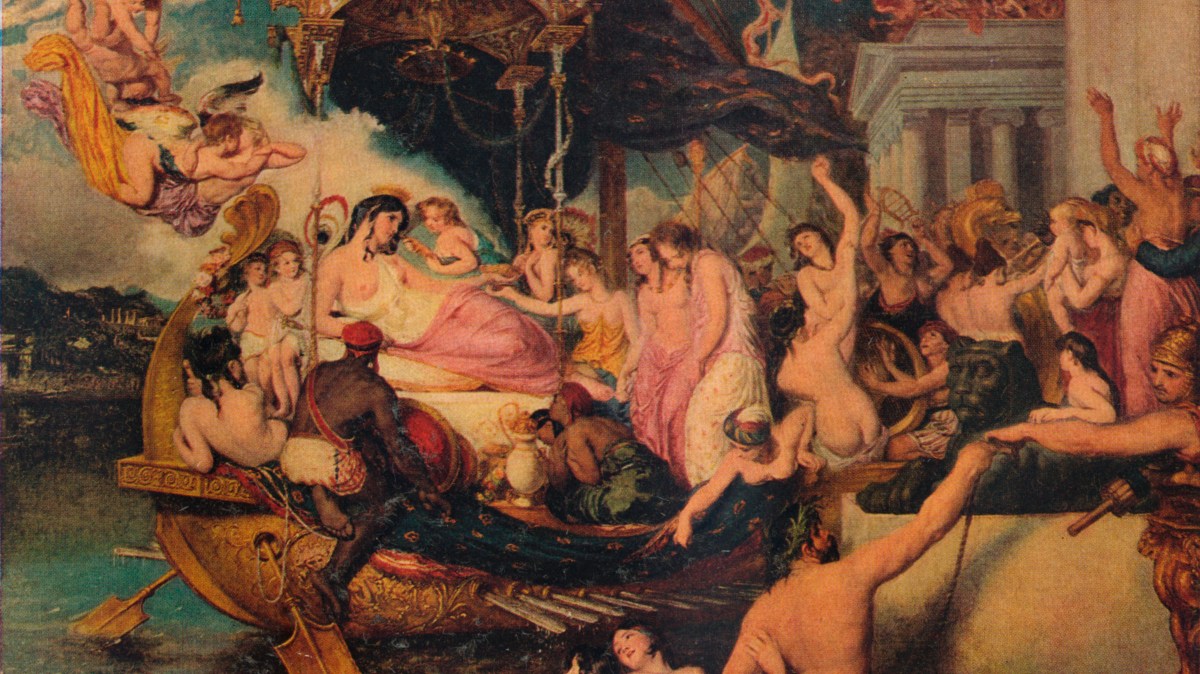
Long depicted as a seductress who used her feminine wiles to manipulate powerful Roman men, Cleopatra was actually a shrewd political strategist and capable ruler whose achievements have been systematically undermined by Roman propaganda, experts say.
“The Romans successfully created a narrative that has endured for millennia,” says Dr. Eleanor Matthews, professor of ancient history at Oxford University. “They reduced a highly educated, multilingual queen to little more than a sexual temptress, when in reality she was fighting to preserve Egyptian sovereignty against an expanding Roman Empire.”
Cleopatra, who ruled Egypt from 51 BCE until her death in 30 BCE, spoke as many as nine languages and was educated in mathematics, philosophy, astronomy, and rhetoric. Contemporary accounts suggest she was more compelling for her intelligence and charisma than her physical appearance.
The distortion of her image began with Octavian (later Emperor Augustus), who waged a propaganda campaign against Cleopatra and Mark Antony prior to his victory at the Battle of Actium in 31 BCE. This negative portrayal was later amplified by Roman historians like Cassius Dio and Plutarch, whose works heavily influenced Western perceptions of the Egyptian queen.
“Octavian needed to justify his war against Antony, so he painted Cleopatra as a foreign seductress who had enchanted a Roman hero,” explains Dr. James Henderson, curator of the upcoming exhibition “Cleopatra: Beyond the Myth” at the British Museum. “It was easier to sell a war against a dangerous foreign queen than to admit it was a Roman civil war.”
Recent archaeological findings and scholarly research have begun to challenge these entrenched narratives. Excavations at Alexandria and analysis of contemporary Egyptian sources reveal Cleopatra as a ruler who stabilized Egypt’s economy, maintained religious traditions, and skillfully navigated complex diplomatic relationships.
Dr. Fatima Al-Saeed, Egyptologist at Cairo University, emphasizes that Cleopatra should be understood within her Egyptian context, not just through a Roman lens. “She identified strongly with Egyptian religious traditions, portraying herself as the embodiment of the goddess Isis. She wasn’t just seeking power for its own sake but was working to preserve Egyptian culture and independence.”
Cleopatra’s economic policies demonstrate her administrative capabilities. During her reign, she reopened trade routes, managed grain production during drought years, and maintained Egypt’s position as the breadbasket of the Mediterranean despite political instability throughout the region.
Her political alliances with Julius Caesar and later Mark Antony, while portrayed by Romans as scandalous affairs, were strategic diplomatic maneuvers. “These were political relationships first and foremost,” notes Dr. Henderson. “Cleopatra recognized that Egypt’s continued independence depended on having powerful allies within Rome.”
The queen’s suicide following Octavian’s conquest of Egypt has often been romanticized, particularly in films and literature. However, historians now emphasize that her death was a political act—choosing to die rather than be paraded through Rome as a captive in Octavian’s triumph.
Modern popular culture has begun to reflect this more nuanced understanding of Cleopatra. Several upcoming documentary projects and books aim to present a more historically accurate portrayal of the queen, focusing on her political acumen rather than her romantic entanglements.
“We’re finally moving beyond Shakespeare and Elizabeth Taylor to discover the real Cleopatra,” says Dr. Matthews. “She was a product of her Ptolemaic heritage but also deeply committed to Egypt. She fought fiercely to maintain Egyptian independence against overwhelming odds.”
The reassessment of Cleopatra’s legacy is part of a broader trend in classical studies to revisit historical narratives that have been shaped by the biases of ancient writers and subsequent centuries of interpretation.
“History is written by the victors,” Dr. Al-Saeed concludes. “And for two thousand years, we’ve been reading Cleopatra’s story through the eyes of the men who defeated her. It’s time we recognized her for what she was—not just a woman who captivated powerful men, but a formidable leader in her own right.”
Fact Checker
Verify the accuracy of this article using The Disinformation Commission analysis and real-time sources.

8 Comments
This is a really important piece of scholarship. Distortions and biases in the historical record are all too common, and it’s crucial that we work to uncover the truth, even when it challenges long-held assumptions. I applaud the efforts of these scholars to rehabilitate Cleopatra’s image and legacy.
Fascinating to see how Cleopatra’s legacy has been shaped by Roman propaganda over the centuries. It’s a good reminder to be critical of historical narratives and seek out diverse perspectives. I’m curious to learn more about her true accomplishments as a skilled ruler and diplomat.
Agreed, the Romans were clearly skilled at crafting a narrative that served their own interests. I look forward to seeing how scholars work to uncover the authentic Cleopatra and her important role in ancient history.
The Romans’ successful efforts to demonize Cleopatra are a sobering example of the power of propaganda. I’m glad to see this being re-examined through a more objective lens. It will be interesting to see how this impacts our broader understanding of ancient Egypt and its interactions with the Roman Empire.
This is an important reexamination of a historical figure who has been unfairly maligned. It’s troubling to see how political agendas can distort our understanding of the past. I hope this research helps restore Cleopatra’s rightful place in history.
Absolutely. Overcoming centuries of biased propaganda is no easy task, but it’s crucial that we strive for a more accurate and nuanced portrayal of historical figures like Cleopatra. I’m glad to see scholars taking on this challenge.
As someone with a keen interest in ancient history, I find this topic quite fascinating. The idea that Cleopatra’s legacy has been so thoroughly distorted by Roman propaganda is eye-opening. I’m eager to learn more about the true nature of her rule and how she navigated the complex geopolitics of her time.
Me too. Cleopatra was clearly a highly accomplished and influential figure, and it’s a shame that her story has been reduced to outdated stereotypes. I’m hopeful that this research will help restore a more accurate and nuanced understanding of her life and legacy.